
Wird geladen...
Wird geladen...
Development and trialling of novel high-temperature materials and thermal protection systems for applications at 1,500 to 3,000 °C. A research field at the interface between refractory technology, materials science and defence technology.
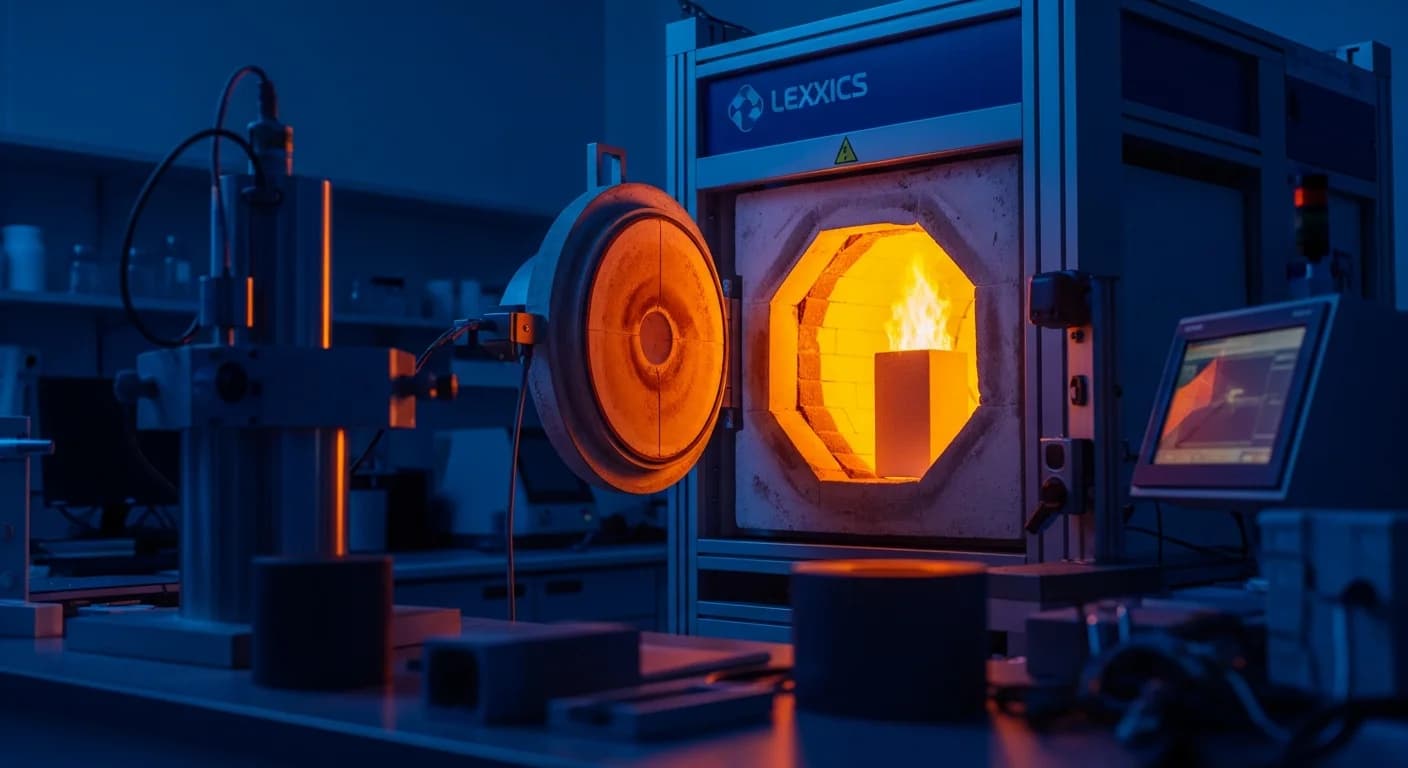
Research & development: high-performance materials
The demands placed on high-temperature materials in the defence industry increasingly exceed the capabilities of conventional refractory materials. Thermal protection systems (TPS) for re-entry vehicles, ceramic matrix composites (CMC) for engines and ablative materials for rocket nozzles require materials that function reliably at 1,500 to 3,000 °C.
Working with research partners such as Fraunhofer institutes and the German Aerospace Center (DLR), SBS Refractory Service is transferring industrial refractory expertise to these extreme applications. Our contribution lies in practical realisation: from laboratory scale to prototype production, from the material concept to the qualified component.
This area is deliberately positioned as a field for the future. Not every technology is already available as a finished product — but the foundations have been laid and development work is in full swing.
Proven methods and specialised equipment for optimal results.
Development of materials and structures that withstand re-entry temperatures of up to 3,000 °C. A combination of insulation, ablation and radiation for controlled heat dissipation.
Oxide and non-oxide CMC materials (SiC/SiC, Ox/Ox) for continuous operation at 1,200–1,500 °C. Lighter than metal, more durable than conventional ceramics, damage-tolerant thanks to fibre reinforcement.
Materials development for controlled thermal decomposition. Phenolic resin composites, carbon-carbon composites (C/C) and UHTC materials (ZrB₂, HfB₂) for extreme temperatures.
Construction and operation of test rigs for material characterisation under extreme conditions: plasma wind tunnels, radiation furnaces, thermal shock test rigs.
Structured, transparent and on schedule — this is how we work.
Definition of the operating conditions and material requirements together with the client.
Temperature-time profiles, mechanical loads, chemical environment, geometry. Literature research and assessment of existing solution approaches. Concept proposal with candidate materials.
Selection and production of material samples, characterisation at laboratory scale.
Production of test specimens, mechanical testing (flexural strength, compressive strength, fracture toughness), thermal analysis (thermal conductivity, coefficient of expansion), ablation trials.
Scaling from laboratory scale to component-relevant dimensions.
Manufacture of prototypes in real geometry. Optimisation of the production parameters (sintering, CVI, polymer infiltration). In cooperation with research partners and specialised manufacturing companies.
Verification of the material properties under near-operational conditions.
Testing on demonstrators: plasma wind tunnel trials for TPS, turbine hot gas trials for CMC, ablation tests under realistic heat fluxes. Documentation in accordance with aerospace standards.
Transfer of qualified materials and processes into series production readiness.
Manufacturing documentation, quality assurance concept, training of the production personnel. Support during the first series batches. Continuous material optimisation based on field data.
Proper separation, recovery and disposal of all resulting materials.
Non-oxide CMC with silicon carbide fibres in a SiC matrix. Continuous operation up to 1,400 °C in an oxidising atmosphere. 60 % lighter than nickel-based superalloys at comparable strength.
Fibre composite of carbon fibres in a carbon matrix. The highest specific strength of any material at temperatures of up to 3,000 °C — but only under inert gas or vacuum (oxidises from 500 °C in air).
Ultra-high-temperature ceramics with melting points above 3,000 °C. Development of composites (UHTC + SiC fibres) for oxidation-resistant structures under the most extreme thermal loads.
Nanoporous insulating materials with a thermal conductivity of < 0,015 W/mK. Extremely light (density < 200 kg/m³), mechanically reinforced by fibre inlays. Operating range up to 1,200 °C.
Typical situations in which Research & development: high-performance materials is used.
Development of thermal protection systems for re-entry vehicles and hypersonic missiles
CMC components for next-generation engines
Ablative rocket nozzles and expansion nozzles
High-temperature insulation for space applications
Material qualification and test rig construction for extreme conditions
Everything you need to know about Research & development: high-performance materials
Your question not listed?
Request a personal consultationWhether complete relining, repair or emergency — free initial consultation and a fast response.