Wird geladen...
Wird geladen...
Lining, servicing and maintenance of refractory linings in safety-critical metallurgical plants in the defence industry. Covers melting furnaces, heat treatment furnaces, vacuum furnaces and casting plants for high-strength alloys.
Military metallurgy & production
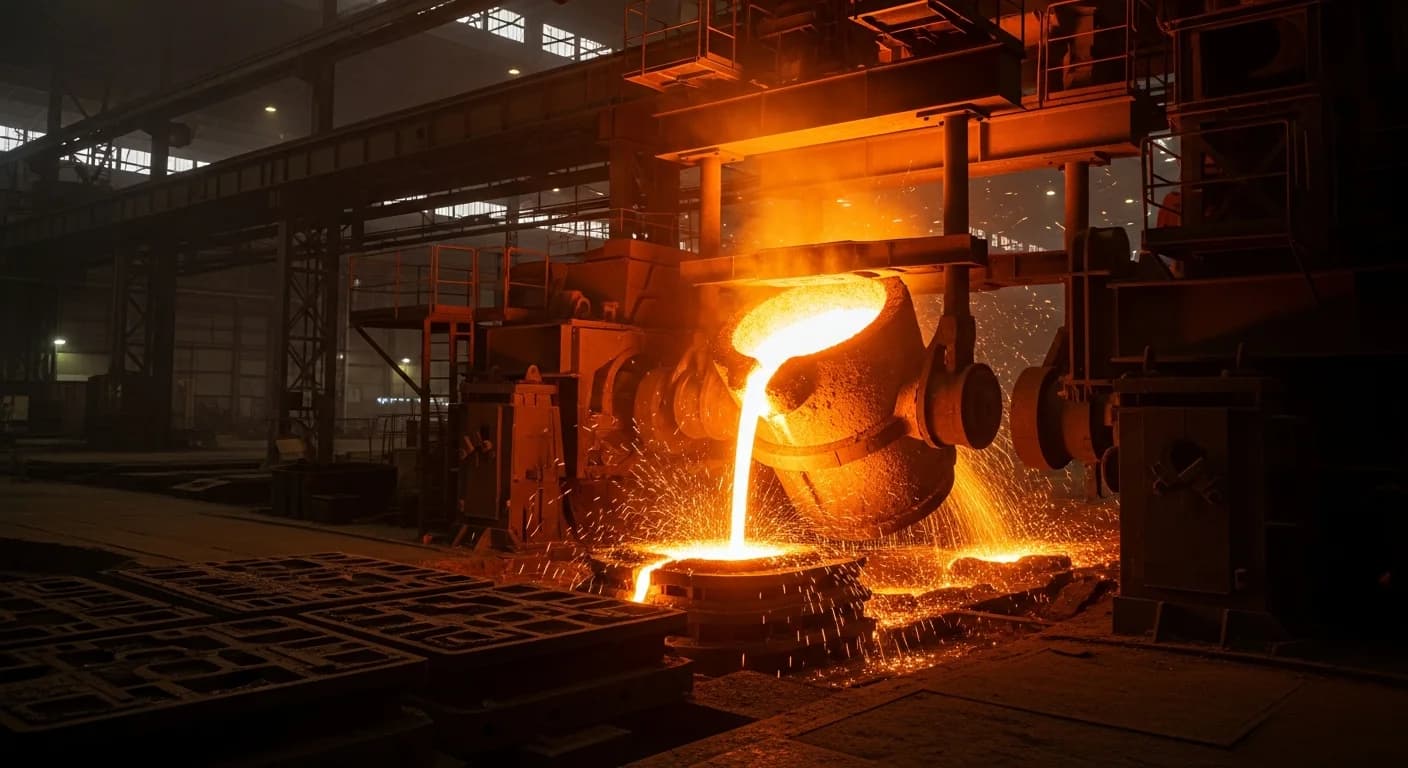
The production of armour steel, turbine alloys and nickel-based superalloys places the highest demands on the refractory lining. Temperatures above 1,600 °C, aggressive melts and extreme thermal cycling call for lining concepts that are matched to the particular material and process.
SBS Refractory Service brings many years of experience in industrial furnace construction to the defence industry. Our teams understand the thermochemical loads involved in processing titanium, Inconel and high-chromium steels — and dimension refractory linings accordingly.
All work on safety-critical plants is carried out in compliance with strict quality assurance protocols. Material testing to DIN EN and seamless documentation are an integral part of every contract.
Proven methods and specialised equipment for optimal results.
Special linings for vacuum induction melting furnaces (VIM) and vacuum arc furnaces (VAR). High-purity refractory materials prevent contamination of the melt when processing superalloys.
Monolithic and brick linings for induction crucible furnaces used to melt steel and titanium. Matched to the slag chemistry and thermomechanical load of the particular alloy system.
Lining and maintenance of continuous and chamber furnaces for quenching and tempering, solution annealing and precipitation hardening. Homogeneous temperature distribution is decisive for material quality.
Regular condition assessment of the furnace lining using thermography and visual inspection. Early detection of wear zones extends campaign durations and prevents unplanned downtime.
Structured, transparent and on schedule — this is how we work.
Assessment of the existing lining, analysis of the wear mechanisms and process parameters.
Thermographic survey, sampling of the residual lining, laboratory analysis. Documentation of the melting campaigns and operating parameters as the basis for redimensioning.
Design of the refractory lining based on the material and process requirements.
Selection of refractory grades taking account of slag chemistry, temperature profiles and mechanical loads. Preparation of lining drawings and material lists.
Controlled removal of the old lining and preparation of the furnace structure for the new lining.
Documented demolition with material classification. Cleaning and inspection of the steel structure, repair of anchors and supports where necessary.
Installation of the refractory lining and controlled heat-up curve.
Professional installation with documented joint geometry. Drying and heat-up curve in accordance with the manufacturer's specification — critical for service life and for avoiding thermal shock.
Quality inspection of the lining and handover with complete documentation.
Dimensional check, joint assessment, thermography after the first heat-up. Acceptance report with material certificates, batch traceability and care instructions.
Proper separation, recovery and disposal of all resulting materials.
Hardenable special steels with hardness values up to 600 HB. Melting and heat treatment furnaces require wear-resistant linings that withstand the aggressive steel slag.
Alloys for operating temperatures up to 1,100 °C. Processing in a vacuum furnace requires high-purity refractory materials to avoid contamination.
Highly reactive material at melting temperature. Processing exclusively in vacuum or inert gas furnaces with contamination-free linings.
Ultra-pure corundum bricks with excellent thermal shock resistance. Standard refractory material for processing reactive alloys.
Typical situations in which Military metallurgy & production is used.
Relining of melting furnaces for armour steel and special alloys
Campaign changes on vacuum induction and arc furnaces
Servicing and repair of heat treatment plants in defence facilities
Emergency call-out in the event of lining failure in safety-critical plants
Conversion of existing furnaces to new alloy systems
Everything you need to know about Military metallurgy & production
Your question not listed?
Request a personal consultationWhether complete relining, repair or emergency — free initial consultation and a fast response.