Wird geladen...
Wird geladen...
The energy transition is decided in furnaces and combustion chambers. Why refractory linings are a key technology for the transformation of industry.
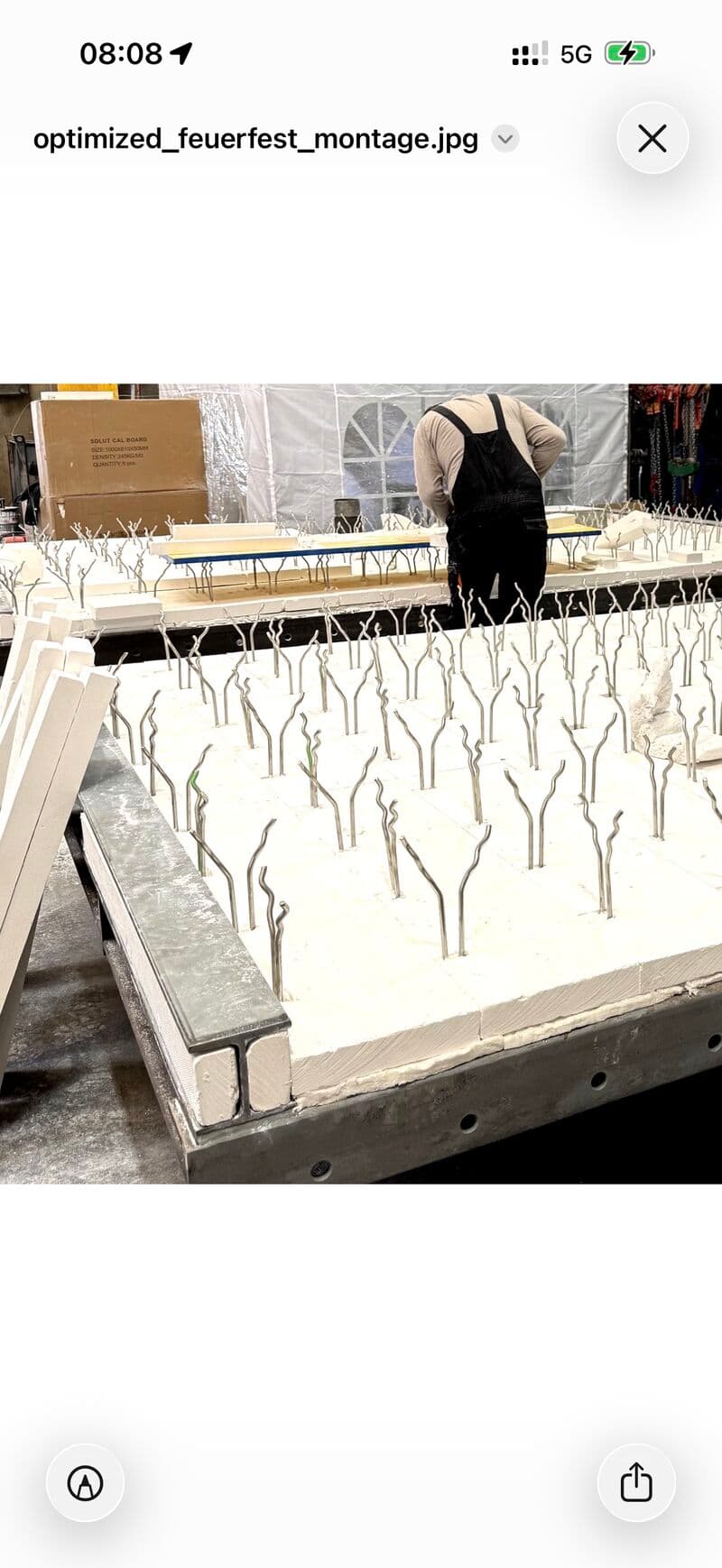
When the energy transition is discussed, wind turbines, solar panels and battery storage dominate public perception. Yet the industrial energy transition is taking place in quite different locations: in the furnaces and combustion chambers of the basic materials industry, in waste incineration plants, biomass power plants and heat recovery systems. And in every one of them the refractory lining plays a central, if rarely noticed, role. Without high-performance refractory materials, no thermal process can be operated efficiently, safely and economically.
Switching from fossil to biogenic and secondary fuels places entirely new demands on the refractory lining. Biomass and refuse-derived fuels produce different ash compositions, different flue gas chemistries and different temperature profiles from coal or gas. The refractory industry has to respond to these changed conditions with new material developments and adapted design concepts. Anyone who wants to drive forward the energy transition in industry has to rethink refractory technology as well.
Around 70 per cent of industrial CO2 emissions arise in high-temperature processes. The efficiency of these processes depends largely on the quality of the refractory lining. Better refractory technology means less energy consumption and fewer emissions.
Before any discussion about switching to new energy sources, the first and often most effective lever lies in improving the efficiency of existing plants. An optimally designed and maintained refractory lining reduces heat losses, raises thermal efficiency and thus directly cuts the specific energy consumption per tonne of product. In the aluminium industry, savings of 10 to 20 per cent of energy consumption can be achieved by optimising the refractory system. In the cement and lime industry the potential is of a similar order of magnitude.
The switch to hydrogen as an energy source, already being trialled in the steel and glass industries, presents refractory technology with new challenges. Hydrogen flames reach higher local temperatures, have different radiation characteristics and produce water vapour as a combustion product, which at high temperatures can impair the chemical stability of certain refractory materials. Materials research is working on new material concepts that will withstand these changed conditions. At the same time, design concepts have to be adapted to take account of altered heat flux profiles and mechanical loads.
At SBS Refractory Service we accompany our customers on their path into the industrial transformation. We understand the interactions between changed operating conditions and the demands placed on the refractory lining. Whether it is a switch to biomass, the integration of heat recovery systems or preparation for the use of hydrogen: refractory technology has to be considered from the outset, not as a downstream detail but as an integral part of plant planning.
Whether complete relining, repair or emergency — free initial consultation and a fast response.