Wird geladen...
Wird geladen...
Systematic removal and disposal of refractory linings (refractory furnace linings) from industrial furnaces. Covers high-temperature furnaces, melting furnaces, rotary kilns and all units with a ceramic or monolithic lining.
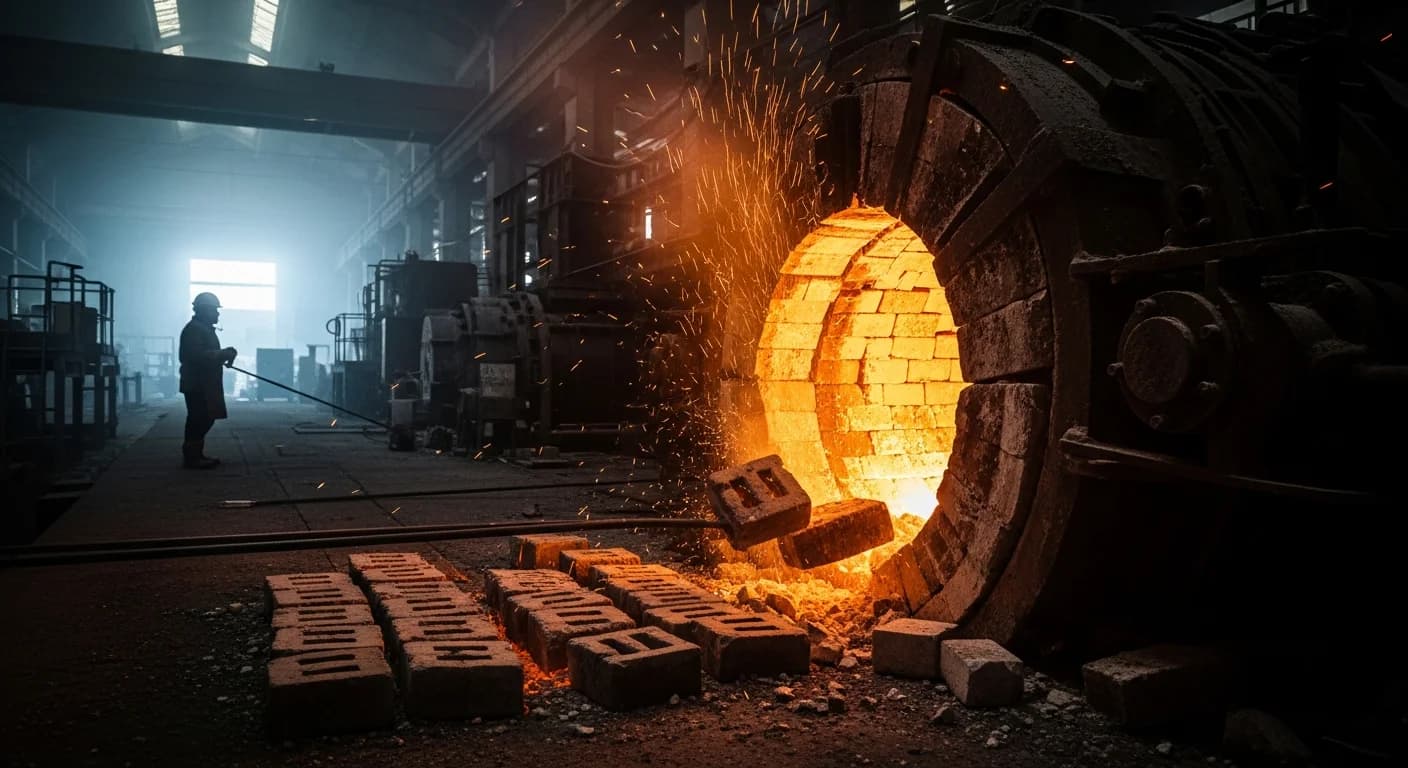
Furnace & refractory dismantling
SBS Refractory Service combines decades of experience in refractory construction with specialist dismantling expertise. Anyone who plans, builds and maintains industrial furnace linings knows their structure down to the last detail — and knows exactly how the dismantling has to be carried out safely and efficiently.
Refractory linings frequently contain substances that are hazardous to health: refractory materials containing hexavalent chromium (chromium VI) in older plants, ceramic fibres (MMMF — man-made mineral fibres) in thermal insulation layers, or asbestos-containing seals. Improper lining removal endangers people and the environment alike.
Our teams rely on methods that minimise the release of dust and fibres. Every lining removal is assessed in advance by material analysis and underpinned by a work and disposal concept.
Proven methods and specialised equipment for optimal results.
Use of hydraulic chisels and demolition hammers for the controlled removal of refractory materials. Particularly efficient with monolithic linings and ramming mixes. Dust reduction by means of water mist spraying.
Selective removal in confined furnace chambers or where the material is contaminated. Enables grade-pure removal and minimises cross-contamination. Indispensable for linings containing hexavalent chromium.
Large-volume industrial vacuum units remove loose refractory rubble, fibre insulation materials and dusts directly at the point of origin. Filtration to HEPA standard. Mandatory for insulation containing MMMF.
Large-format refractory segments are pulled out of the furnace chamber using steel cables and mobile cranes. Used on rotary kilns, tunnel kilns and shaft furnaces with a large lining cross-section.
Structured, transparent and on schedule — this is how we work.
Material samples of the lining, laboratory analysis for hexavalent chromium, MMMF and asbestos. Preparation of the risk assessment.
Sampling in accordance with VDI 3492, laboratory analysis in accordance with VDI 3866 Part 5. Results report as the basis for the work and disposal concept.
Coordination with production planning. Enclosure, negative-pressure containment or partitioning depending on the hazardous substance findings.
Calculation of the cooling curve, erection of access scaffolding and working platforms. PPE logistics, clean/dirty changing facility where contamination is present.
Controlled removal of the refractory lining using the specified method. Continuous dust measurement and documentation.
Shift operation possible. Removal of material in closed containers. Segregation by AVV waste codes directly at the point of origin.
Fine cleaning of the furnace structure. Where hazardous substances are present: clearance measurement in accordance with TRGS 519/521.
Wipe samples and indoor air measurements document that the limit values are not exceeded. Clearance certificate for relining or further dismantling.
Transport documentation, record-keeping via the eANV (electronic waste verification procedure), final report.
Disposal records, weighbridge tickets, recovery rates. Seamless documentation for the environmental authorities and the client.
Proper separation, recovery and disposal of all resulting materials.
Used refractory bricks, materials and mortars free of hazardous substances. The largest fraction by mass in furnace lining removal.
High-temperature insulating wool from furnace walls and expansion joints. Respirable fibres — strict protective measures in accordance with TRGS 521.
Chrome ore and chrome magnesite bricks from older steelworks furnaces. Hexavalent chromium is carcinogenic — exposure must be minimised in accordance with the GefStoffV.
Furnace shell, supporting structures, anchors and brackets. Grade-pure collection increases the recycling revenue.
Typical situations in which Furnace & refractory dismantling is used.
Planned relining at the end of a campaign
Suspected hazardous substances in older plants (hexavalent chromium, MMMF, asbestos)
Partial refurbishment following localised lining damage
Complete furnace decommissioning and disassembly
Conversion or capacity expansion of existing furnaces
Official requirements for hazardous-substance remediation
Everything you need to know about Furnace & refractory dismantling
Your question not listed?
Request a personal consultationWhether complete relining, repair or emergency — free initial consultation and a fast response.