Wird geladen...
Wird geladen...
As a long-standing partner to industry, we combine in-depth plant knowledge with comprehensive dismantling expertise. Safe, on schedule and environmentally compliant.
Whoever built a plant knows its structure better than anyone else. SBS Refractory Service has been active in refractory construction and industrial furnace construction for more than three decades. That knowledge feeds directly into our dismantling services: we know which materials were installed, where hazardous substances may be located and how the load-bearing structure of a plant is built up — before the first tool is applied.
The result is a dismantling process that is precisely planned, safely executed and documented without gaps. We do not simply deliver a demolition service but complete dismantling management — from the site survey through hazardous-substance remediation to handover of the development-ready site.
Decades of experience with refractory linings, insulating materials and high-temperature materials form the basis for the safe classification and professional disposal of all dismantling materials.
We know the structural design of industrial furnaces, tanks, reactors and incineration plants from having built them ourselves. This structural knowledge minimises unforeseen risks during demolition.
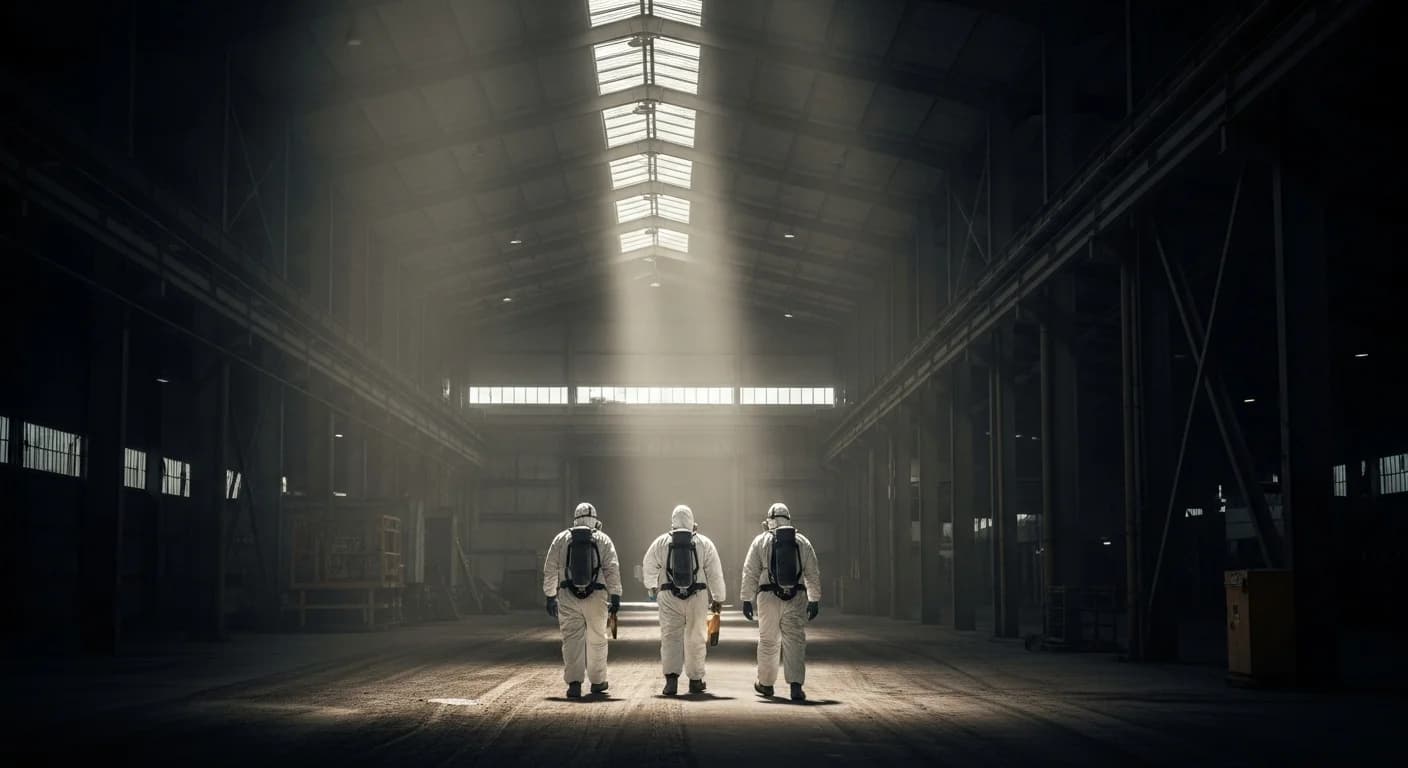
Asbestos, man-made mineral fibres and other hazardous substances call for particular care. Our experienced specialist personnel ensure that they are handled safely and in compliance with the law.
From permit planning through site logistics to the recovery rate: we coordinate all trades from a single source and supply complete supporting documentation for authorities and clients.
From disassembly to proper disposal — everything from a single source.
Experience from a wide range of industrial sectors.
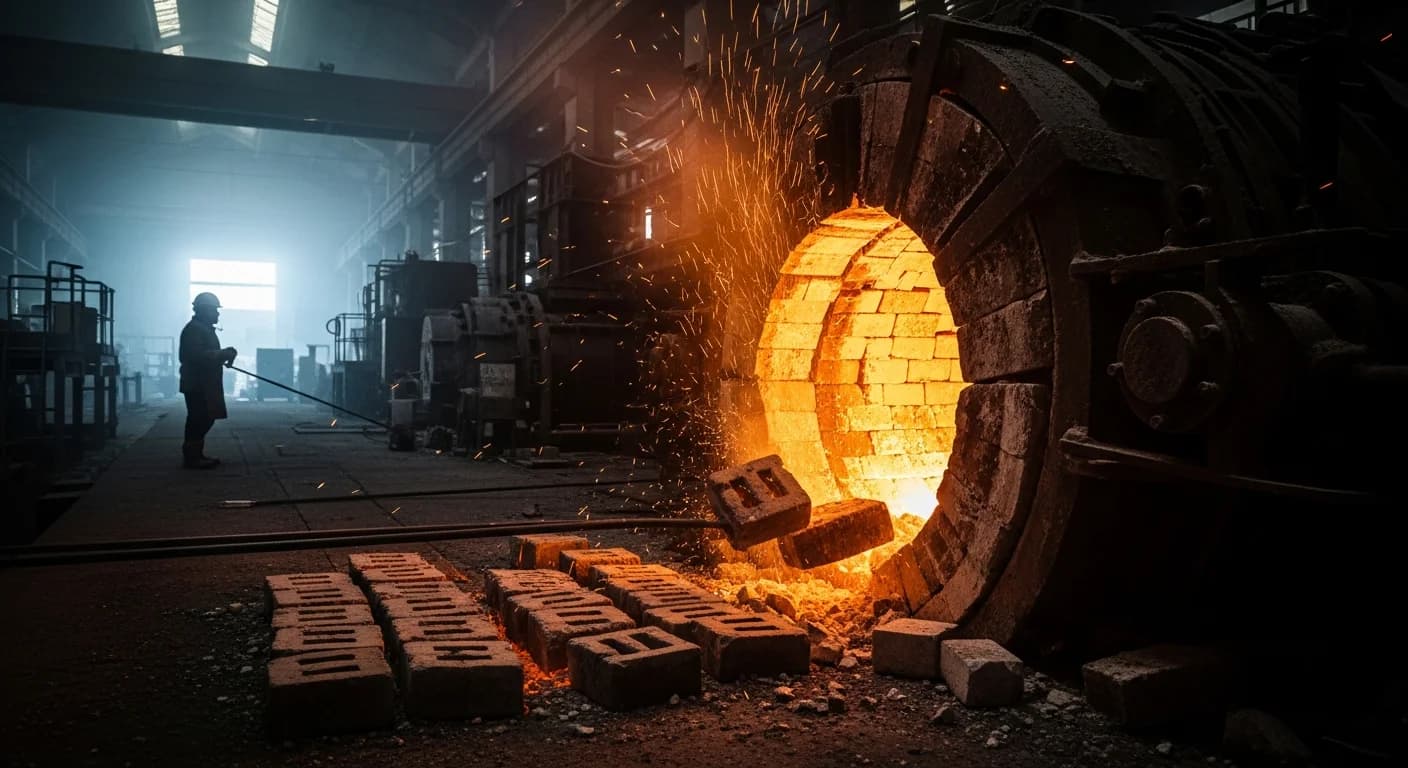
Dismantling of blast furnaces, electric arc furnaces, ladle furnaces and refractory-lined transport vessels, taking account of their particular load-bearing structures.
Disassembly and disposal of reactors, crackers, distillation columns and heat-resistant insulated pipework systems, with particular attention to contamination risks.
Dismantling of hardening shops and heat treatment plants, paint curing ovens and industrial dryers in vehicle plants — often during ongoing production.
Demolition of glass tanks, tunnel kilns and chamber kilns with high-performance refractory linings, plus the safe handling of mineral fibre insulation.
Dismantling of rotary kilns, clinker coolers, calcination plants and grinding mills — including disassembly of the steel shells and disposal of chromate-bearing linings.
Disassembly of boiler plants, afterburner chambers, flue gas ducts and heat-insulated pipe systems in combined heat and power plants and industrial power stations.
Structured, transparent and on schedule — this is how we work.
On-site inspection, review of the existing as-built documentation, hazard register for pollutants and hazardous substances, photographic documentation of all relevant parts of the plant.
Preparation of the dismantling concept with the demolition sequence, risk assessment and disposal plan. Obtaining the necessary official permits under BImSchG, KrWG and, where applicable, the Federal Water Act.
Professional removal and disposal of asbestos, MMMF, PAH-bearing materials and other hazardous substances by trained specialist personnel in accordance with the applicable TRGS requirements.
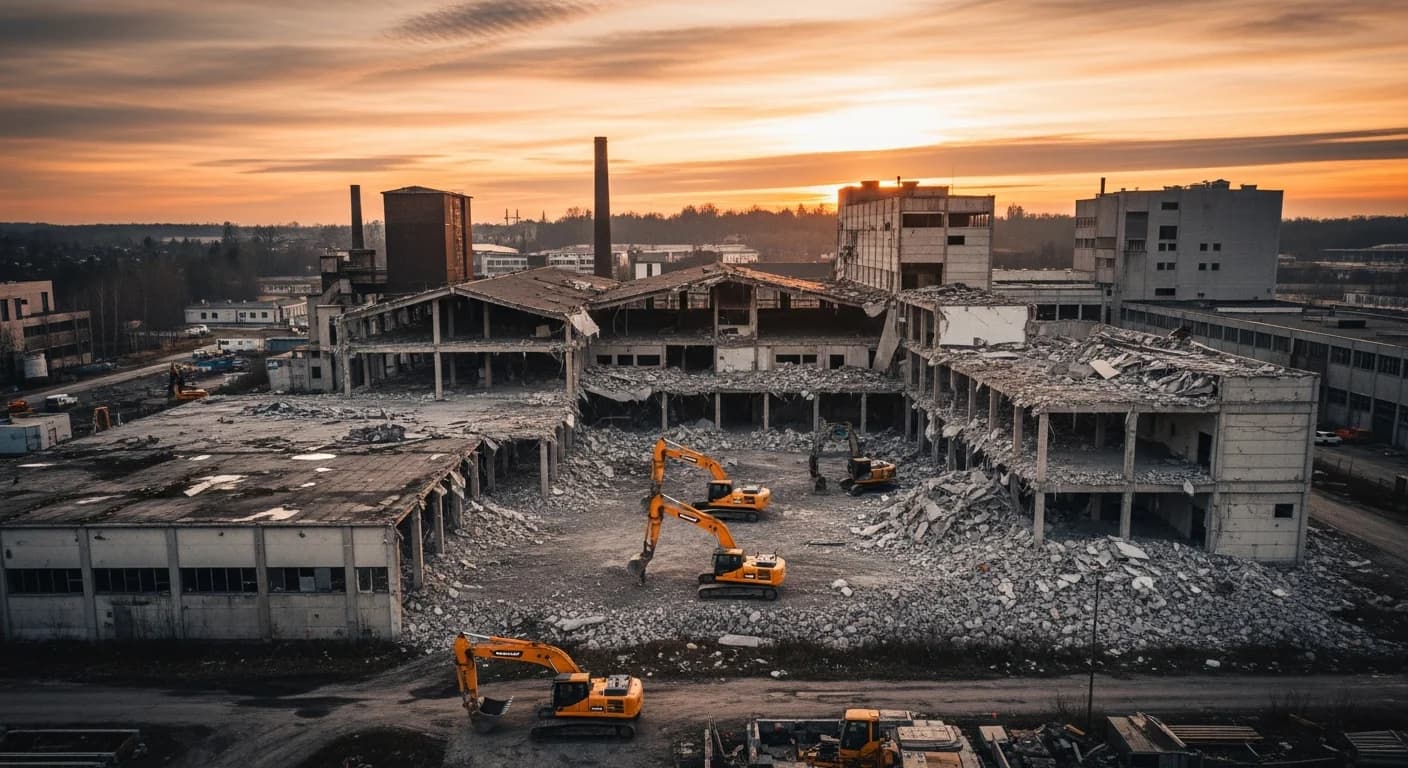
Controlled demolition of the plant in a defined sequence — mechanical, thermal or manual depending on the structure. Continuous documentation and adjustment in the event of unforeseen findings.
Fraction-by-fraction separation and classification of all materials. Maximum recovery rate through targeted pre-sorting; complete disposal records under NachwV for every waste type.
Final documentation with photographic records, mass balances, disposal certificates and a handover protocol. On request, coordination with a soil surveyor for subsequent development.
Typical project duration: 3–12 months depending on scope