Wird geladen...
Wird geladen...
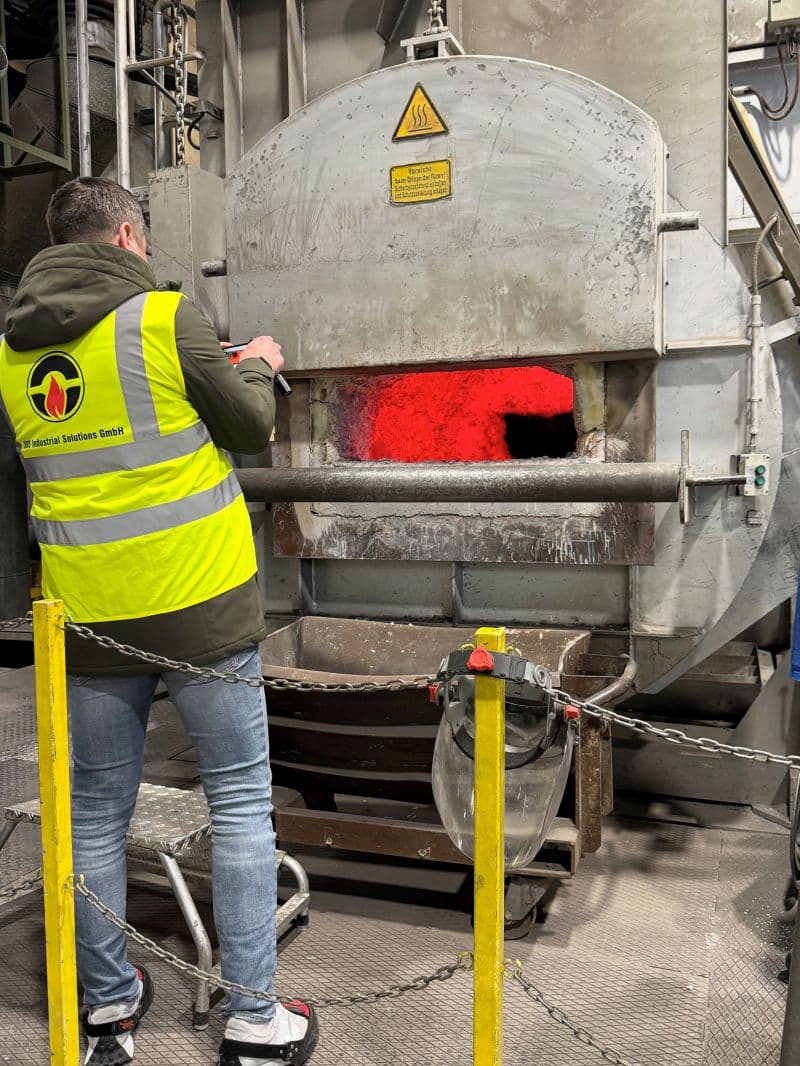
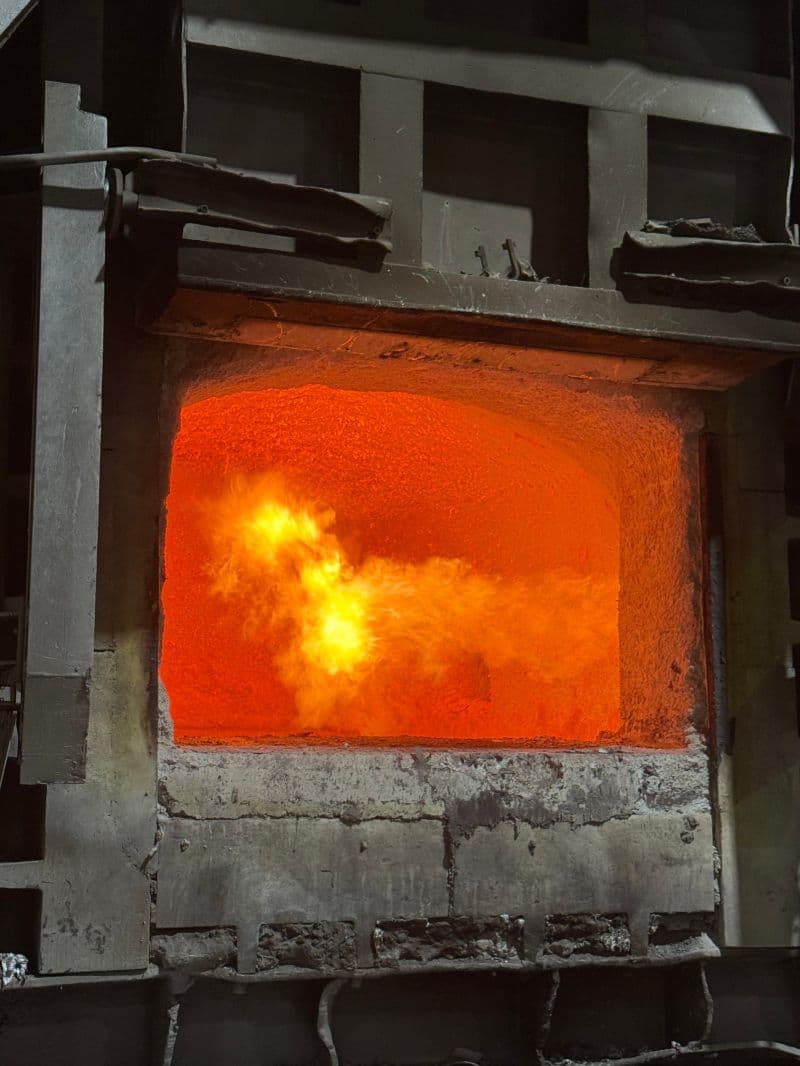
Care spraying carried out in good time can extend the service life of a refractory lining by a whole campaign. When shotcrete pays off, how it works and what matters in its execution.
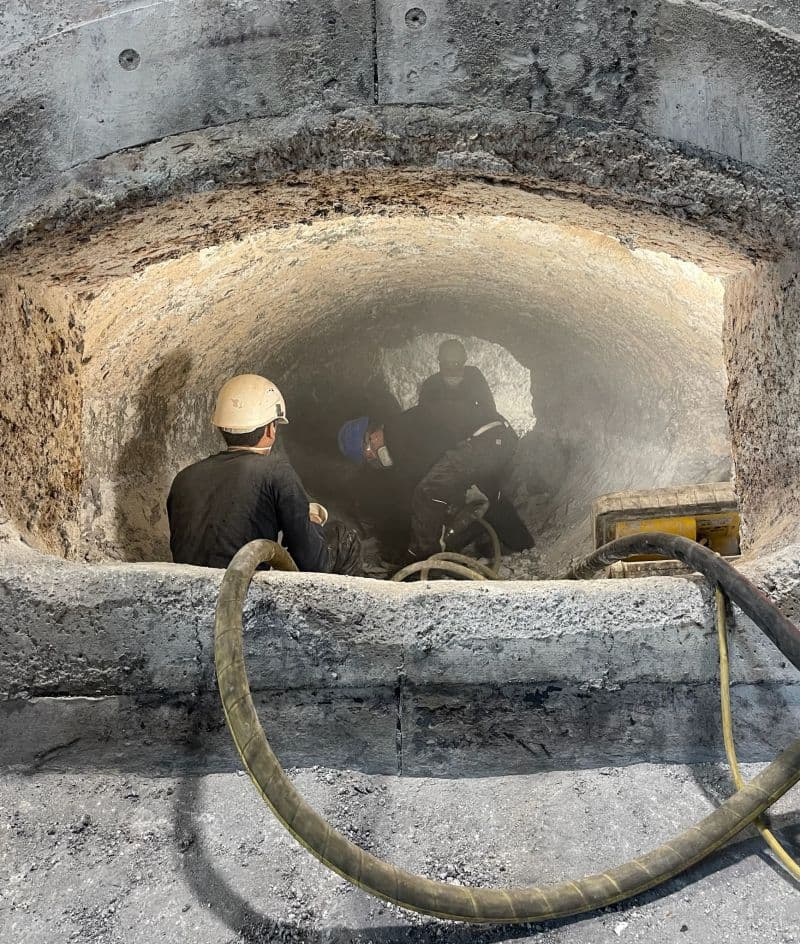
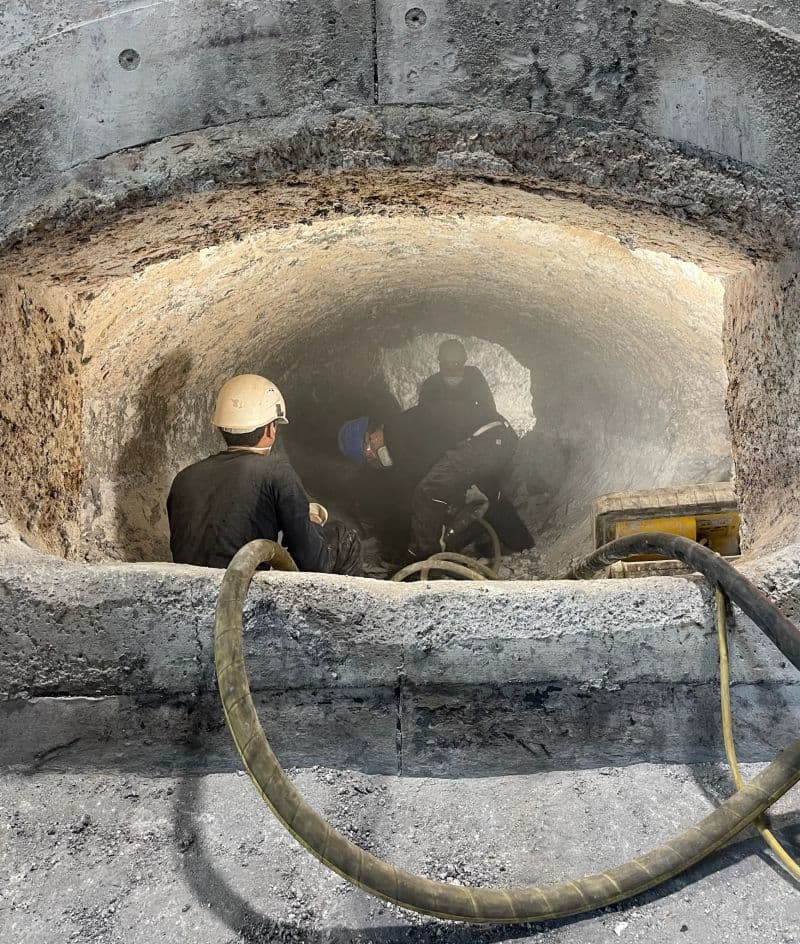
Care spraying, also known as gunning or shotcrete, is a process for applying refractory material to worn lining surfaces by means of compressed air. Unlike a complete relining, it does not renew the whole lining but applies material specifically to the worn areas. The method is considerably faster and more economical than a complete replacement and in many cases can be carried out during planned maintenance shutdowns without significantly affecting the production schedule.
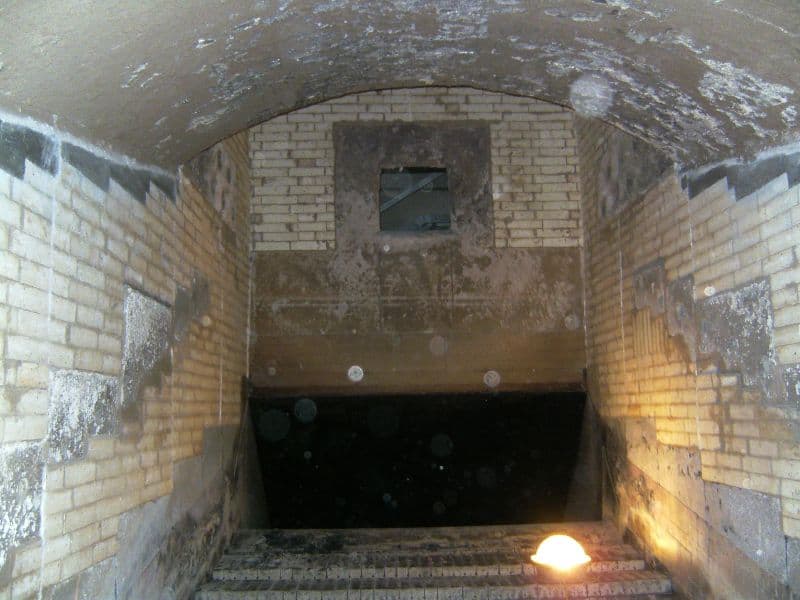
The timing of care spraying largely decides how successful it is. If it is sprayed too early, the economic benefit is small, because the remaining service life of the original material would still have been sufficient. If it is sprayed too late, the spray material can no longer bond reliably to the damaged substrate. The optimum moment is usually when 40 to 60 per cent of the lining has been consumed. At this point the wear is already clearly measurable, but the substrate surface still offers enough structure and integrity for the spray material to bond well.
The typical application thickness for care spraying is 5 to 7 centimetres. When executed properly, care spraying lasts 50 to 70 per cent of the service life of a comparable complete relining, at a fraction of the cost and downtime.
In practice, two fundamentally different processes are used. In the dry spraying process, the dry spray material is conveyed through a compressed-air hose to the nozzle tip, where it is mixed with water and thrown against the surface. The process allows high application rates and is particularly suitable for large areas and thick applications. The disadvantage is a higher rebound, that is, material that does not stick to the surface and ends up as waste.
In the wet spraying process, the material is mixed with water before it is conveyed to the nozzle. The result is a more uniform material quality with lower rebound, though with a lower application rate and greater demands on the conveying equipment. The choice of process depends on accessibility, the desired application thickness, the type of material and the project-specific boundary conditions.
At SBS Refractory Service we carry out care spraying with our own experienced specialists and state-of-the-art conveying equipment. Our teams are familiar with the specific requirements of different furnace types and can build up an even, firmly bonded sprayed layer even in confined conditions. The combination of regular damage analysis and targeted care spraying is one of the most effective strategies for maximising plant availability while minimising refractory costs.
Whether complete relining, repair or emergency — free initial consultation and a fast response.