Wird geladen...
Wird geladen...
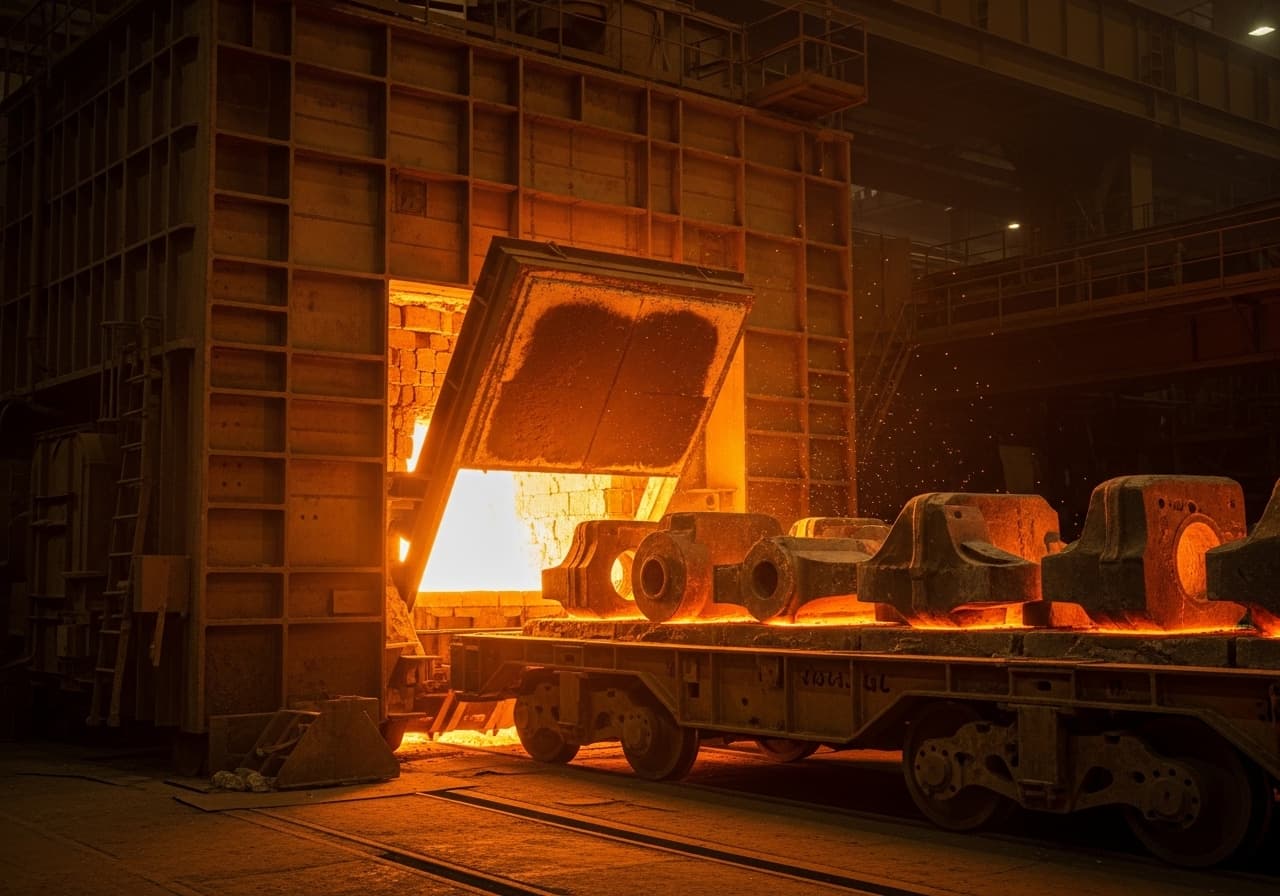
Refractory lining of bogie hearth furnaces for large and heavy workpieces.
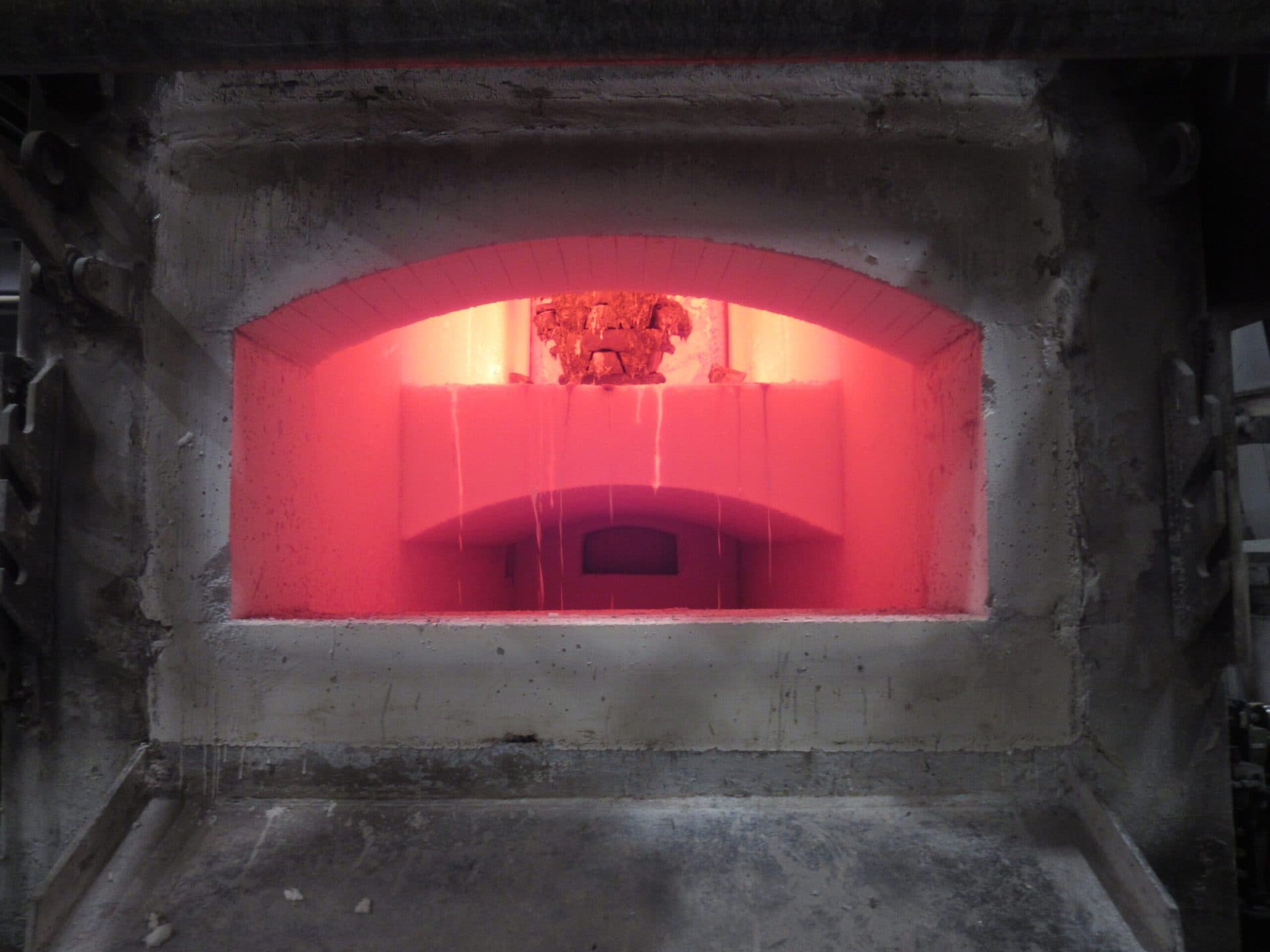
The bogie hearth furnace is one of the most capable batch furnaces in industrial heat treatment and is the preferred solution for the thermal treatment of large and heavy workpieces. Its extendable bogie hearth permits convenient charging and discharging outside the hot furnace chamber — a decisive advantage for processing large components, welded frames and heavy forged parts. SBS Refractory Service specialises in refractory construction for bogie hearth furnaces of every size — from compact single-bogie furnaces to large plants with several bogies and furnace lengths of more than 20 metres. Our teams of experienced refractory installers have mastered the particular requirements of the coordinated lining of the furnace chamber and the bogie hearth and guarantee a precisely fitting execution with optimal tightness.
The refractory lining of a bogie hearth furnace presents particular challenges: the chamber and the bogie must function as an overall system — the seal between the two areas is decisive for energy efficiency and process quality. The bogie hearth itself is subject to enormous mechanical loading from the weight of the workpieces placed on it, while the chamber lining is loaded primarily thermally and by scale attack. Temperature fluctuations between 600 and 1,200°C generate thermal shock loading in both areas, which calls for careful material selection.
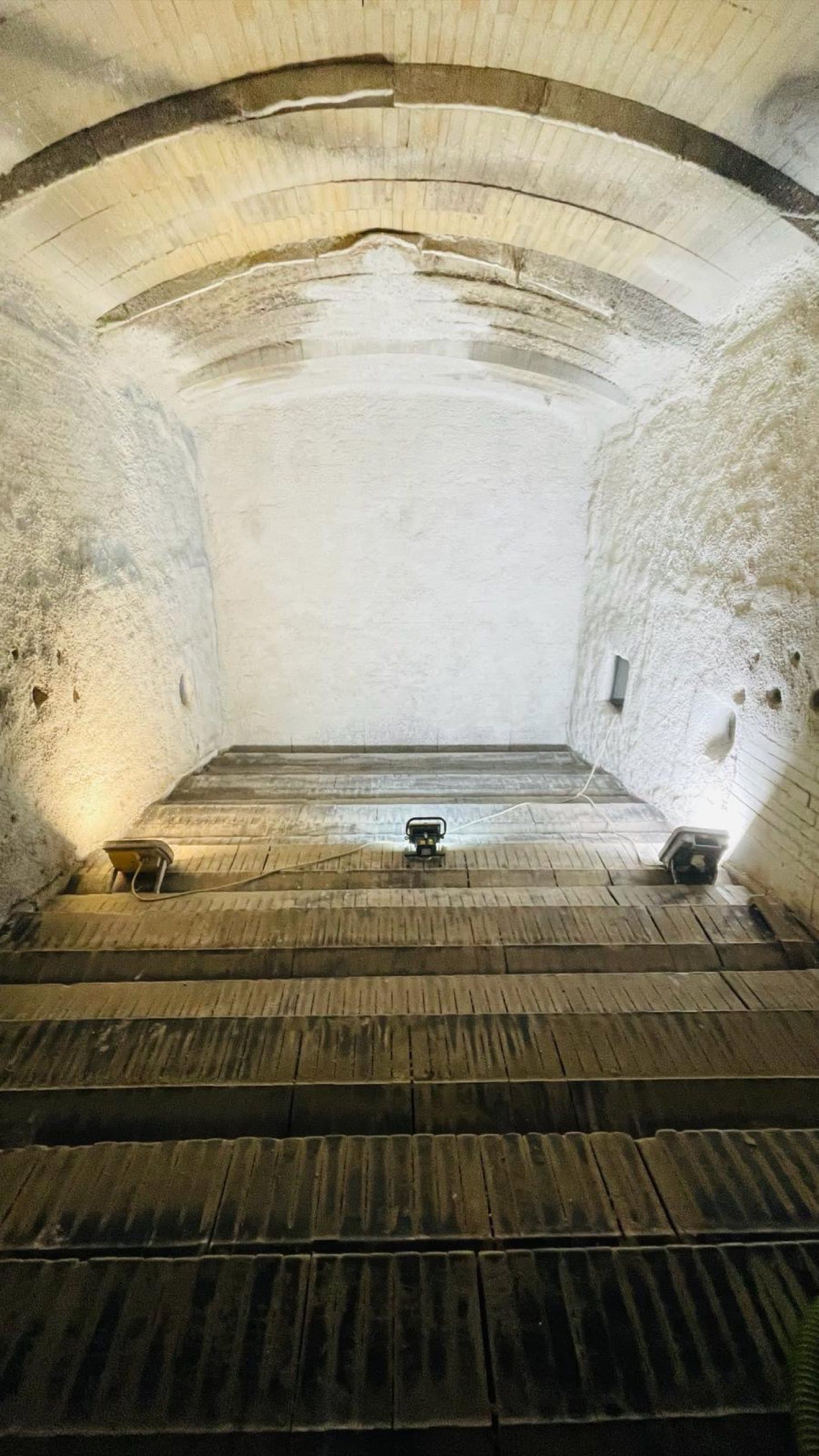
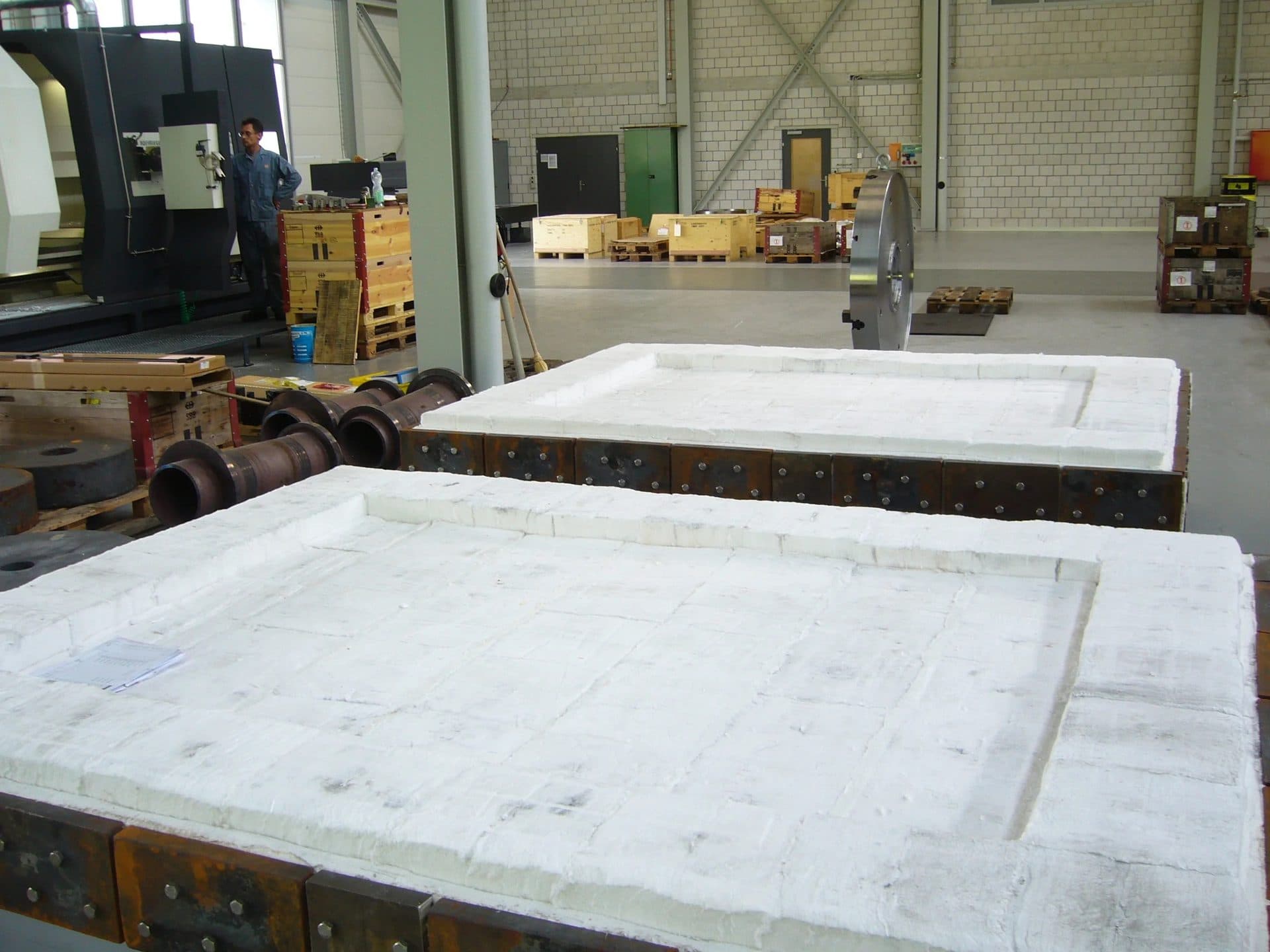
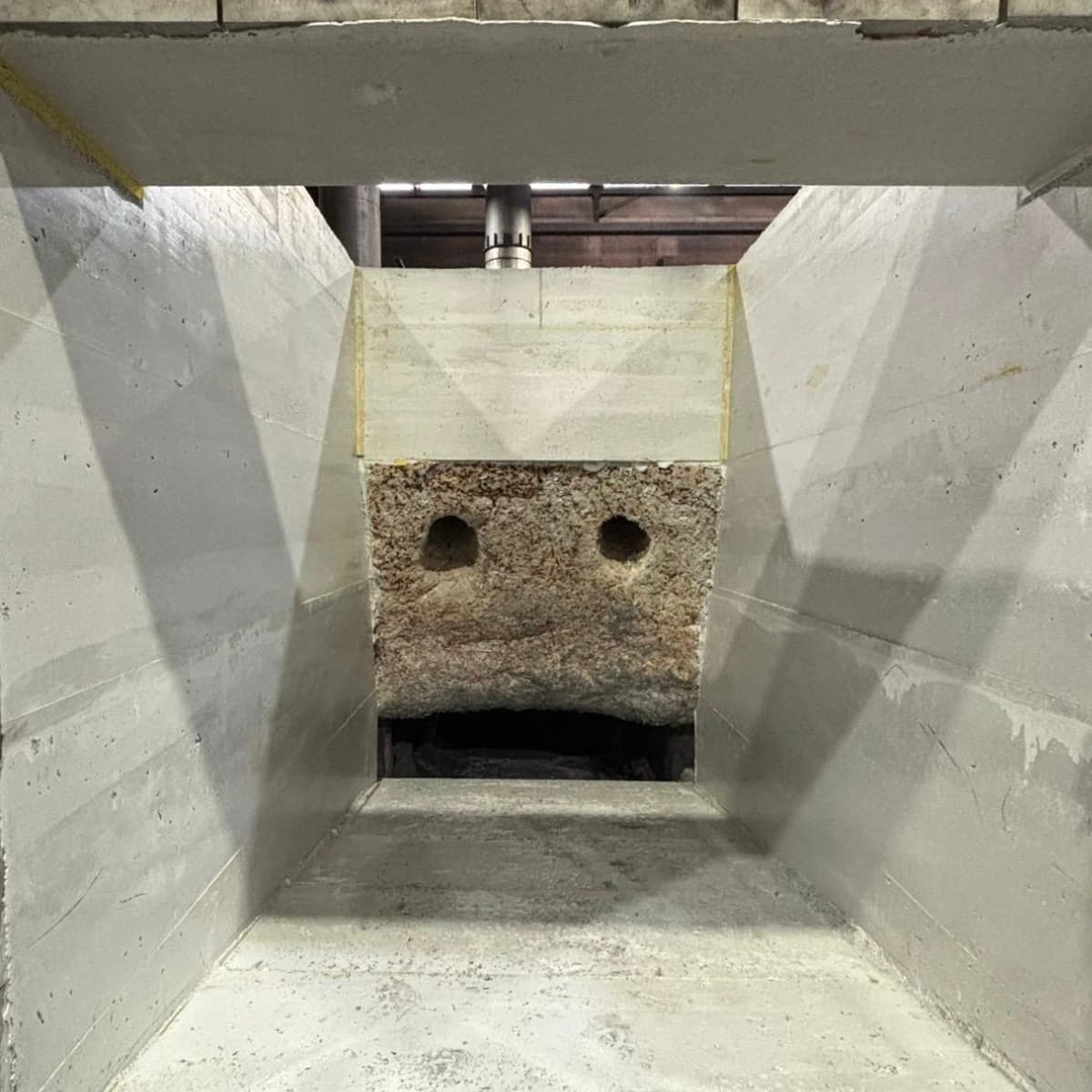
For every bogie hearth furnace, SBS develops an individual lining concept that takes account of the specific loading profiles of the chamber and the bogie. For the chamber lining we rely on energy-efficient ceramic fibre solutions that permit rapid heat-up cycles. The bogie hearth support surfaces are executed with high-strength fireclay or corundum bricks that reliably withstand the weight of heavy workpieces. The sand cup or ceramic fibre seal around the perimeter of the bogie is adapted precisely to the furnace geometry in order to minimise heat losses and the ingress of false air.
These loads determine the choice of material and the design of the refractory lining.
The seal at the transition between the furnace chamber and the extendable bogie hearth is the most critical point of the entire furnace system. Leaks lead to considerable energy losses, the ingress of false air and an uneven temperature distribution inside the furnace.
The support surface of the bogie hearth carries the entire weight of the charge — often steel components weighing several tonnes. Point loads when setting down with a crane or forklift can cause local break-outs and cracks in the refractory lining.
During the heat treatment of steel workpieces, scale (iron oxide) forms which falls onto the bogie hearth lining and attacks it chemically. The scale layer can eat into the brick surface and considerably shorten the service life.
The differing thermal expansion of the steel frame and the refractory lining leads to mechanical stresses with every heat-up cycle. Without sufficient expansion joints this can lead to cracks, distortion and leaks in the sealing area.
Every zone of your furnace places its own demands on temperature resistance, chemical resistance and mechanical load capacity. We select the optimum material combination.
Click on a material for details
Bogie hearth support surface
Chamber lining
Our services for this furnace type — from complete relining to ongoing maintenance.
Our structured process guarantees quality, on-time delivery and safety in every project.
Inspection of the chamber and bogie hearth lining
Coordinated repair of chamber and bogie
Renewal of the lining in both areas
Securing of the bogie travel area
Our refractory specialists carry out a systematic condition analysis of both furnace areas — the chamber and the bogie hearth are assessed separately. In the chamber we check the walls, roof and door area for cracks, spalling and insulation defects by means of visual inspection and thermography. On the bogie hearth we assess the condition of the support surface, the flatness of the hearth bricks and the wear of the sealing surfaces. Particular attention is paid to the seal around the perimeter of the bogie — this is what determines the energy efficiency of the entire furnace.
The planning phase covers the definition of the material concept for the chamber and the bogie as well as the coordination of the work sequences. On bogie hearth furnaces, scheduling is particularly important: the bogie can be run out and worked on separately while work is carried out on the chamber in parallel. We prepare a detailed construction schedule that synchronises both areas and minimises the total shutdown time. The sealing geometry is measured precisely and the appropriate sealing system is specified.
Execution is carried out in a coordinated manner on the chamber and the bogie hearth. In the chamber, worn wall and roof areas are renewed — depending on the concept with ceramic fibre modules or lightweight refractory bricks. On the bogie hearth, the hearth bricks and support surfaces are replaced completely or in part, with attention paid to exact flatness and sufficient expansion joints. The seal around the perimeter of the bogie is renewed and checked for accuracy of fit. After the bogie and chamber have been brought together, a controlled heat-up follows a defined drying curve.
Special safety requirements apply to work on the bogie hearth furnace. The bogie travel area is secured against unauthorised movement and the bogie is mechanically locked. When working inside the furnace chamber, the regulations for confined spaces are applied. All lifting gear and cranes used for material transport are checked before use. Documentation is seamless and comprises material certificates, installation records and a seal inspection report.
Over 500 successfully completed refractory construction projects in the DACH region and the Benelux countries.
Bogie hearth furnace
Everything you need to know about the Bogie hearth furnace
Whether complete relining, repair or emergency — free initial consultation and a fast response.