Wird geladen...
Wird geladen...
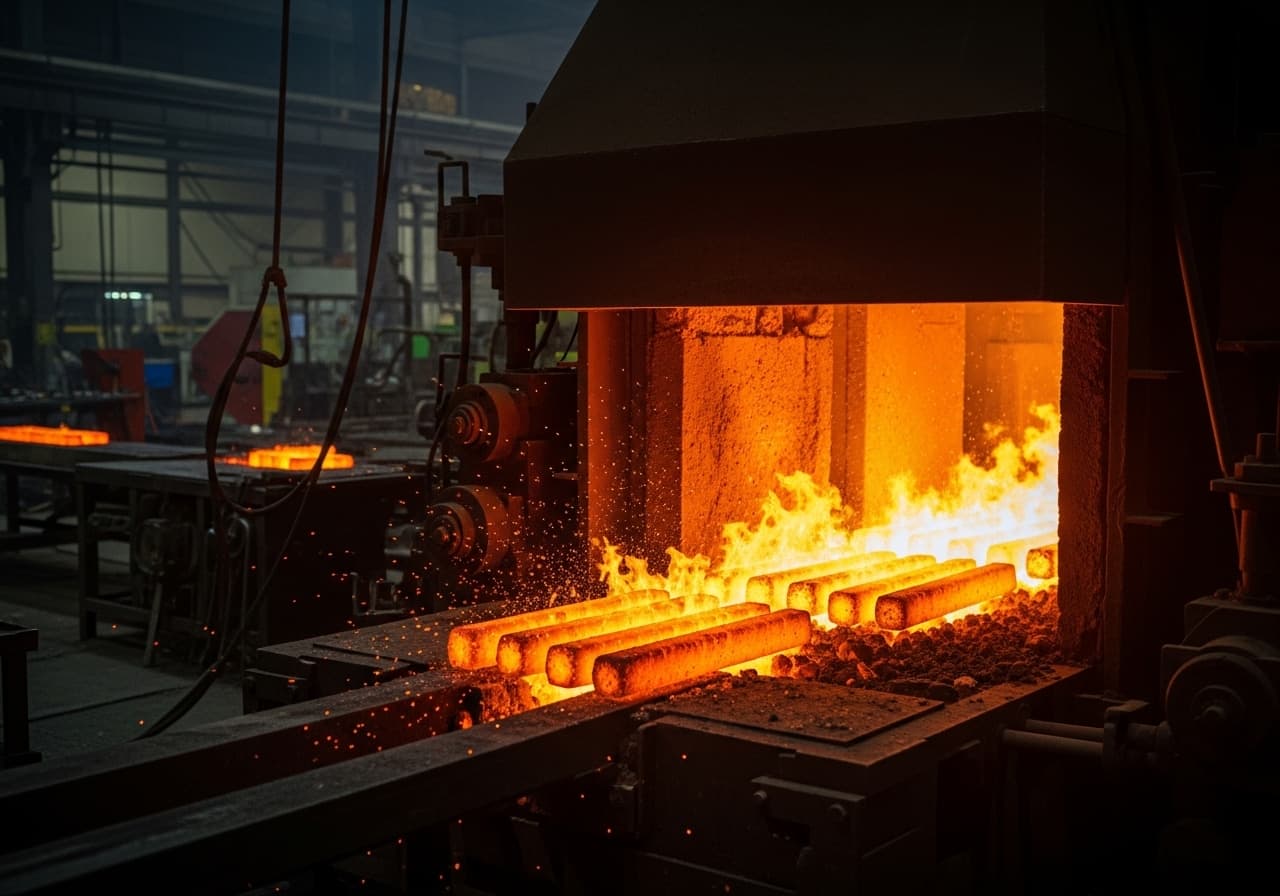
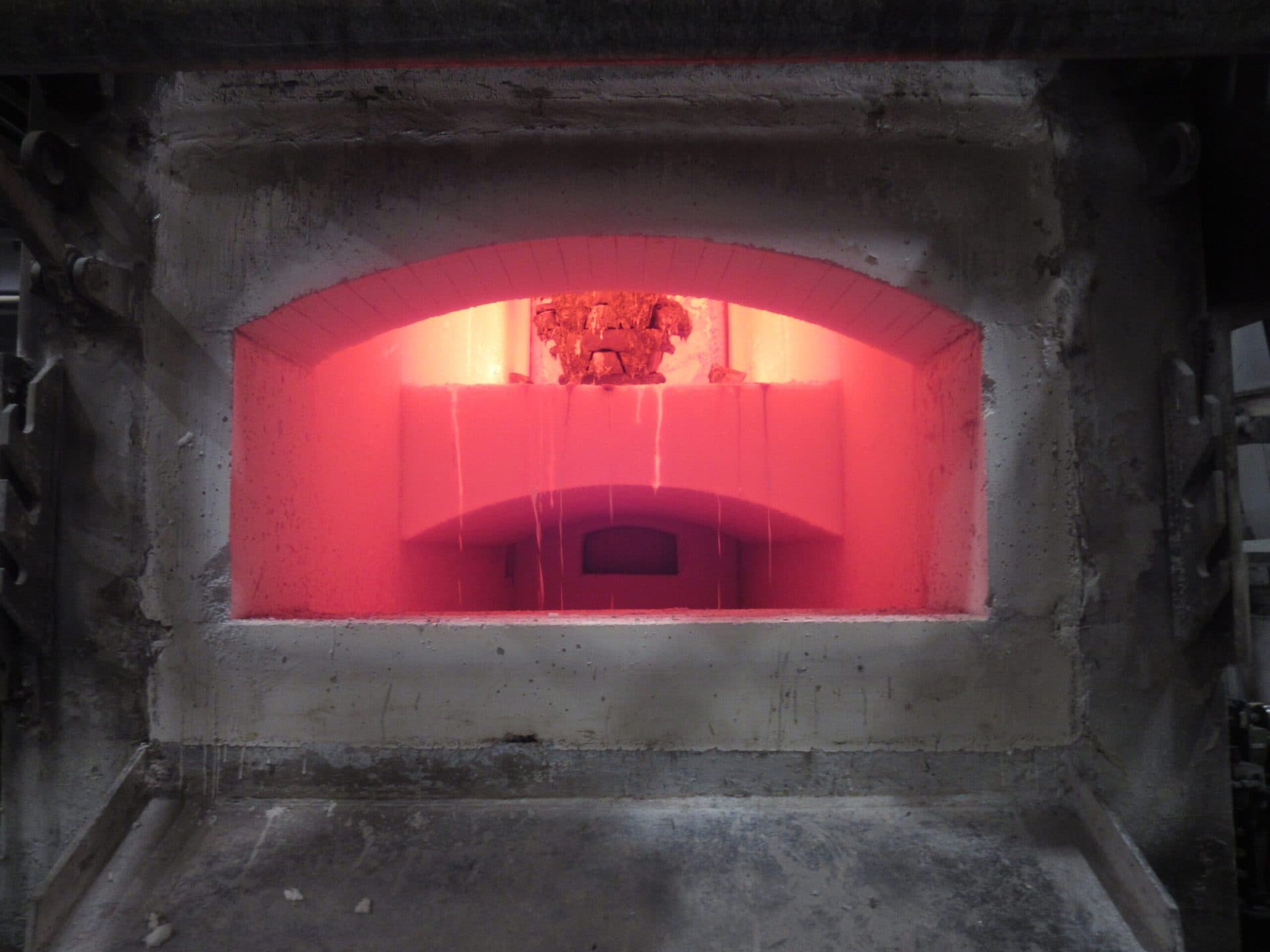
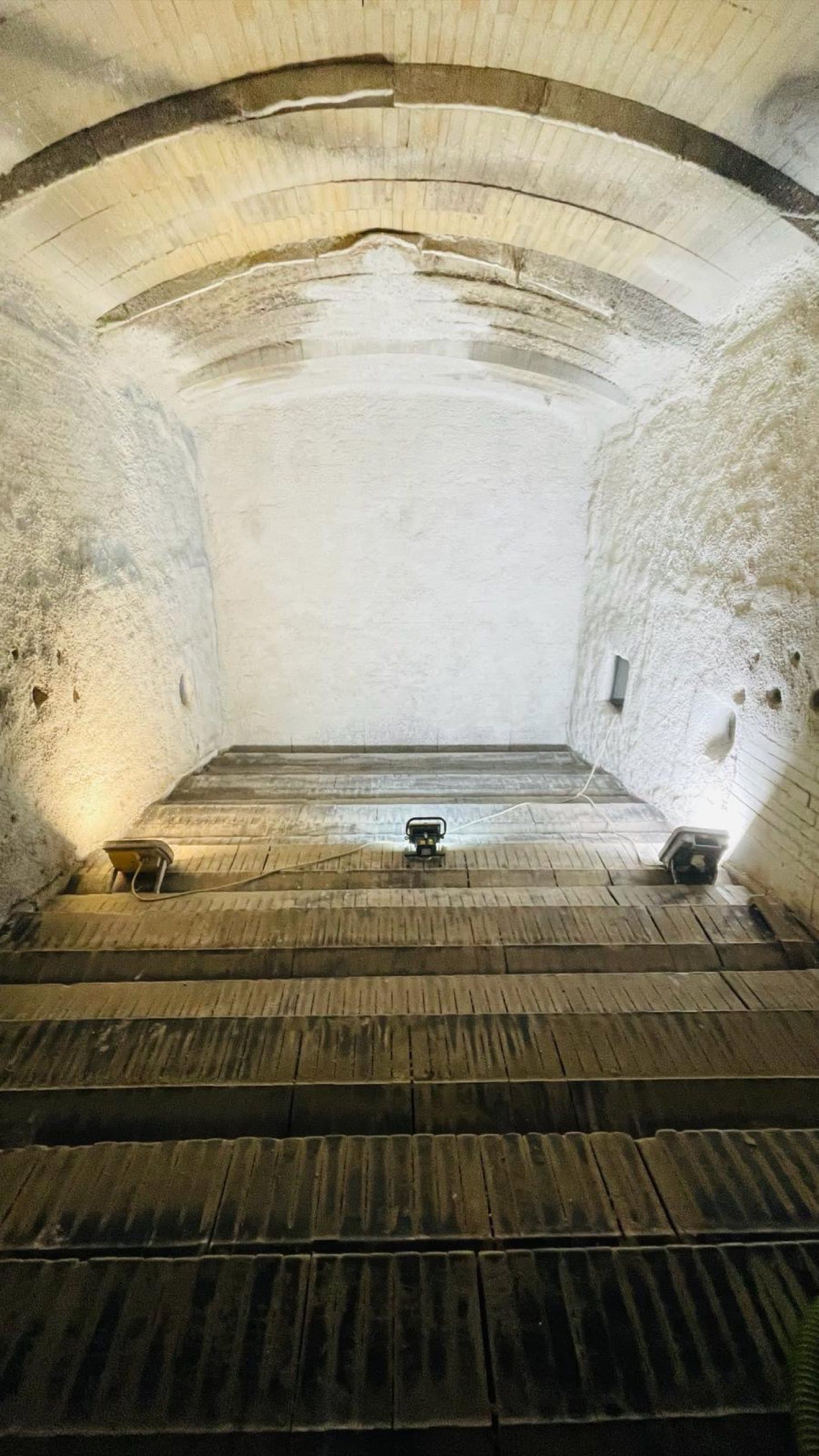
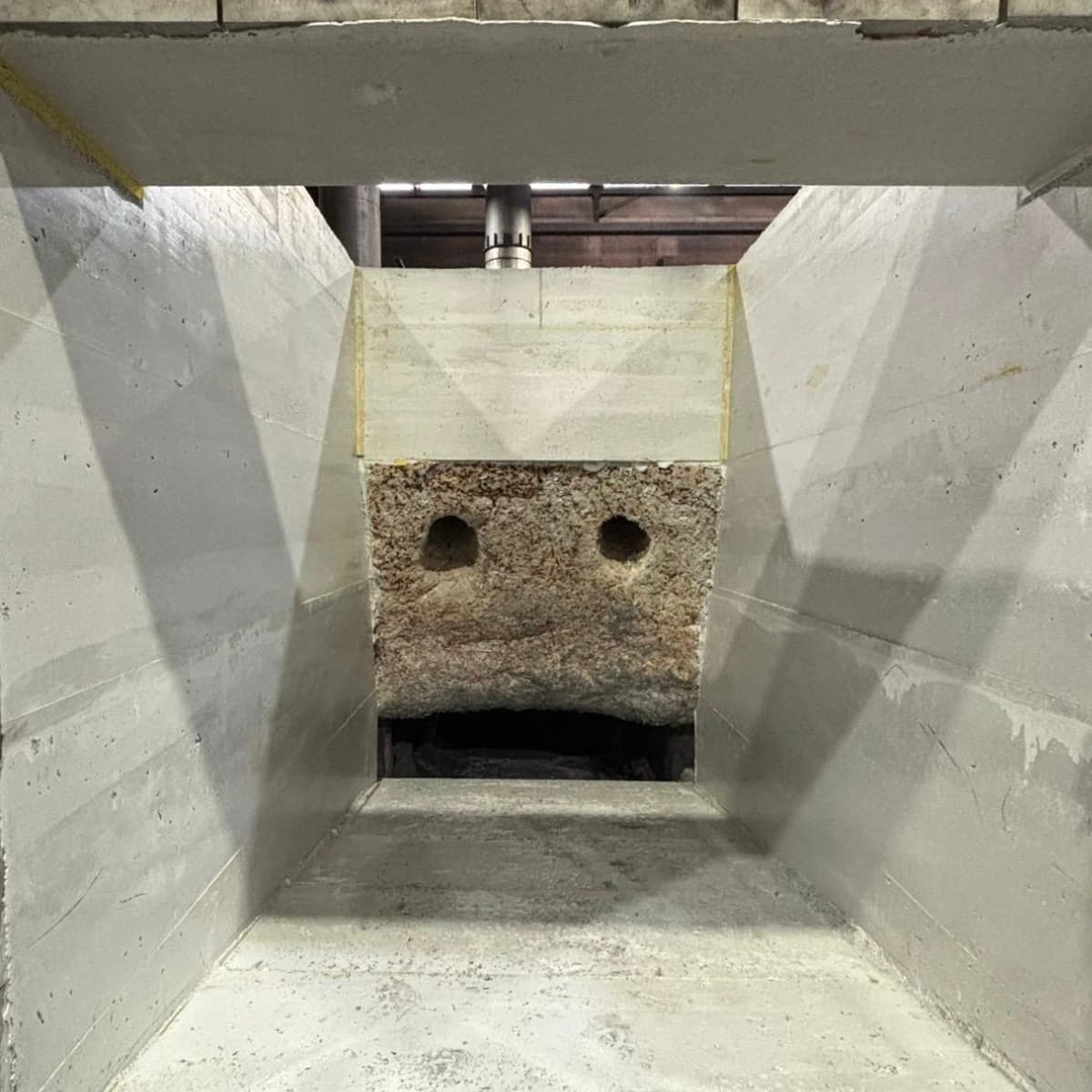
Refractory lining of forging furnaces for heating forged parts.
The forging furnace is one of the most heavily loaded industrial furnaces in the field of heat treatment. Its task is to heat steel blanks to forming temperature — typically between 900 and 1,300 °C — for subsequent drop forging or open-die forging. The refractory lining must not only withstand extreme temperatures, but also resist the massive mechanical loading caused by moving heavy forged parts in and out. SBS Refractory Service specialises in refractory construction for forging furnaces of every size and serves forging operations throughout Germany — from complete relining and partial repair to energy-related modernisation.
The particular challenge with the forging furnace lies in the combination of high temperature, heavy mechanical loading and aggressive scale attack. During the heating of steel blanks, iron oxide scale forms which falls onto the hearth plate and the lower wall areas and attacks the lining chemically. Charging and discharging with manipulators, tongs or forklifts generates impact loads that lead to local break-outs and cracking. In the burner area, hot spots and uneven temperature distributions occur that cause additional thermal shock stresses. For every furnace zone, SBS selects materials that are matched precisely to this combination of loads.
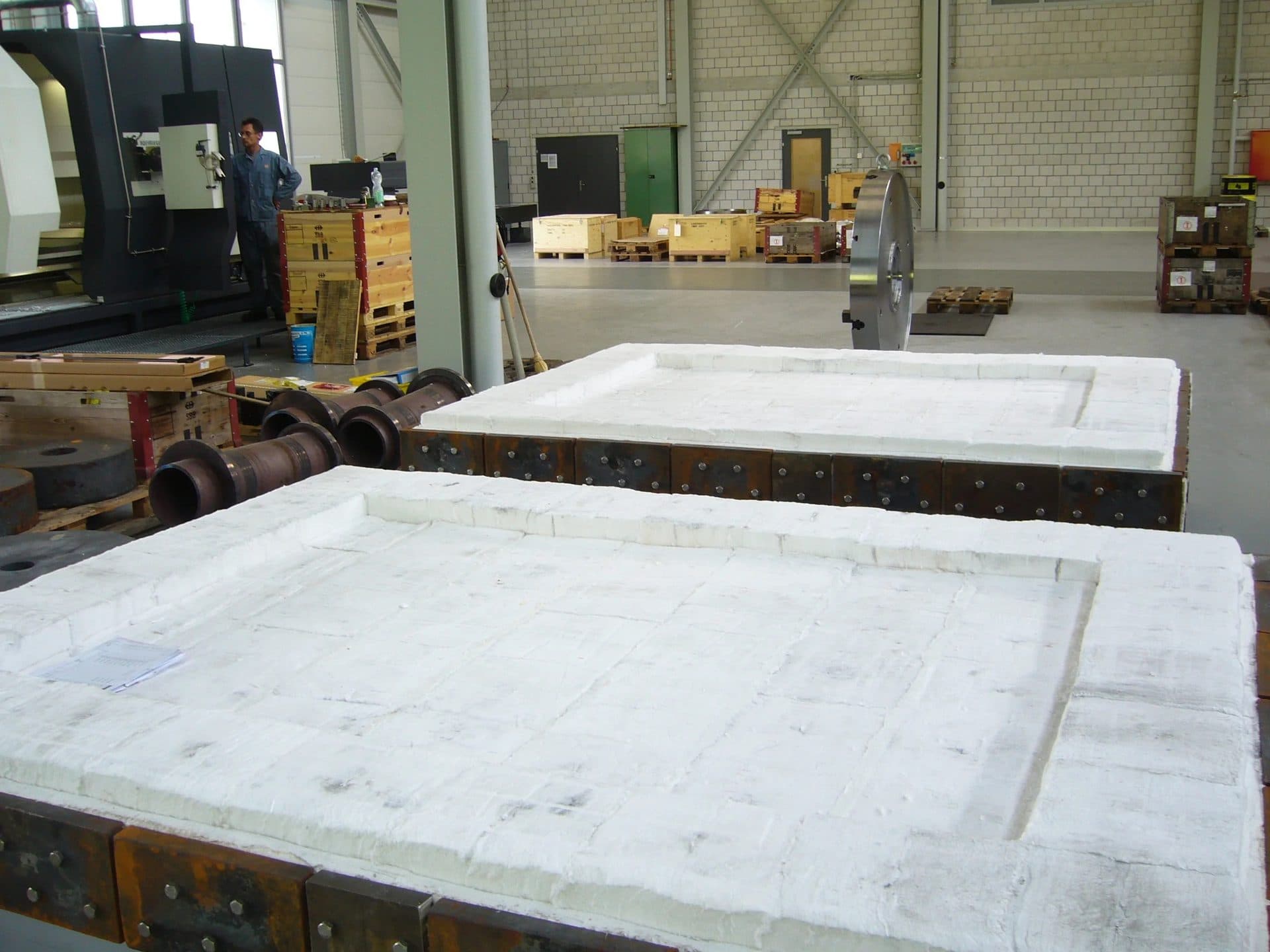
An economically optimised forging furnace lining not only reduces repair costs but, above all, lowers energy consumption and shortens heat-up times. By using modern ceramic fibre modules in the walls and roof instead of a conventional dense brick lining, the heat storage mass is significantly reduced — heat-up times fall by up to 30 per cent and gas consumption per charge decreases noticeably. For the heavily loaded hearth plate, SBS relies on high-alumina or chrome-corundum bricks with maximum abrasion and scale resistance. On completion of the lining we document all materials and procedures used and remain available at any time for questions about furnace operation.
These loads determine the choice of material and the design of the refractory lining.
During the heating of steel blanks, iron oxide scale is formed which is deposited on the hearth plate and attacks the refractory lining chemically. At high temperatures, iron oxide slag forms low-melting phases that infiltrate the brick structure and lead to accelerated wear.
Moving heavy forging blanks in and out with manipulators, tongs or forklifts generates impact loads on the hearth plate and the door area. Local break-outs, edge spalling and cracking are the result. High-strength materials and sacrificial layers protect the actual lining.
In the burner area, locally much higher temperatures occur than in the other furnace zones. These hot spots generate thermal shock stresses in the lining and can lead to premature material failure. An optimised burner arrangement and heat-resistant materials in the burner surroundings reduce this problem.
Conventional dense brick linings store large amounts of heat and considerably extend heat-up times. In multi-shift operation with frequent charge cycles, energy consumption is a significant cost factor. Conversion to ceramic fibre insulation lowers gas consumption by up to 30 per cent.
Every zone of your furnace places its own demands on temperature resistance, chemical resistance and mechanical load capacity. We select the optimum material combination.
Click on a material for details
Heavily loaded hearth plate
Wall and roof insulation
Our services for this furnace type — from complete relining to ongoing maintenance.
Our structured process guarantees quality, on-time delivery and safety in every project.
Condition assessment after the furnace campaign
Material selection for mechanical loading
Renewal of the lining
Protection during charging and discharging
Our refractory specialists carry out a systematic condition assessment of the forging furnace. The hearth plate is checked for scale infiltration, abrasion and cracking, and the wall lining for thermal shock damage and hot spot erosion. In the burner area, the condition of the refractory burner blocks and the transition zones is inspected. The door lining and the seals are assessed for wear and energy losses. We prepare a photographically documented inspection report with a concrete recommendation for action.
During the planning phase, the material concept is matched to the specific loads on your forging furnace. For the hearth plate, high-alumina or chrome-corundum bricks with maximum scale resistance and compressive strength are selected. For the walls and roof we examine conversion to ceramic fibre modules to save energy. The construction schedule is coordinated closely with your forging planning in order to minimise the interruption to production. All materials are specified in advance and checked for availability.
Execution begins with the break-out of the worn lining — often mechanically on the hearth plate, by hand on the walls and roof. After thorough cleaning, the insulating layers are installed first, followed by the wear lining. The hearth plate is set with high-strength bricks on a mortar bed, and the wall and roof insulation is mounted as ceramic fibre modules with stainless steel anchoring. In the burner area, special bricks with increased thermal shock resistance are used. Finally, a controlled heat-up follows a defined drying curve.
Safety during the lining of a forging furnace covers protection when working in hot areas, safeguarding against falling bricks and mortar residues, and dust protection during break-out. Particular attention is paid to securing the charging and discharging area, since heavy machinery and cranes are in use here. All employees are instructed in the site-specific safety regulations before deployment. SBS works in accordance with the SCC guidelines and ensures compliance with all applicable occupational safety provisions.
Over 500 successfully completed refractory construction projects in the DACH region and the Benelux countries.
Forging furnace
Everything you need to know about the Forging furnace
Whether complete relining, repair or emergency — free initial consultation and a fast response.