Wird geladen...
Wird geladen...
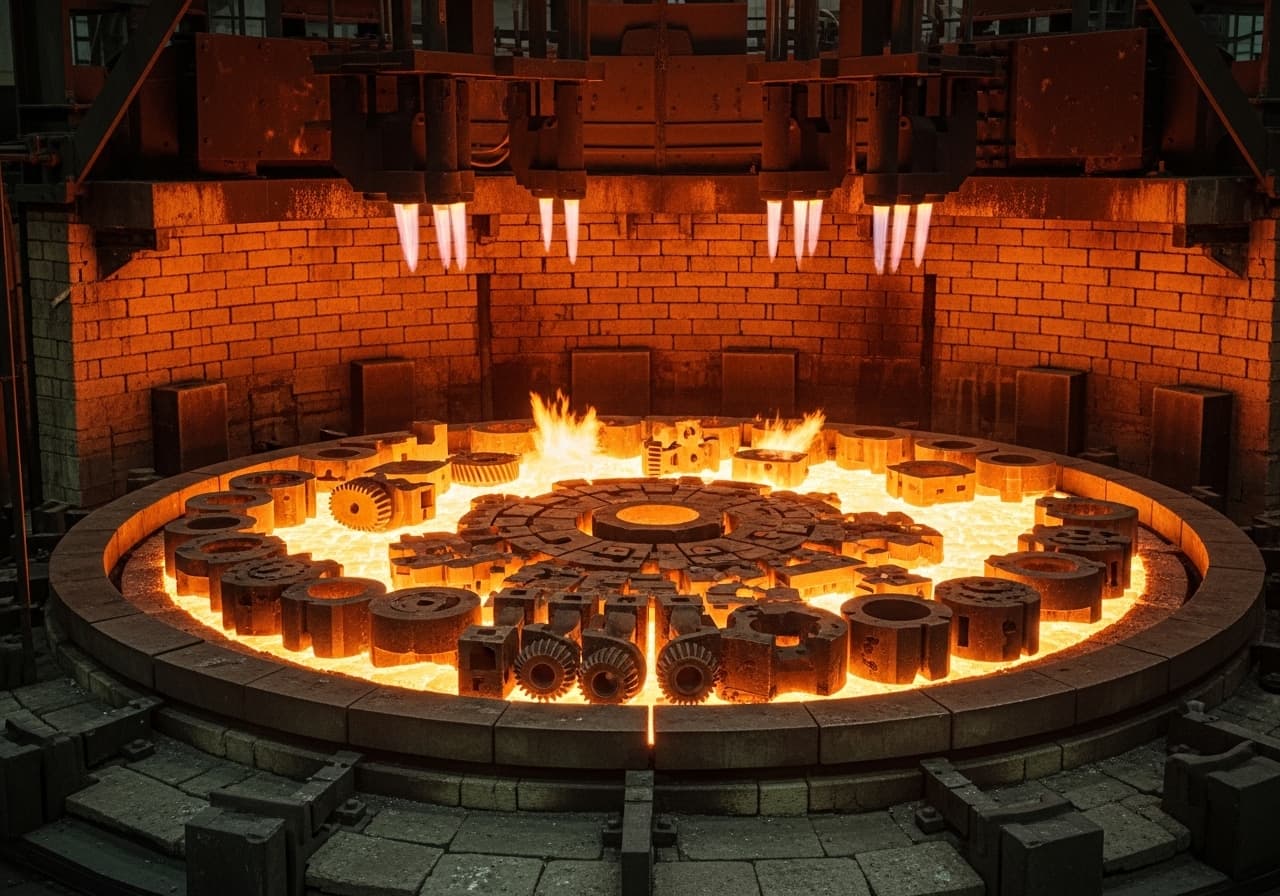
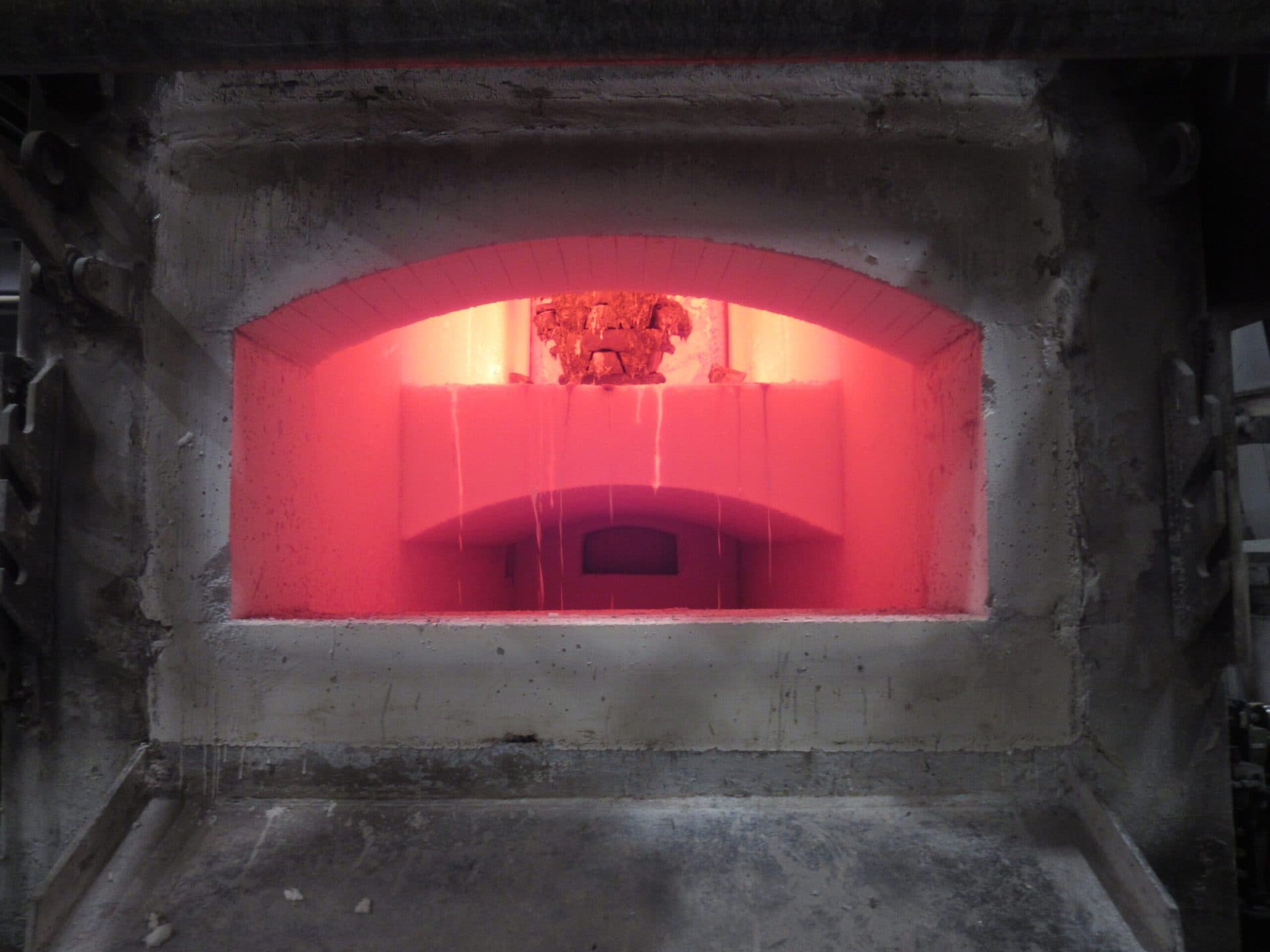
Refractory lining of rotary hearth furnaces for the heat treatment of forged parts.
The rotary hearth furnace is a versatile heat treatment unit used in the forging industry and in heat treatment shops for the uniform heating of forged parts, blanks, rings and other workpieces. SBS Refractory Service is your experienced partner for refractory construction on rotary hearth furnaces of every size. Our specialists know the particular requirements of this furnace type — from the rotating hearth floor to the fixed furnace hood — and supply tailor-made refractory solutions that maximise service life and energy efficiency.
The special design of the rotary hearth furnace — a rotating hearth beneath a fixed hood — presents refractory construction with specific challenges. The rotary hearth floor is exposed to permanent mechanical loading from the stock placed on it and to thermal cycling during loading and unloading. The seal between the rotating hearth and the fixed hood is a critical component that is subjected to the highest thermal and mechanical loading under permanent relative movement. SBS relies on proven material concepts and sealing systems that reliably withstand these requirements.
Rotary hearth furnaces are distinguished by their flexibility in terms of cycle times and workpiece geometries — but these advantages can only be fully exploited with an intact refractory lining. A worn hearth plate leads to uneven heating and losses in quality, while damaged hood insulation causes increased energy consumption. SBS offers separate repair strategies for the hearth and the hood, so that refurbishment can be carried out in a targeted and economical manner. All work is carried out with seamless documentation.
These loads determine the choice of material and the design of the refractory lining.
Placing and removing heavy workpieces places a heavy mechanical load on the hearth floor. Impact loading and abrasion from rough workpiece surfaces lead to local loss of material and unevenness that impairs heating quality.
The seal at the interface between the rotating hearth and the fixed hood is subject to permanent relative movement and thermal expansion. Wear leads to the ingress of false air and to energy losses, which is why a check every 6–12 months is recommended.
Opening the loading and unloading doors causes local temperature drops of several hundred degrees. These cyclic thermal shocks place a particularly heavy load on the lining in the area of the openings and can lead to cracking.
During the heating of metallic workpieces, scale forms which is deposited on the hearth floor and attacks the refractory mix chemically. Regular removal of the scale layer is necessary in order to maintain the hearth plate surface and the heating quality.
Every zone of your furnace places its own demands on temperature resistance, chemical resistance and mechanical load capacity. We select the optimum material combination.
Click on a material for details
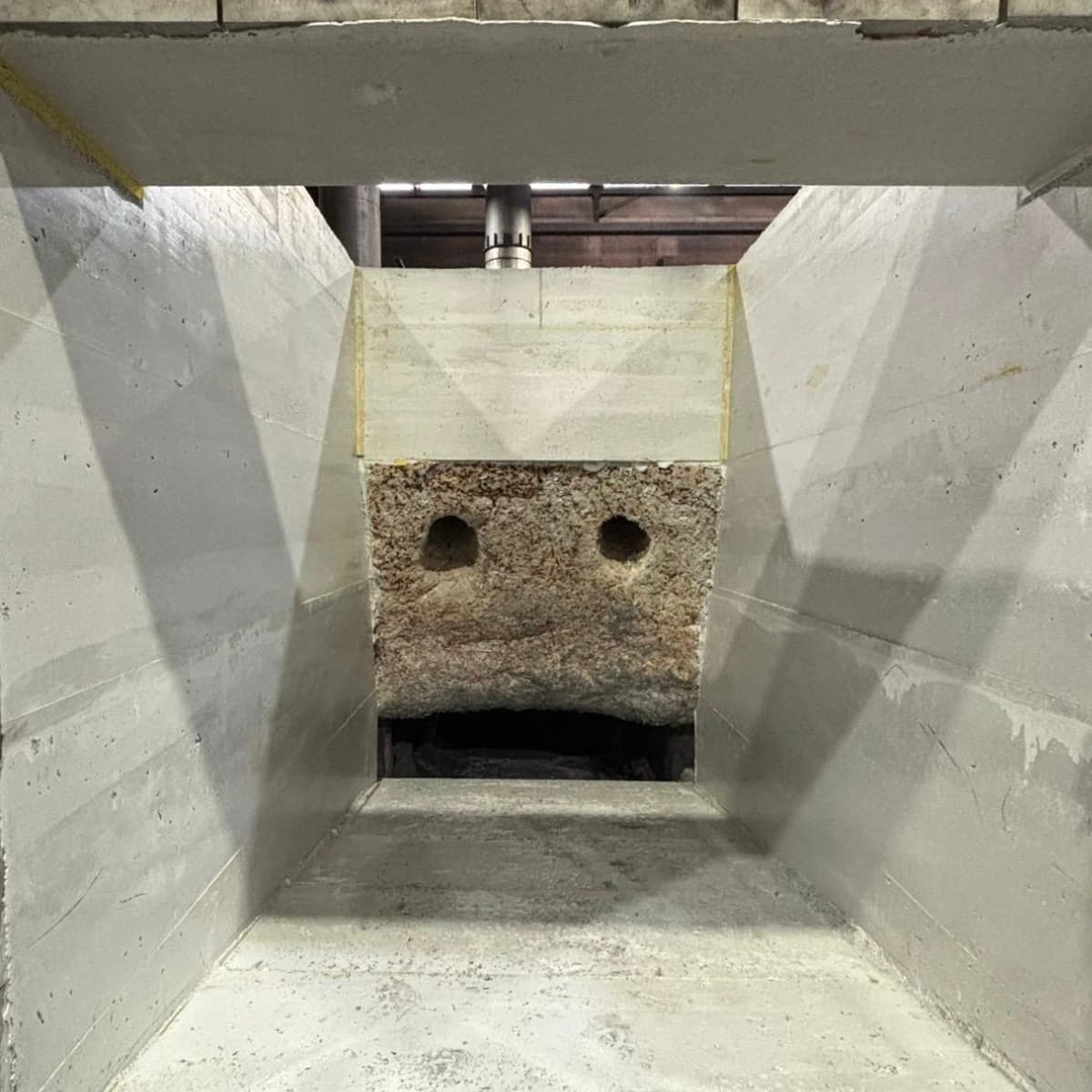
Rotary hearth floor
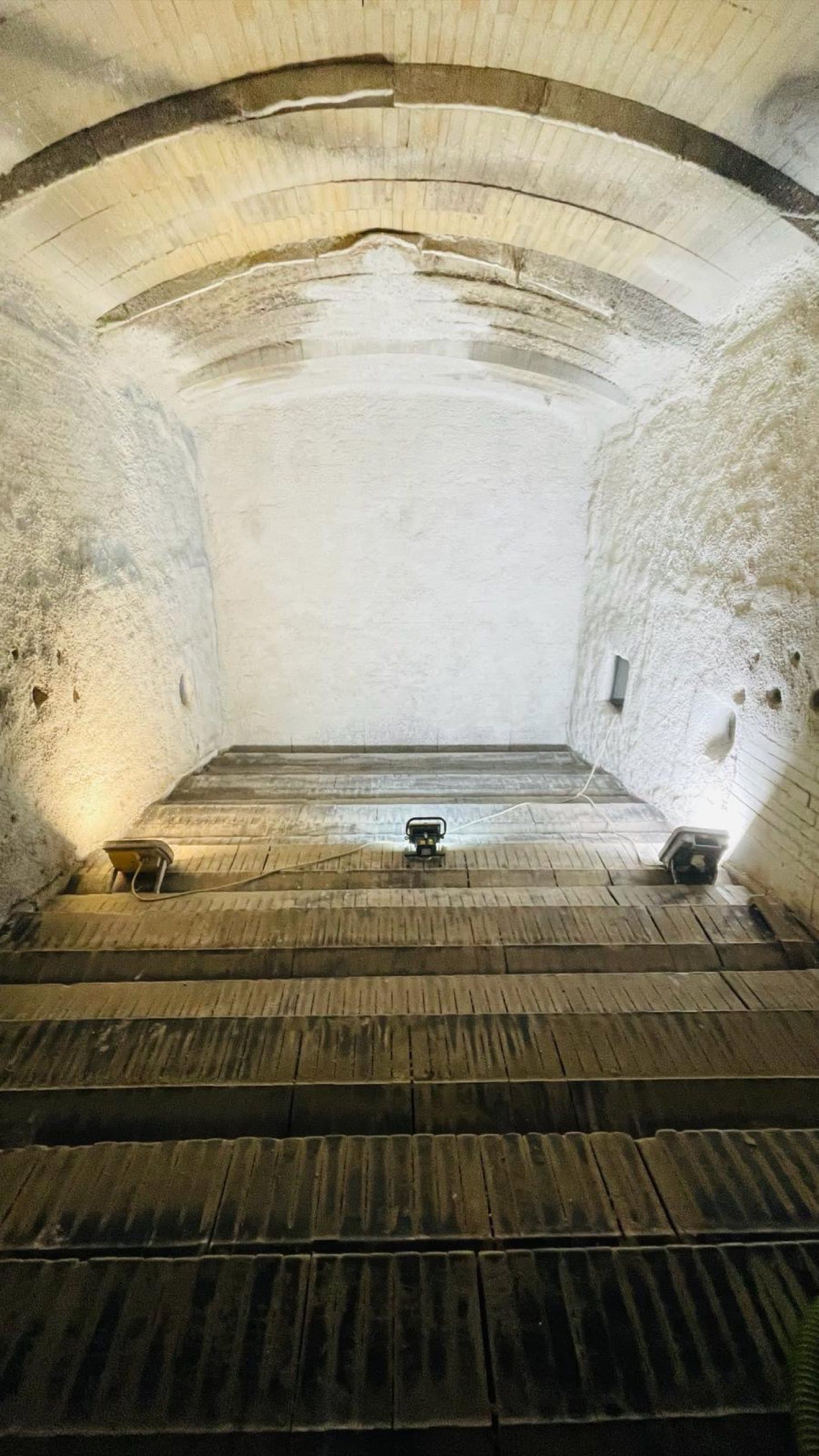
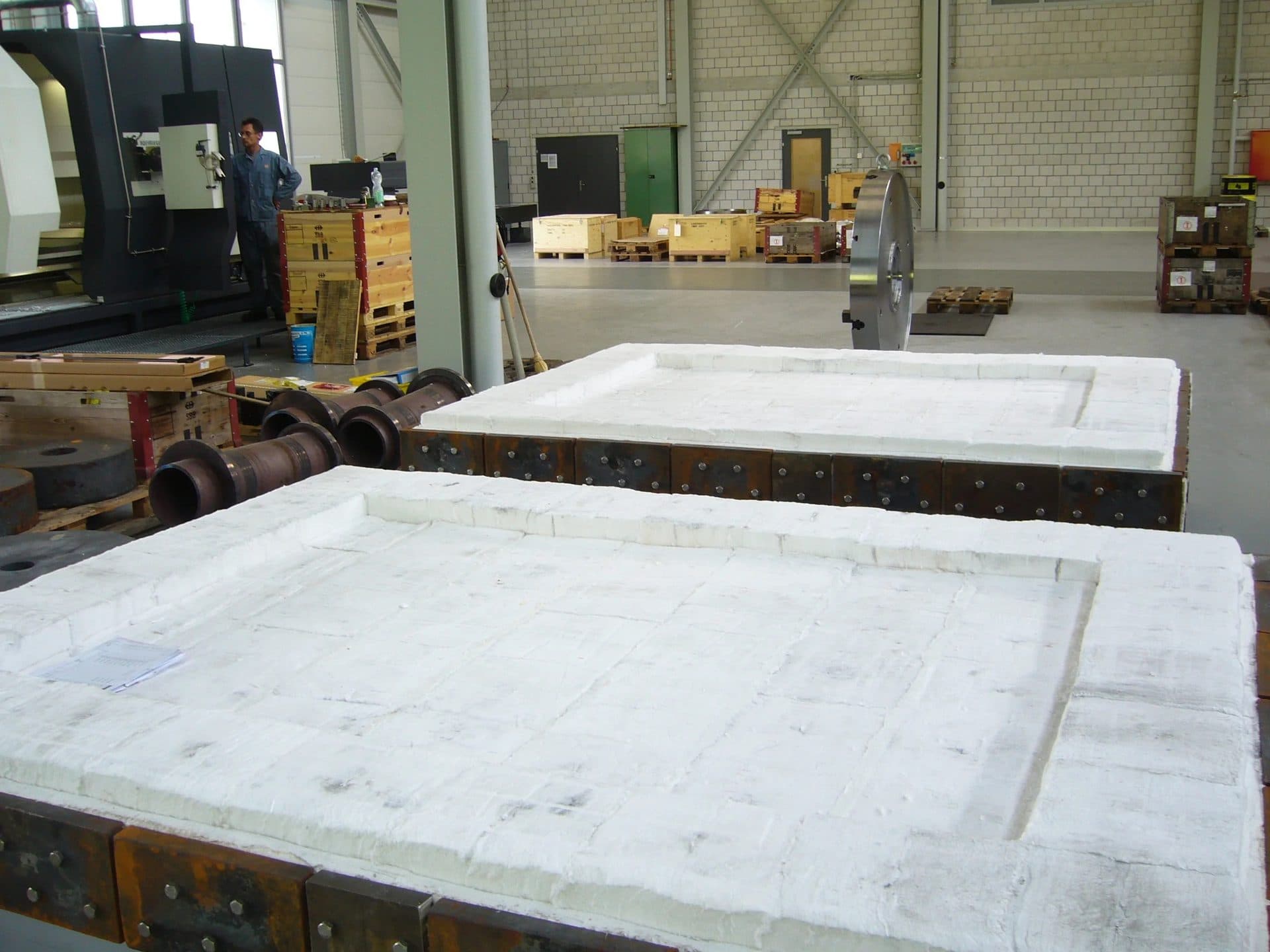
Hood lining
Our services for this furnace type — from complete relining to ongoing maintenance.
Our structured process guarantees quality, on-time delivery and safety in every project.
Inspection of the hearth plate and hood lining
Separate repair strategy for hearth and hood
Renewal of the hearth plate, repair of the hood
Securing of the rotating mechanism
Our specialists carry out a comprehensive condition analysis of the rotary hearth furnace. The hearth floor is checked for unevenness, cracks, spalling and embedded scale, and the hood lining is inspected for cracking and detachment. Particular attention is paid to the condition of the rotary hearth seal, which is examined for wear and air tightness. Thermographic images of the furnace hood reveal insulation defects and thermal bridges. All findings are documented and summarised in a prioritised plan of measures.
During the planning phase we develop a separate repair strategy for the hearth floor and the hood, since these assemblies require different material systems and installation techniques. The material selection is matched to the operating temperature, the type of stock and the required service life. The shutdown period is coordinated closely with your production planning in order to minimise downtime. We prepare a detailed construction schedule including material logistics and manpower planning and check the availability of all required materials in advance.
Execution begins with the controlled cooling of the furnace and the break-out of the worn refractory materials. On the hearth floor, the old ramming mix is removed mechanically, the hearth floor structure is inspected and the new high-alumina ramming mix is placed and compacted layer by layer. On the hood, damaged ceramic fibre modules are replaced or the entire hood lining is renewed. Finally, the rotary hearth seal is refurbished and the furnace is brought back into operation under control following a defined heat-up curve.
All work on the rotary hearth furnace is carried out in strict compliance with the safety regulations. Before work begins, the rotating mechanism is secured mechanically and electrically against unintentional start-up. For work beneath the furnace hood, inspected scaffold systems with fall protection are used. Dust protection and respiratory protection are mandatory during break-out of the old mix. All employees are instructed in the site-specific safety rules before deployment and a risk assessment is prepared.
Over 500 successfully completed refractory construction projects in the DACH region and the Benelux countries.
Rotary hearth furnace
Everything you need to know about the Rotary hearth furnace
Whether complete relining, repair or emergency — free initial consultation and a fast response.