Wird geladen...
Wird geladen...
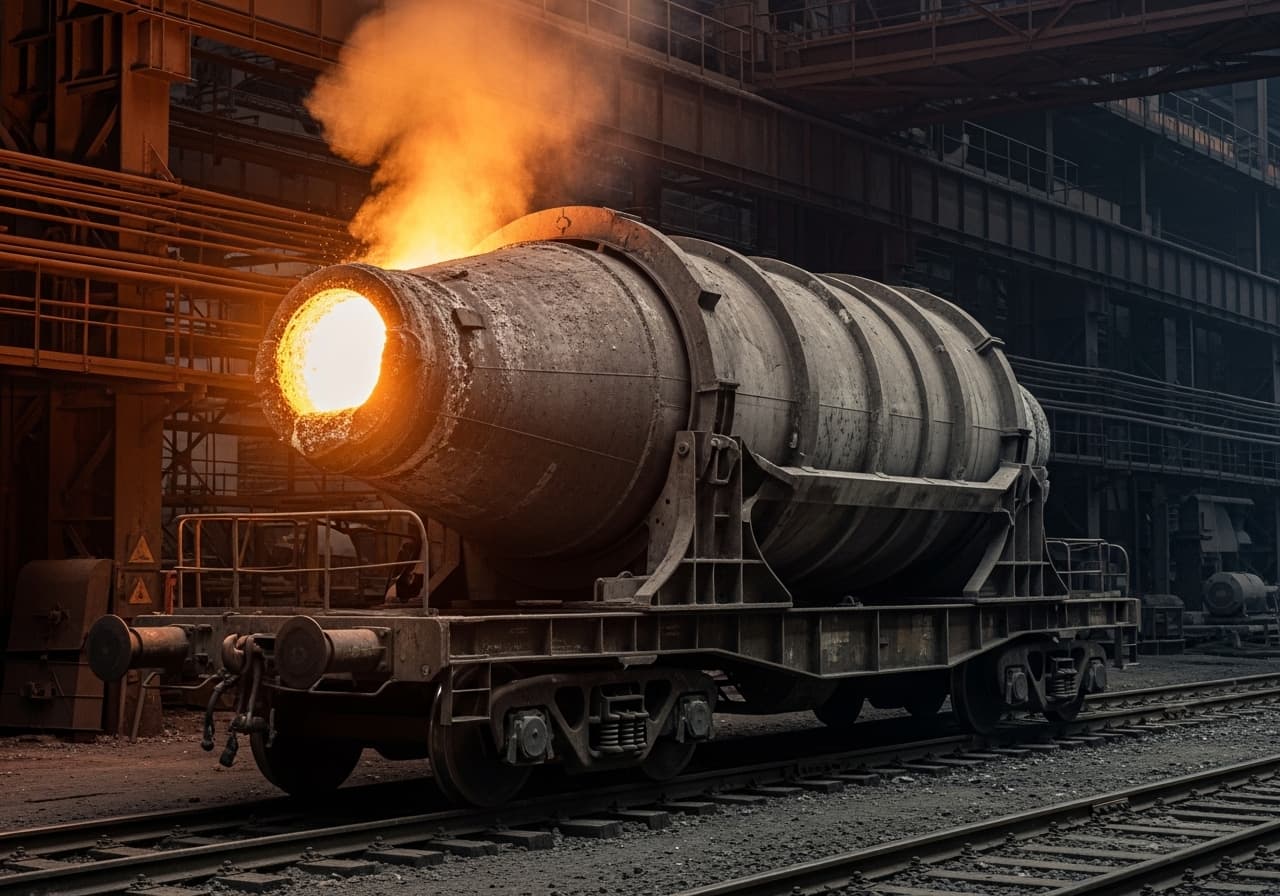
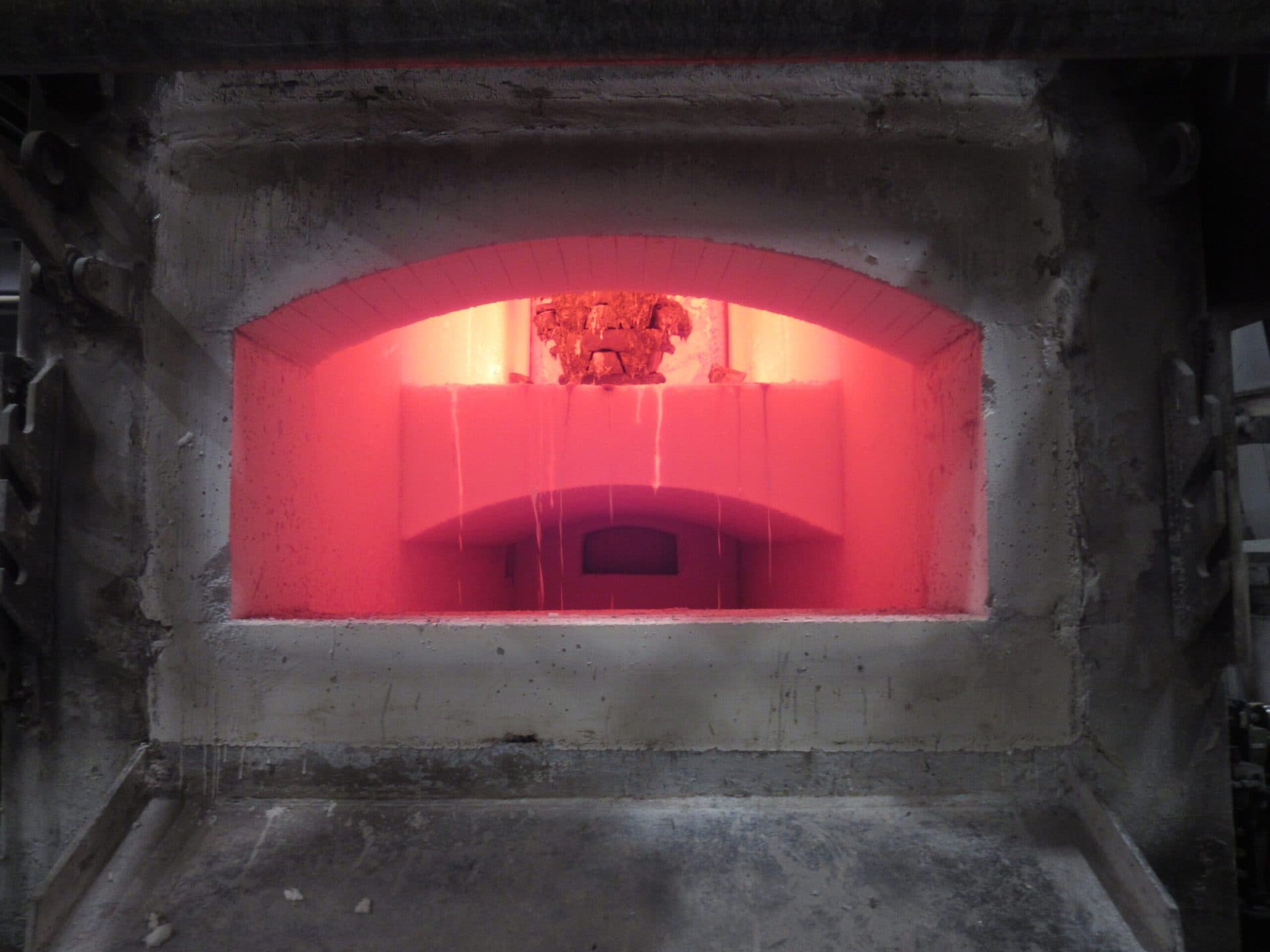
Refractory lining of torpedo ladle cars for transporting hot metal from the blast furnace to the steelworks.
The torpedo ladle — also known as the torpedo ladle car or torpedo car — is the backbone of hot metal transport in integrated iron and steel works. These rail-bound vessels with their characteristic torpedo-shaped geometry transport liquid hot metal at more than 1,400 °C from the blast furnace to the steelworks. The refractory lining must not only withstand the extreme temperatures, but also the chemical attack by the accompanying elements in the hot metal and the mechanical loads from rail traffic. SBS Refractory Service has decades of experience in the lining of torpedo ladle cars and serves integrated iron and steel works throughout Germany.
The loading placed on the refractory lining in torpedo ladles is uniquely complex. Inside the closed torpedo body, the lining is in permanent contact with liquid hot metal at temperatures of 1,300–1,500 °C. Silicon, manganese and sulphur in the hot metal, as well as the slags formed during desulphurisation, attack the refractory lining chemically. At the same time, travel movements on the rail network generate dynamic loads, and the sloshing of the melt places a particularly heavy load on the cone areas at the filling and discharge openings. High-alumina bricks with high density and wear resistance have proven themselves as the standard material for the torpedo body.
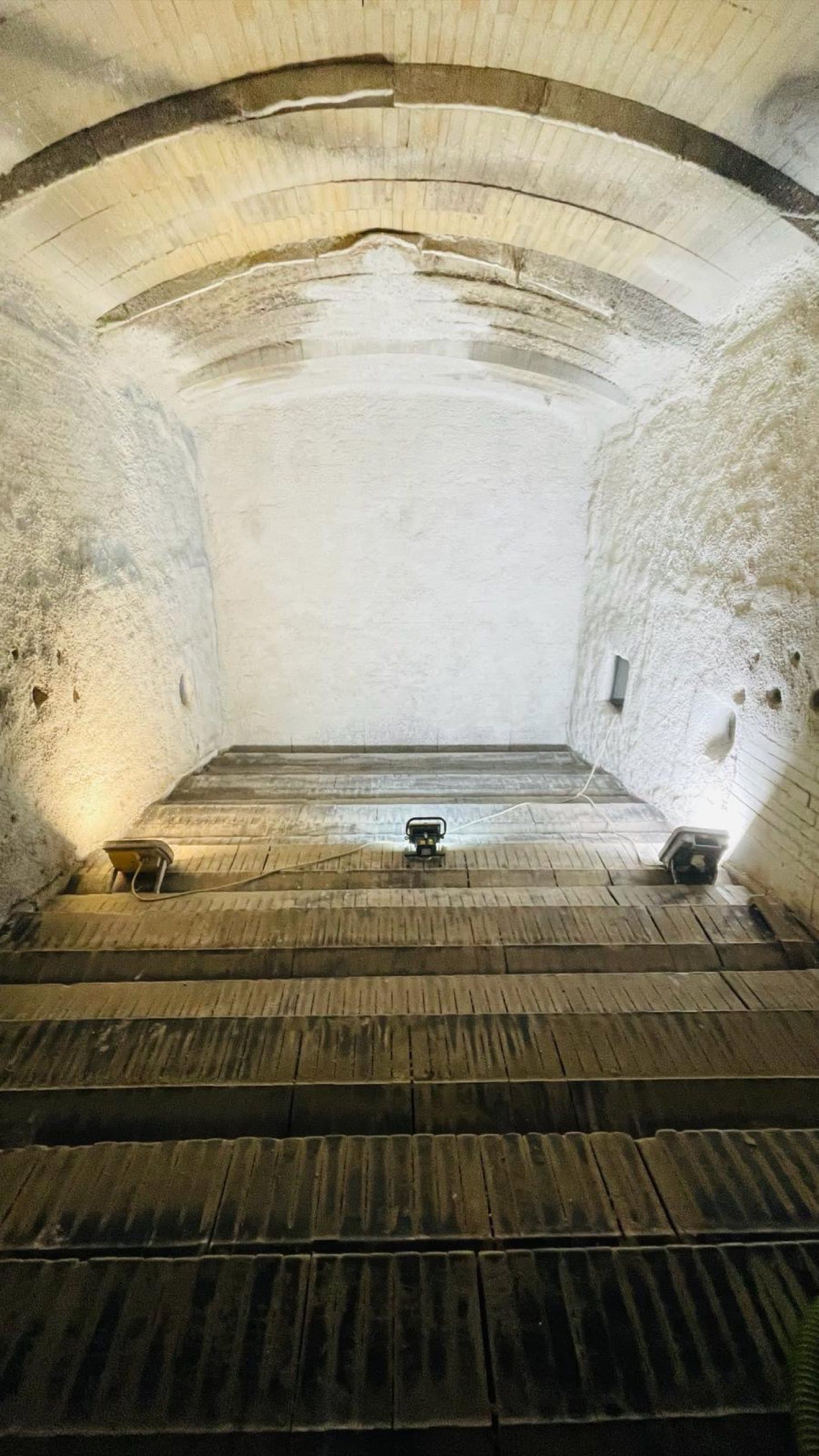
The complete relining of a torpedo ladle is a major project that calls for careful planning and specialised expertise. The confined access through the filling opening, the curved internal geometry and the enormous quantity of bricks, amounting to up to several hundred tonnes, place the highest demands on logistics and occupational safety. SBS relies on experienced installation teams that are familiar with the particular challenges of torpedo ladle lining from daily practice.
Between major repairs, targeted gunning repairs at local wear points extend the overall service life considerably. SBS offers both complete relining and scheduled intermediate repairs — matched to your production cycle and your maintenance strategy.
These loads determine the choice of material and the design of the refractory lining.
Silicon, manganese and sulphur in the liquid hot metal, as well as the slags formed during desulphurisation, attack the refractory lining aggressively. The CaO-based desulphurisation slag in particular is highly basic and calls for chemically resistant lining materials.
The dynamic forces during rail travel — acceleration, braking, cornering and track irregularities — generate sloshing movements of the melt inside the torpedo body. These forces act on the entire lining and place a particularly heavy load on the cone areas at the filling and discharge openings.
The confined access through the filling opening and the curved internal geometry make the lining work a logistical and safety-related challenge. Special ventilation concepts, rescue plans and compliance with the regulations for confined spaces are absolutely essential.
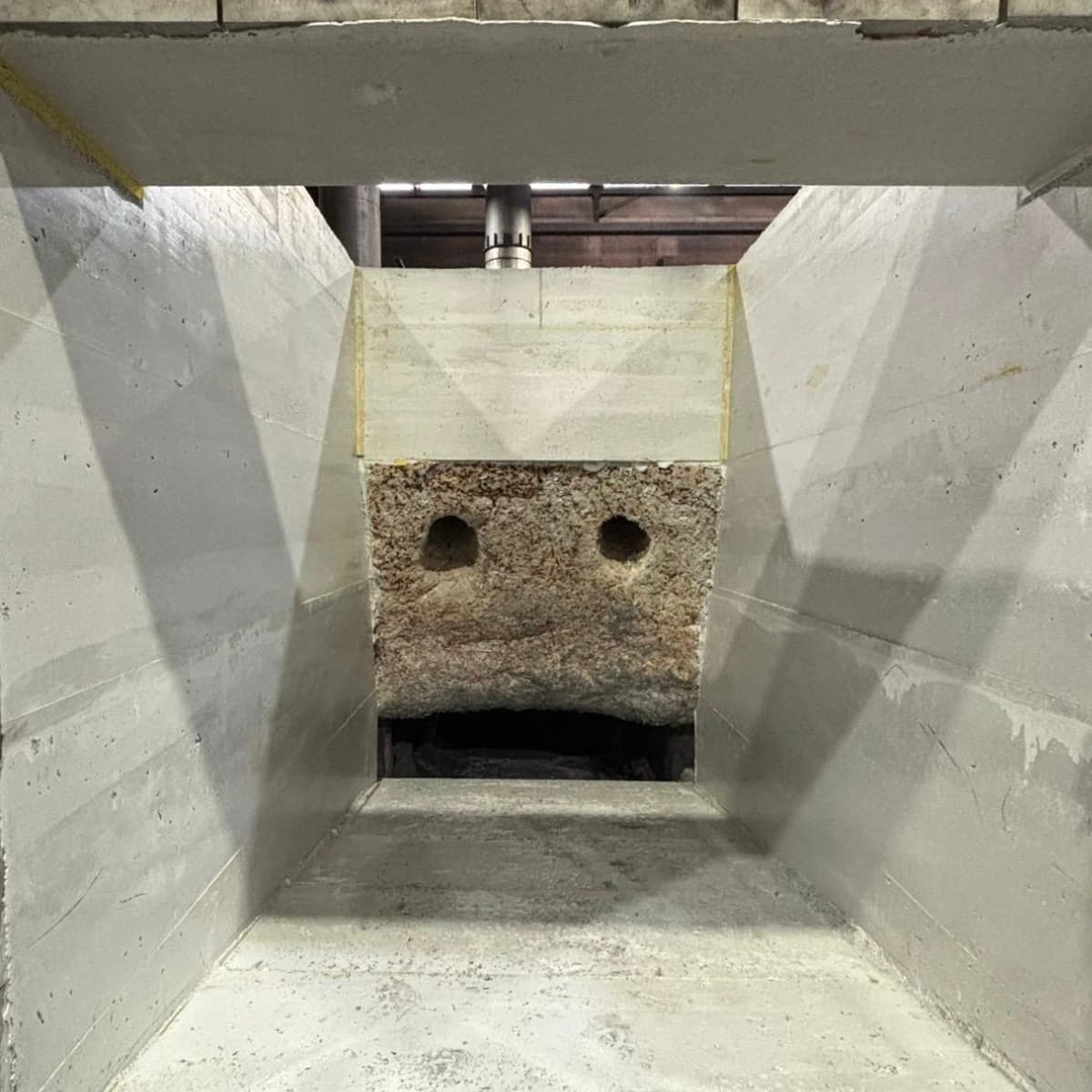
The conical transitions at the filling and discharge openings are exposed to the highest loads — slag contact, thermal shock during filling and mechanical erosion from the flow of the melt. These zones frequently determine the timing of the next major repair.
Every zone of your furnace places its own demands on temperature resistance, chemical resistance and mechanical load capacity. We select the optimum material combination.
Click on a material for details
Main wear zone in the torpedo body
Intermediate repairs at local wear points
Our services for this furnace type — from complete relining to ongoing maintenance.
Our structured process guarantees quality, on-time delivery and safety in every project.
Laser measurement of the interior and inspection of the wear zones after cooling.
Lining concept with zone-by-zone material selection and scheduling of the major repair.
Mechanical demolition through the filling opening, complete relining with high-alumina and alumina bricks.
Special safety measures for work inside a closed vessel, ventilation and rescue concept.
At the end of the campaign the torpedo ladle car is cooled down and subjected to a comprehensive condition assessment. Using 3D laser measurement, the wear profile of the entire interior is recorded — torpedo body, both cone areas and the openings. Critical wear points are documented photographically and the residual lining thicknesses are determined. The steel shell is also examined for deformation and cracking. The inspection report forms the basis for the decision on the scope and material concept of the major repair.
Planning a torpedo ladle lining is a complex project that requires several weeks of lead time. The material concept is defined zone by zone — highly wear-resistant bricks for the main body, special qualities for the cone areas and special shaped bricks for the openings. Material logistics are coordinated, since several hundred tonnes of refractory material have to be delivered on schedule. The manpower plan takes account of shift work throughout the entire lining period. Coordination with the works planning ensures that sufficient replacement torpedoes are available for ongoing operation.
The old lining is broken out mechanically through the filling opening using special demolition equipment designed for confined use in torpedo ladles. After complete break-out and cleaning of the steel shell, the new lining is built up layer by layer from the openings. The bricks are laid in refractory mortar and every layer is checked for dimensional accuracy. In the main body the bricks are installed in rings, while in the cone areas wedge bricks and special formats are used. Finally, the lining is dried and the torpedo ladle is heated up under control.
Lining a torpedo ladle requires compliance with the highest safety standards for work in confined spaces. Before work begins, a permit procedure is carried out with gas-free measurement, temperature control and a stability check. Permanent ventilation of the interior and continuous atmosphere monitoring are ensured throughout the whole of the work. A rescue concept with a safety attendant at the filling opening is active at all times. All employees are trained and instructed for work in confined spaces.
Over 500 successfully completed refractory construction projects in the DACH region and the Benelux countries.
Torpedo ladle
Everything you need to know about the Torpedo ladle
Whether complete relining, repair or emergency — free initial consultation and a fast response.