Wird geladen...
Wird geladen...
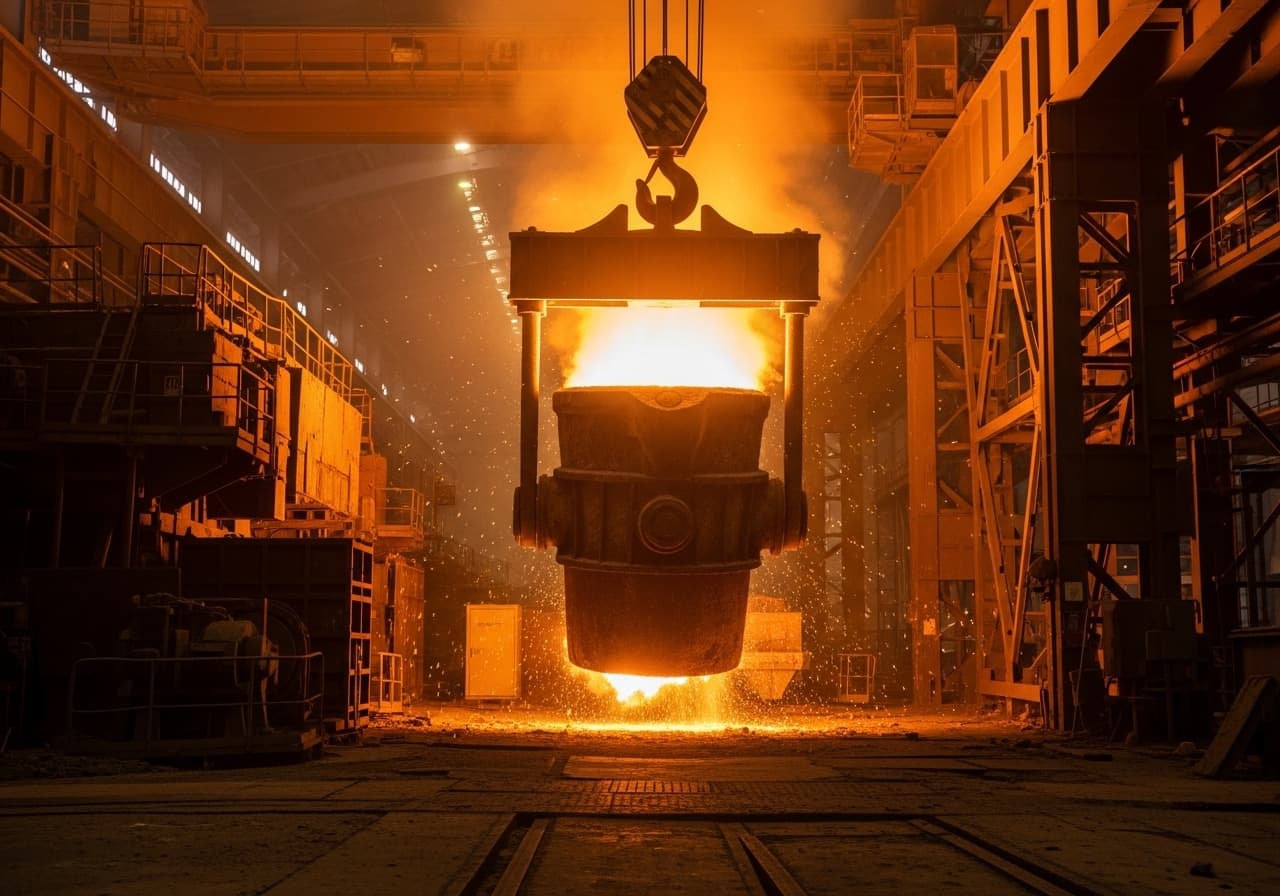
Refractory lining of transfer ladles for the in-plant transport of liquid metals.
Transfer ladles are the universal workhorses in foundries and steelworks — they handle the in-plant transport of liquid metals between the melting furnace, treatment station and casting plant. The refractory lining must not only withstand extreme temperatures, but also the mechanical loads from crane and forklift movements as well as the frequent temperature changes between filling and the empty return journey. SBS Refractory Service is your experienced partner for the lining and maintenance of transfer ladles of every size and design — from the 500 kg hand pouring crucible to the 100-tonne crane bucket ladle.
The variety of transfer ladles is considerable: bucket ladles, lip-pour and stopper ladles, drum ladles and fork ladles differ in geometry, capacity and pouring mechanism. The transported media are just as varied — from grey iron and ductile iron through cast steel to copper and aluminium alloys. Every medium places specific demands on the refractory lining in terms of chemical resistance, thermal shock behaviour and resistance to wetting. For every application SBS selects the optimal material system from the wide spectrum of monolithic castables, ramming mixes and brick linings.
In foundry operation, the availability of transfer ladles is directly relevant to production. An unplanned outage due to refractory failure can bring the entire production to a standstill. SBS therefore plans linings and repairs in close coordination with your production cycle and, where required, also works in shifts in order to minimise shutdown times. Our installation teams are familiar with all common ladle designs and can correctly execute both monolithic and bricked linings.
Via our 24/7 emergency hotline we are ready for action at any time for urgent repairs. After every lining you receive complete documentation including material certificates and an acceptance record — for seamless traceability and quality assurance.
These loads determine the choice of material and the design of the refractory lining.
In foundry operation, transfer ladles are filled and emptied several times a day. The constant change between operating temperature and cooling generates thermal shock stresses that lead to cracking and spalling in the lining. Materials with high thermal shock resistance are therefore decisive.
Transfer ladles are used for a wide variety of metals — from iron and steel castings through copper alloys to aluminium. Every metal and the associated slag place specific chemical demands on the lining. An incorrect material choice leads to accelerated wear or contamination of the melt.
Crane and forklift movements, tilting during pouring and setting the ladle down on the ladle ring generate impact-type mechanical loads. The trunnion area and the ladle bottom in particular are affected by these forces and require a mechanically robust lining.
The nozzle or spout of the transfer ladle is exposed to the flow of liquid metal during pouring. The combination of high temperature and erosive metal flow leads to local wear that makes the nozzle the most frequent point of repair.
Every zone of your furnace places its own demands on temperature resistance, chemical resistance and mechanical load capacity. We select the optimum material combination.
Click on a material for details
Monolithic ladle lining
Brickwork under basic slag conditions
Our services for this furnace type — from complete relining to ongoing maintenance.
Our structured process guarantees quality, on-time delivery and safety in every project.
Checking the lining for cracks, washouts and material spalling.
Scheduling with production and preparation of the refractory materials.
Break-out and complete relining with refractory mixes or bricks, matched to the transported medium.
Protection against uncontrolled escape of metal, checking ladle integrity before recommissioning.
Our refractory specialists carry out a systematic condition assessment of the transfer ladle. The visual inspection records cracking, washouts, slag build-up and infiltration zones. The residual lining thickness is measured and documented in all critical areas — ladle wall, bottom, nozzle and trunnion area. Particular attention is paid to the nozzle area, which is subject to the highest wear in foundry operation. On the basis of the inspection we prepare a clear recommendation: local repair, nozzle replacement or complete relining.
The material selection is matched precisely to the transported medium — alumina castables for iron castings, SiC-based materials for non-ferrous metals or basic bricks for cast steel. The shutdown period is closely coordinated with your foundry planning so as not to disrupt ladle rotation. For foundries with a limited number of ladles we also offer weekend and shift work. All materials are specified in advance and made available on schedule.
Once the ladle has cooled, the old lining is broken out mechanically or by hand. The steel shell is inspected for deformation and corrosion. In the case of a monolithic lining, the new castable or ramming mix is placed, compacted and then dried and sintered in accordance with the manufacturer's instructions. In the case of a brick lining, the bricks are laid layer by layer in refractory mortar. The nozzle is installed as a shaped part and can be replaced separately in the event of later wear. Finally, the ladle is heated up under control.
Before work begins, a risk assessment is prepared with a particular focus on foundry operation — crane traffic, hot melts in neighbouring ladles and the risk of splashing. The ladle is secured against unintentional tilting. Before recommissioning, the integrity of the ladle is verified by visual inspection and dimensional check. All employees wear full protective equipment including heat protection and face protection.
Over 500 successfully completed refractory construction projects in the DACH region and the Benelux countries.
Transfer ladle
Everything you need to know about the Transfer ladle
Whether complete relining, repair or emergency — free initial consultation and a fast response.