Wird geladen...
Wird geladen...
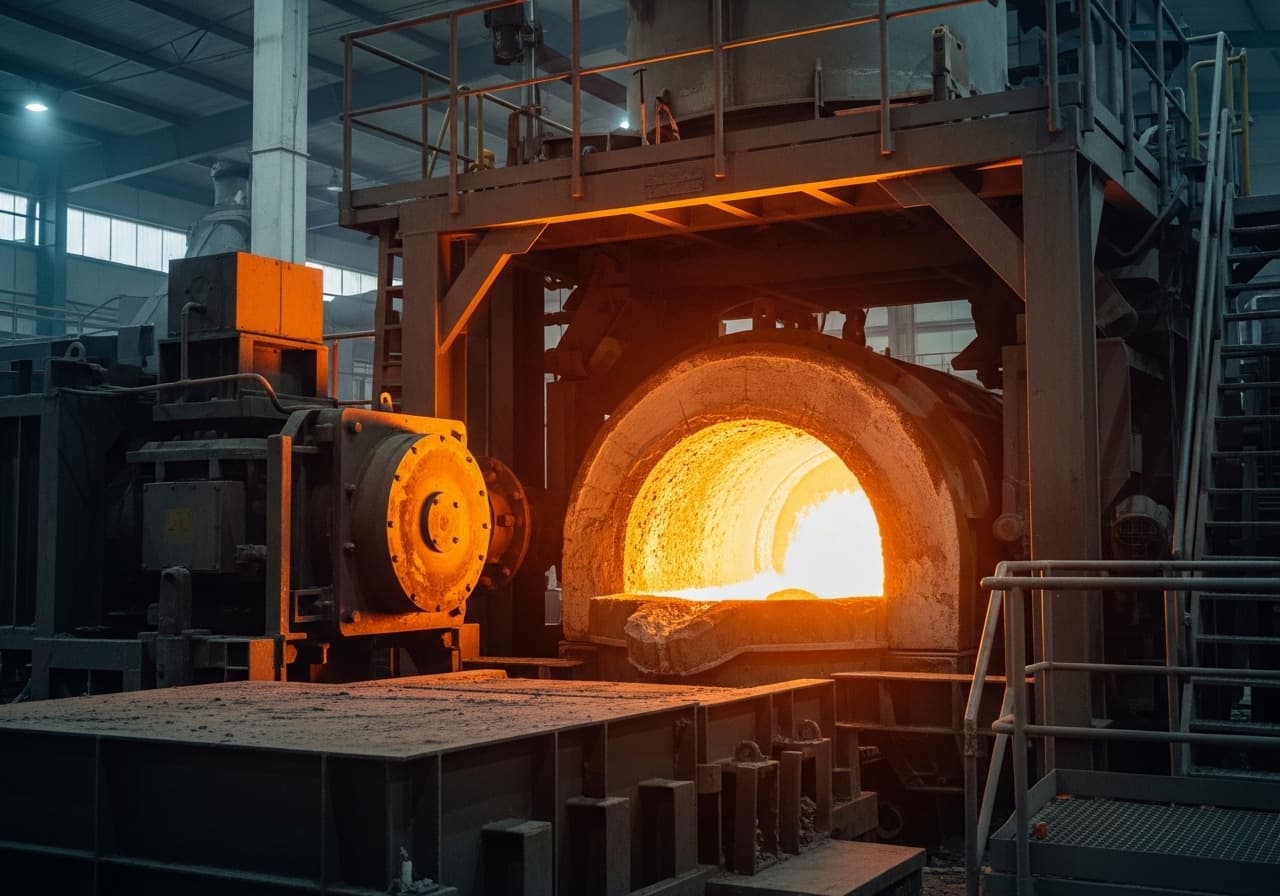
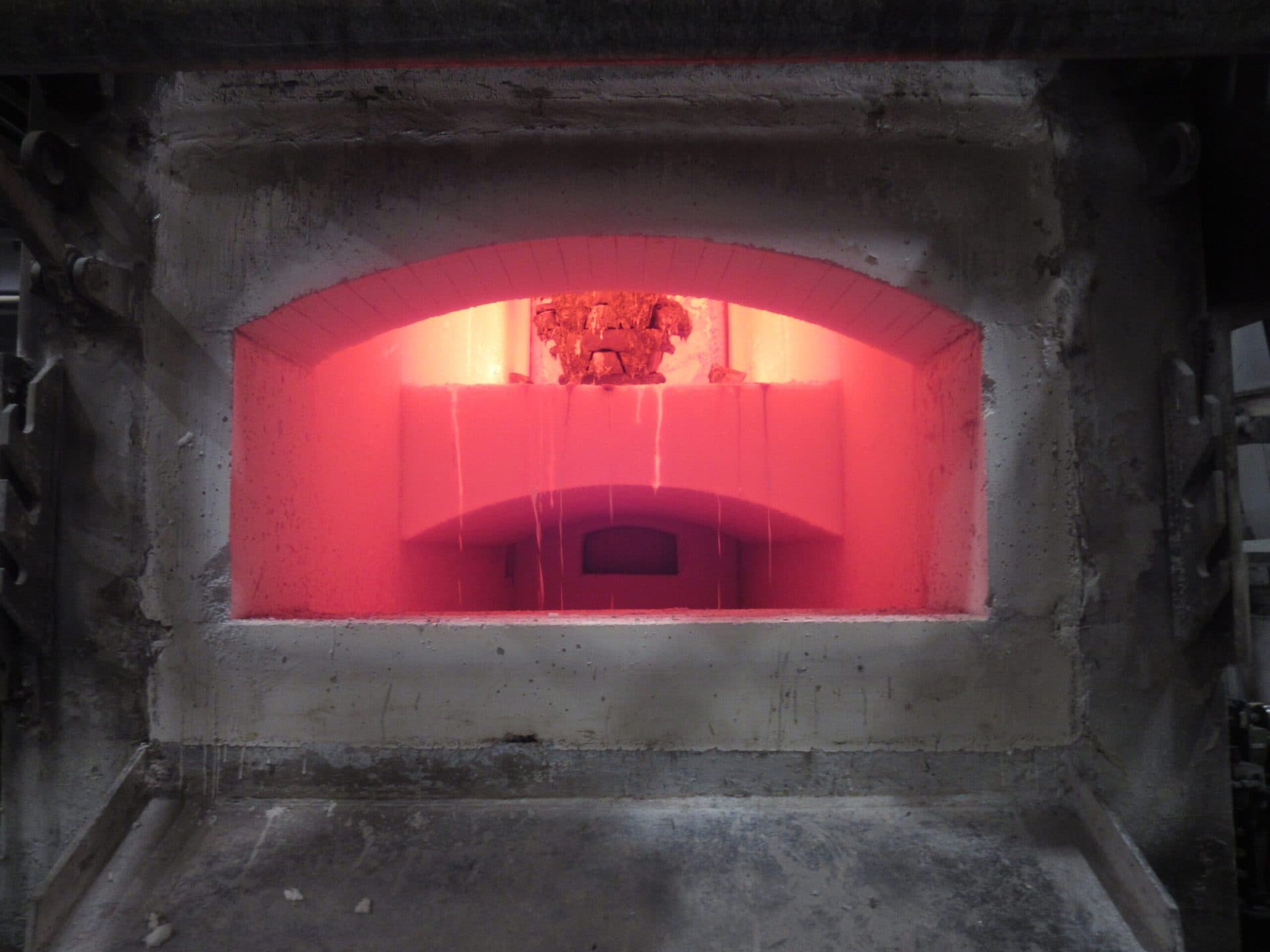
Refractory construction for chip melting furnaces used to melt aluminium chips and residues.
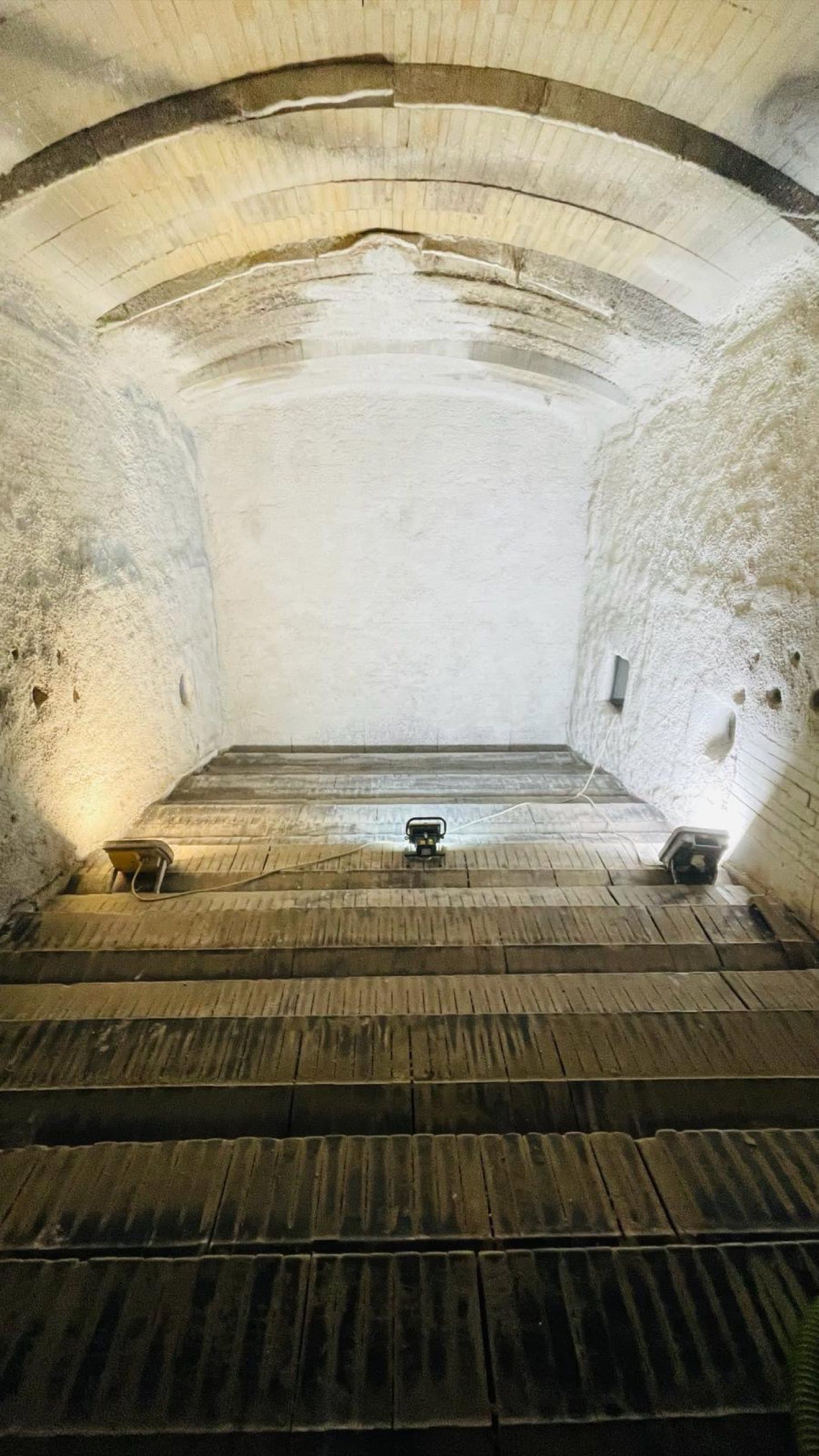
The furnace chamber forms the main melting space and is subject to the highest loading — mechanically from charging, thermally from temperature changes and chemically from salt slag attack. In rotary drum furnaces the entire cylindrical inner surface is loaded uniformly.
The burner zone is exposed locally to extremely high temperatures that can exceed 1,200°C. The burner blocks must permanently withstand this flame temperature while also being resistant to salt slag. SBS uses high-refractory burner blocks made of corundum or spinel.
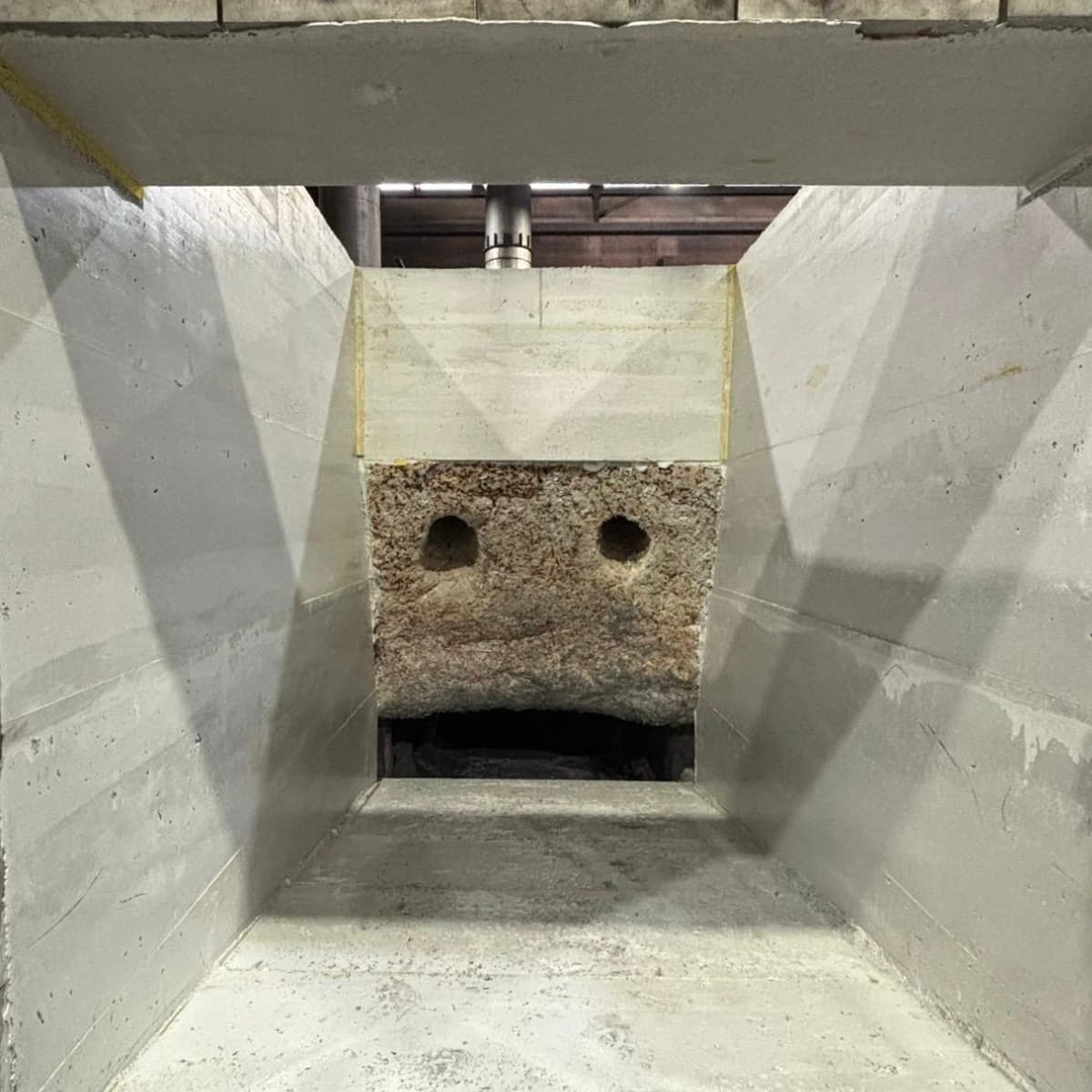
The tapping area carries the molten metal out of the furnace. It is exposed to thermal shock during tapping and to erosion from the flow of the melt. Prefabricated tapping elements of non-wetting material allow rapid replacement.
The charging opening is heavily loaded by mechanical impact during charging and by extreme temperature changes when opened. Reinforced frames of high-strength refractory castable and replaceable wear plates protect this critical area.
The chip melting furnace is a special unit for recycling aluminium chips, stamping scrap, dross and other production residues. At a time of rising raw material prices and growing sustainability requirements, aluminium recycling is becoming increasingly important — processing secondary aluminium requires only around 5 per cent of the energy needed for primary production. SBS Refractory Service specialises in refractory construction for chip melting furnaces of all designs and supports recycling companies as well as aluminium foundries with their own chip melting operations in the professional lining, repair and maintenance of these particularly heavily loaded units.
The strain on the refractory lining in a chip melting furnace is among the most extreme in the entire aluminium industry. The charge material — often oil-contaminated, damp or oxidised chips — produces aggressive salt slags and corrosive vapours during melting that attack the lining chemically to a massive degree. Added to this is the considerable mechanical loading from charging with heavy bulk material, which leads to spalling and break-outs at the furnace bottom and the charging opening. Temperature control between 700 and 850°C with rapid temperature changes during charging places additional demands on the thermal shock resistance of the materials used.
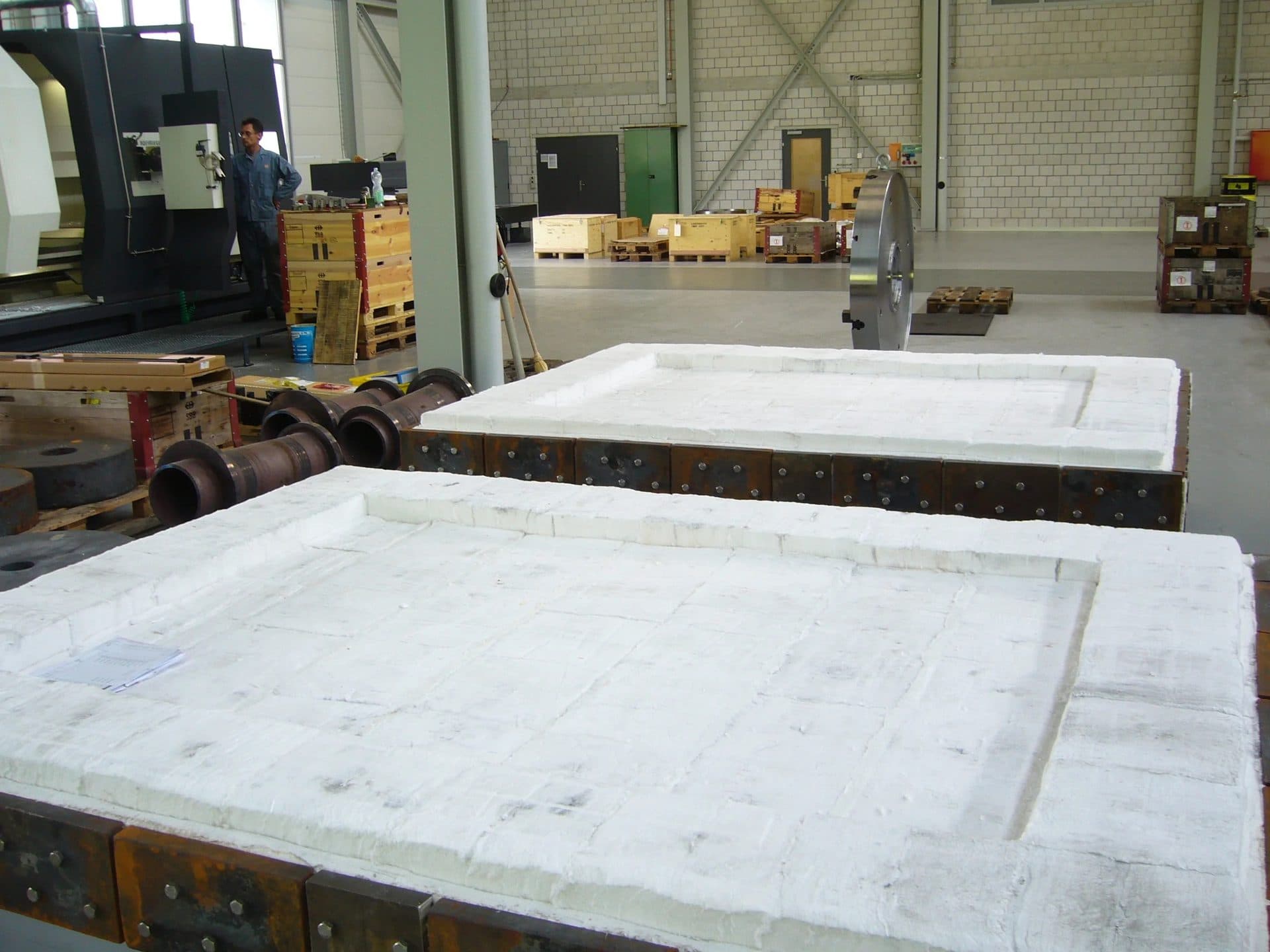
A high-performance refractory concept for the chip melting furnace combines chemical resistance to aggressive salt slags with high mechanical strength and abrasion resistance. SBS relies on proven material combinations of wear-resistant special castable and SiC-containing bricks that achieve an economical service life even under extreme operating conditions. Our specialists advise you independently of any manufacturer on the optimal choice of material and carry out all refractory work on site and on schedule — including emergency repairs via our 24/7 hotline.
These loads determine the choice of material and the design of the refractory lining.
Melting under salt produces highly aggressive chloride and fluoride slags that break down conventional refractory materials within a few weeks. The chemical resistance of the lining directly determines its service life.
Charging with chip briquettes, dross and pieces of scrap causes massive impact loading on the furnace bottom and the charging opening. Spalling and local break-outs are the most common damage patterns on chip melting furnaces.
When the charging opening is opened and cold material is introduced, the wall temperature drops locally by several hundred degrees. These thermal shocks generate stress cracks that lead to material failure over time.
Oil residues and moisture on the chips produce corrosive vapours during melting that also attack areas above the melt line. The entire furnace chamber — including the roof and the burner zone — is exposed to this loading.
Every zone of your furnace places its own demands on temperature resistance, chemical resistance and mechanical load capacity. We select the optimum material combination.
Click on a material for details
Highly loaded areas
Slag line
Lid and roof insulation
Local patching and rapid repairs
Our services for this furnace type — from complete relining to ongoing maintenance.
Our structured process guarantees quality, on-time delivery and safety in every project.
Assessment of the mechanical and thermal loading
Material selection for high abrasion resistance
Brick lining with wear-resistant materials
Compliance with all safety regulations
Our specialists carry out a comprehensive condition assessment of the chip melting furnace. This includes visual inspection of the furnace bottom, side walls and roof for cracks, break-outs and slag build-up, measurement of the residual lining thickness in all critical zones, and documentation of the wear profile. Particular attention is paid to the charging opening, the tapping area and the slag line, since these zones exhibit the highest wear. On the basis of the results we prepare an inspection report with a specific recommendation for action.
During the planning phase we define the material concept taking into account the specific loads on your chip melting furnace. The decisive factors are the type of charge material (dry or oily chips, dross, salt slag), the operating temperature and the charging frequency. We prepare a detailed construction schedule and coordinate the work with your production operations in order to minimise downtime. All materials are ordered in advance and checked for availability.
Execution begins with the controlled cooling of the furnace and the mechanical break-out of the worn lining. After thorough cleaning and inspection of the steel shell for corrosion and deformation, the rebuild follows: installation of the insulating layer, bricking of the SiC-containing bricks in the slag line area and installation of the wear-resistant special castable at the furnace bottom and side walls. The charging opening and the tapping area receive particularly resistant preformed shapes. Finally, the lining is dried out under control and fired in along a defined heat-up curve.
Work on chip melting furnaces requires particular safety measures on account of the aggressive salt slag residues and the confined furnace chamber. Before entry, the furnace is checked for freedom from gas and for temperature, and the regulations for work in confined spaces apply. When breaking out the old lining, particular importance is attached to dust protection, since salt slag residues can be harmful to health. All work is carried out in accordance with SCC safety standards.
Over 500 successfully completed refractory construction projects in the DACH region and the Benelux countries.
Chip melting furnace
Everything you need to know about the Chip melting furnace
Whether complete relining, repair or emergency — free initial consultation and a fast response.