Wird geladen...
Wird geladen...
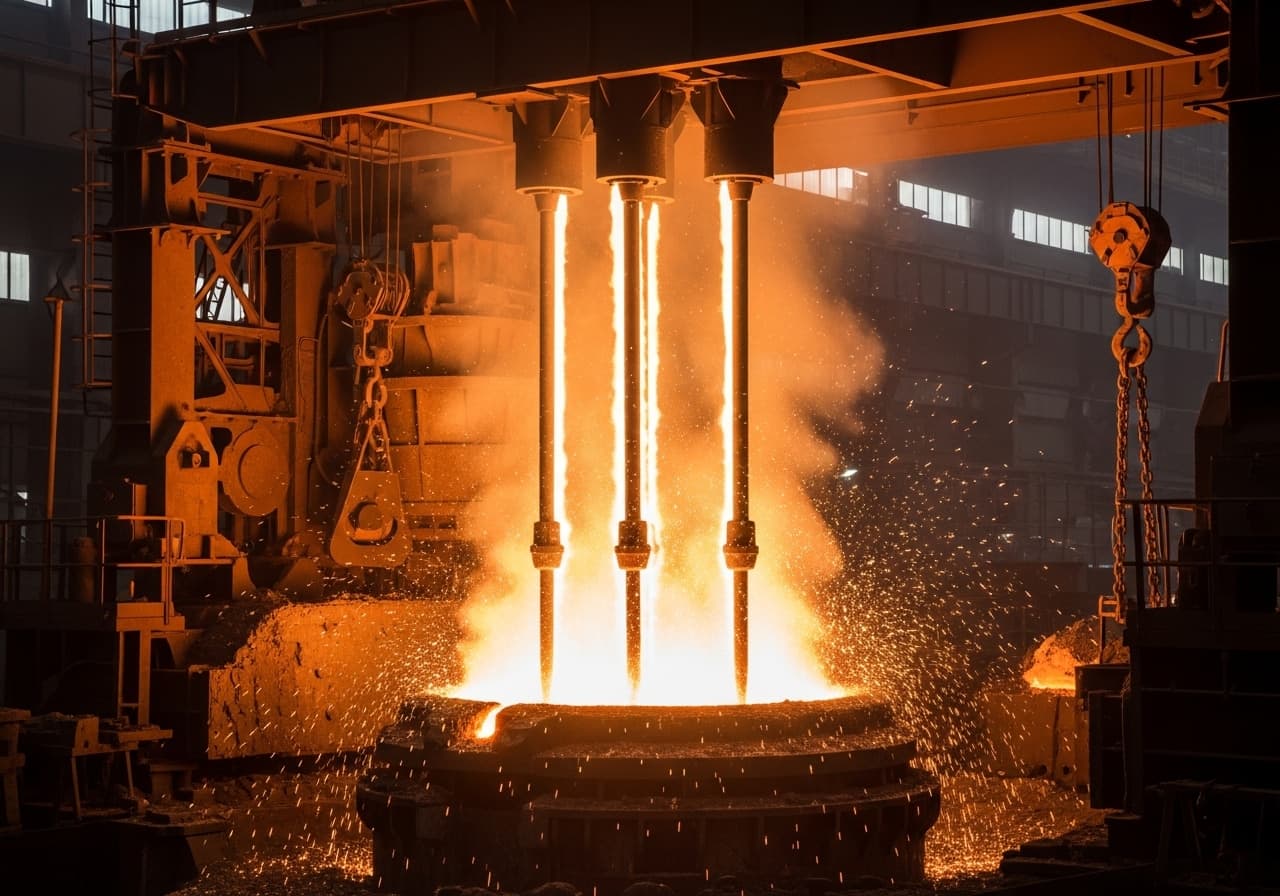
Refractory lining and maintenance of electric arc furnaces for steelmaking from scrap.
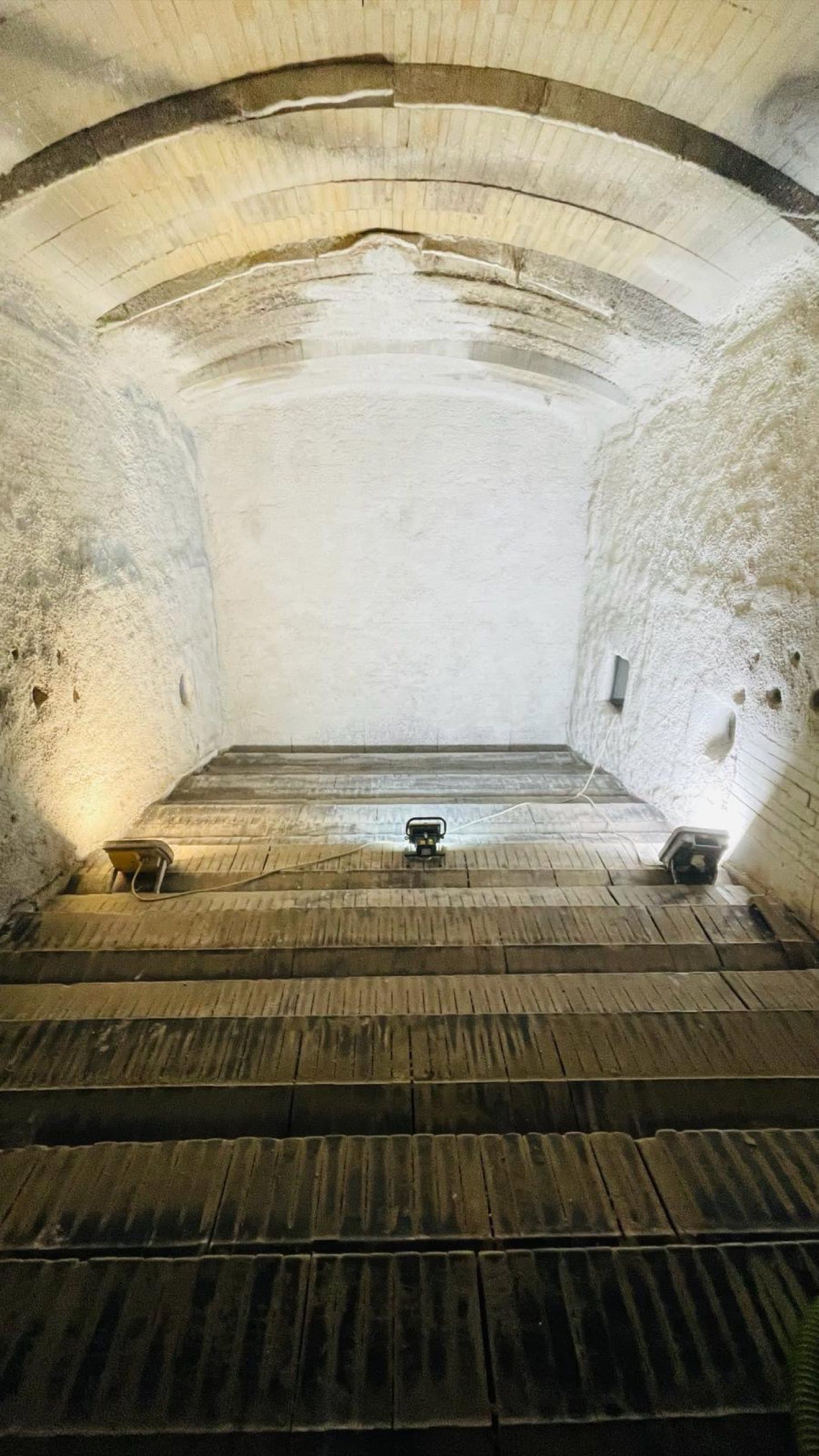
Cylindrical steel shell with a refractory inner lining of MgO-C bricks. Typical wall thicknesses of 300–500 mm in the working area. The lining is optimised zone by zone for the differing loads.
Water-cooled copper panels in the upper vessel area above the slag line. They protect the steel structure against overheating and reduce refractory consumption in the upper furnace area.
Monolithic hearth of magnesia ramming or vibration mix. The bottom is the most heavily loaded area and is regularly repaired with patching mix.
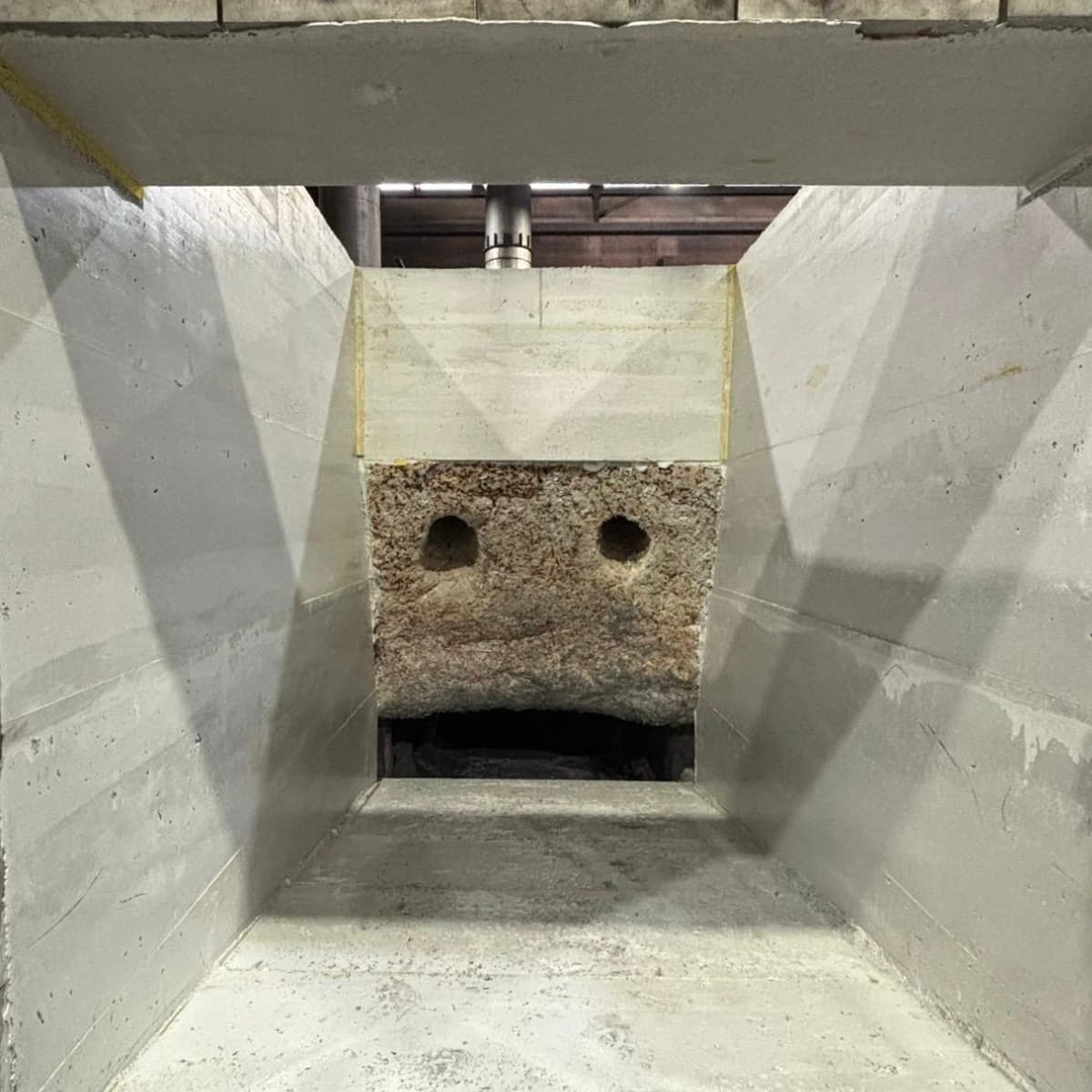
Lateral tapping channel for slag-free steel tapping. Lined with highly wear-resistant MgO-C bricks and special shapes for the EBT geometry.
Water-cooled furnace roof with electrode ports. Contains refractory inserts in the area of the electrode openings and the delta section.
Opening for slag removal and sampling. Refractory-lined and subject to heavy mechanical loading from manipulation with slag tools.
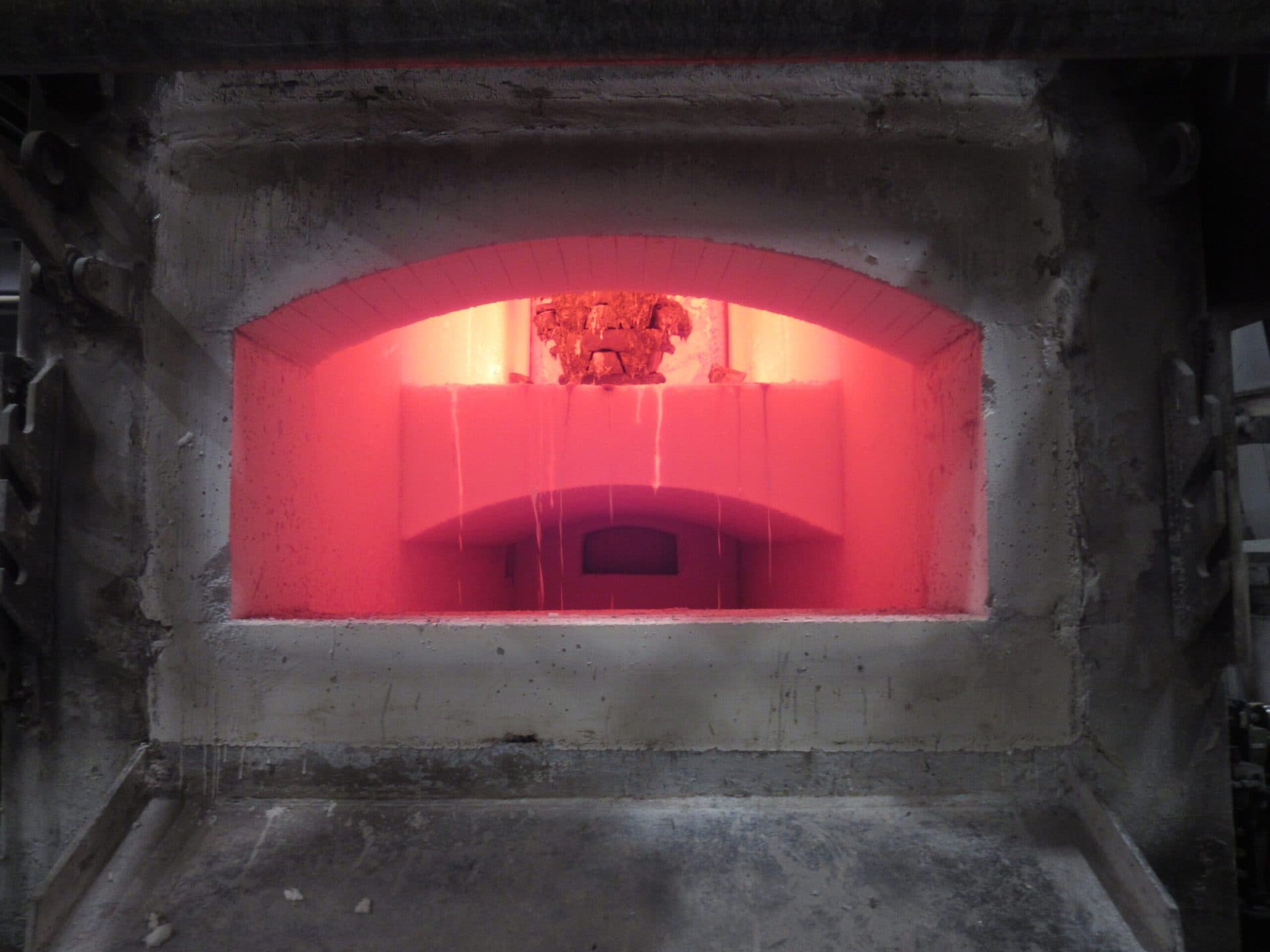
The electric arc furnace (EAF) is the central unit of secondary metallurgy and enables steelmaking from scrap using electrical energy. Temperatures of up to 1,800 °C, aggressive FeO-bearing slags and the extreme cyclic thermal loading of the charging cycle place the highest demands on the refractory lining. SBS Refractory Service GmbH has decades of experience in the lining and maintenance of electric arc furnaces throughout Europe.
The choice of the right refractory materials determines furnace availability and cost-effectiveness. We use proven MgO-C bricks with an optimised carbon content in the wall area and high-quality magnesia ramming mixes for the hearth. Every lining is matched precisely to the slag chemistry, the electrode circuit and the specific mode of operation of the individual EAF — for maximum service life at minimum cost per tonne of steel.
Whether a complete relining or a partial repair of the furnace bottom: our experienced installation teams work around the clock under the strictest safety precautions. From mechanical demolition and material logistics through to controlled heat-up, SBS takes on full project responsibility. Laser measurement and thermographic analyses allow precise wear prediction and predictive maintenance planning.
These loads determine the choice of material and the design of the refractory lining.
FeO-rich converter slags attack the MgO-C lining chemically. Severe material loss occurs in particular in the area of the slag line and at the EBT tapping bay, limiting the furnace campaign.
Every charging cycle generates enormous temperature gradients in the lining. The alternation between scrap charging and arc operation causes thermal shock stresses that lead to spalling and cracking.
The arc generates local temperatures above 3,500 °C. The intense radiation and the turbulent steel bath flow in the area close to the electrodes cause accelerated wear on the opposite wall (hot spot).
During charging, heavy steel scrap impacts the bottom and the wall. This mechanical impact loading can damage the refractory lining and calls for particularly resistant materials in the impact zone.
EAF operators run their furnaces on three shifts. Repairs and complete relinings must be carried out within the shortest possible planned shutdowns in order to minimise production losses.
Every zone of your furnace places its own demands on temperature resistance, chemical resistance and mechanical load capacity. We select the optimum material combination.
Click on a material for details
Wall lining in the slag zone and high-wear areas
Furnace bottom and hearth
Our services for this furnace type — from complete relining to ongoing maintenance.
Our structured process guarantees quality, on-time delivery and safety in every project.
Laser measurement of the wear contour and thermographic analysis of the furnace wall.
Coordination of the lining concept with steel plant management and material logistics.
Mechanical demolition of the old lining, installation of MgO-C bricks and ramming mixes, controlled heat-up.
Protection against arc radiation, guarding against slag splashes and hot surfaces.
Every measure is preceded by a detailed condition analysis of the electric arc furnace. Using 3D laser measurement we record the exact wear contour of the entire lining and identify critical areas. Thermographic images of the furnace shell complete the analysis and reveal weak points in the insulation. The results are processed digitally and serve as the basis for repair planning and material ordering.
Based on the inspection data we prepare a tailored lining concept. The material selection is matched zone by zone to the wear profile and the slag chemistry. In close coordination with steel plant management the schedule is fixed and the material logistics coordinated. Safety concepts, manpower planning and equipment scheduling are brought together in a project plan.
Mechanical demolition of the worn lining is carried out with special excavators and hydraulic breakers. After cleaning the steel shell, the insulating layers are installed first, followed by the working lining with MgO-C bricks in the wall and EBT areas. The furnace bottom is installed and compacted with magnesia ramming mix. Finally, a controlled heat-up programme is run in accordance with the manufacturer's specifications.
Work on the EAF calls for comprehensive safety measures. All employees wear heat-resistant PPE with face protection against arc radiation. Barriers and protective screens prevent contact with hot surfaces and slag splashes. Before entering the furnace vessel, temperature and atmosphere measurements are carried out. Rescue plans and escape route planning are mandatory.
Over 500 successfully completed refractory construction projects in the DACH region and the Benelux countries.
Electric arc furnace
Everything you need to know about the Electric arc furnace
Whether complete relining, repair or emergency — free initial consultation and a fast response.