Wird geladen...
Wird geladen...
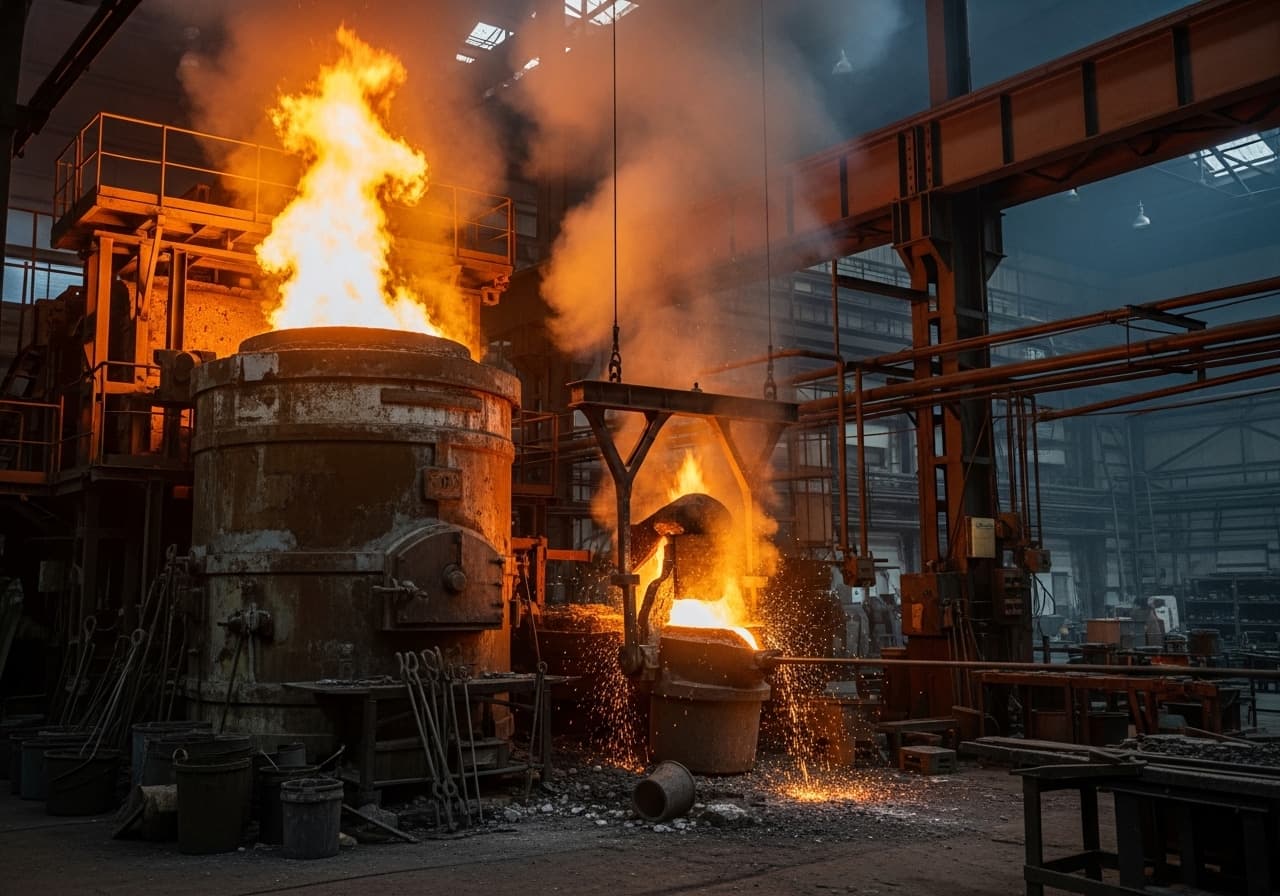
Refractory lining and maintenance of cupola furnaces for continuous cast iron production.
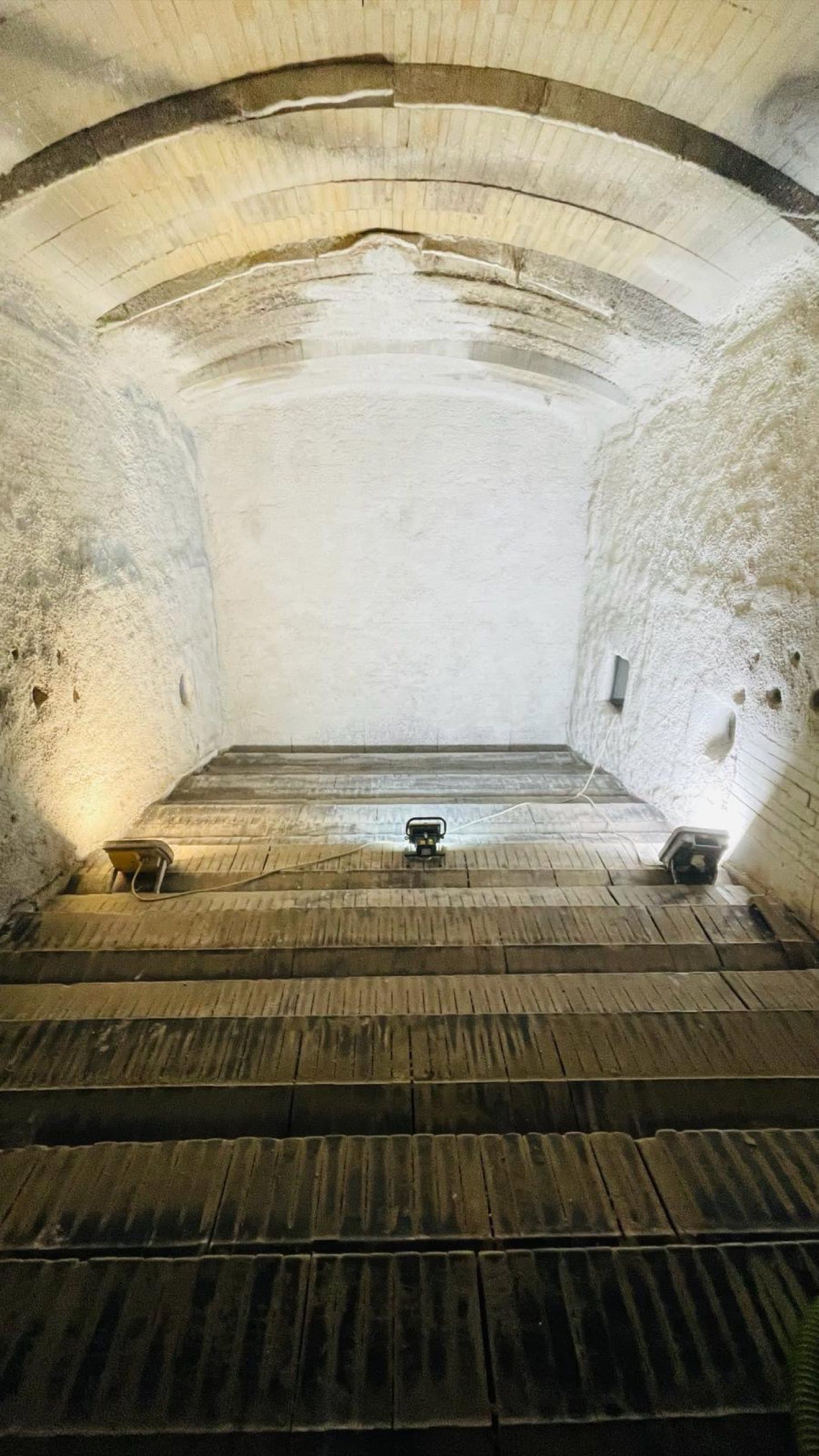
The shaft is the cylindrical main body of the cupola furnace and holds the charge. The brickwork must withstand the mechanical loading from the descending charge column, the thermal loading in the preheating and melting zones, and the chemical attack of the rising gases. Depending on the mode of operation, the shaft is lined with acidic (quartzite), basic (magnesia) or neutral (high-alumina) bricks.
The well is located in the lower part of the cupola furnace and serves as the collecting basin for the iron melt and the slag. It is permanently filled with liquid metal and is therefore subject to extreme thermal and chemical loading. The well brickwork is built up from highly refractory bricks that offer maximum resistance to iron melt and slag.
The tuyère level comprises the blast tuyères through which the hot blast is blown into the furnace. The tuyère blocks are exposed to extreme wear from the combination of high temperature, oxidising atmosphere and slag contact. SBS uses special tuyère blocks with an increased SiC or Al₂O₃ content that withstand this multiple attack.
The forehearth is a separate heated vessel ahead of the cupola furnace in which the iron melt is collected, brought to temperature and, where required, treated metallurgically. The forehearth lining is in permanent contact with liquid iron and must be resistant to slag attack and erosion. SBS lines forehearths with high-alumina bricks or castables, matched to the operating temperature and the slag chemistry.
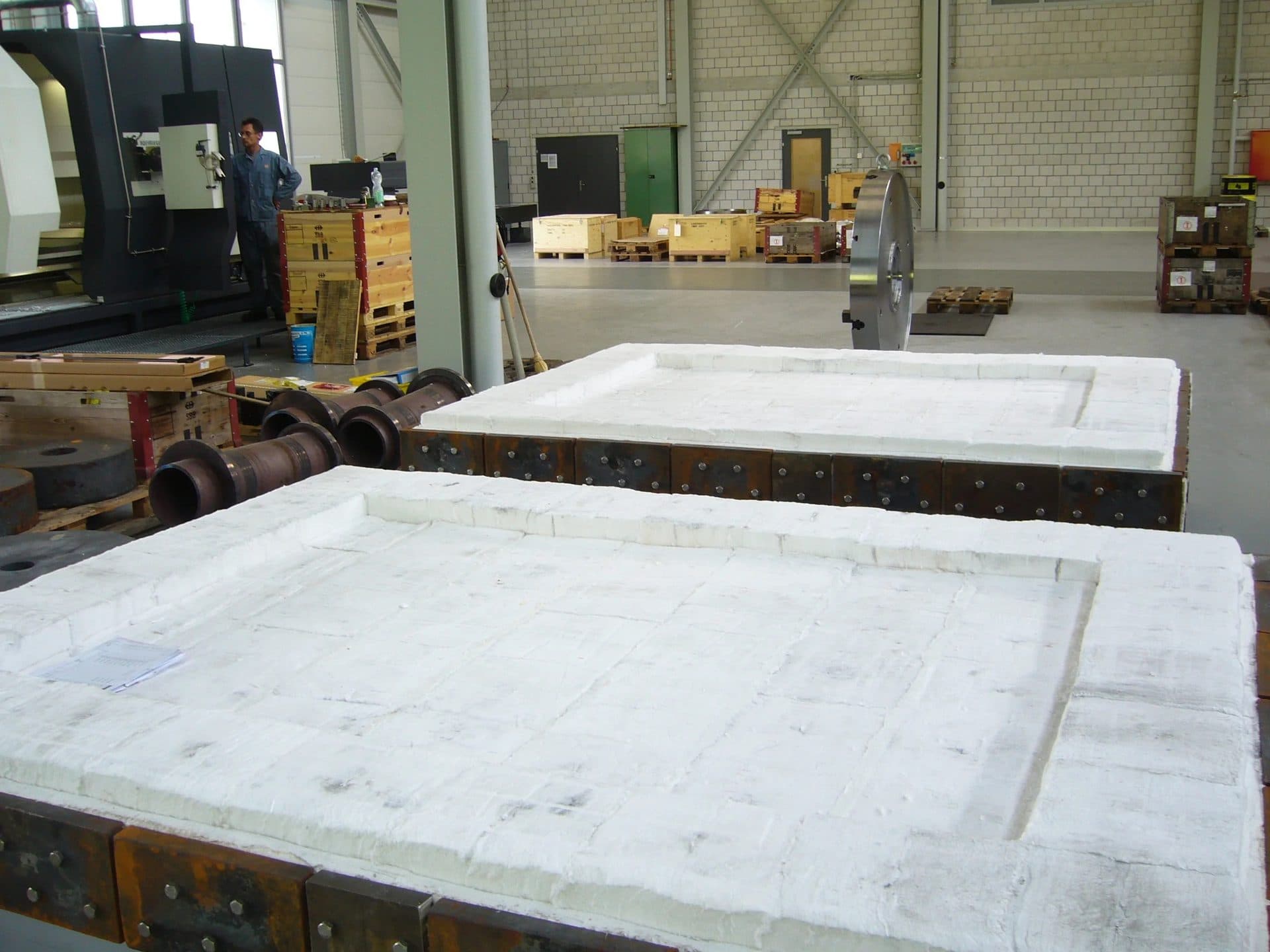
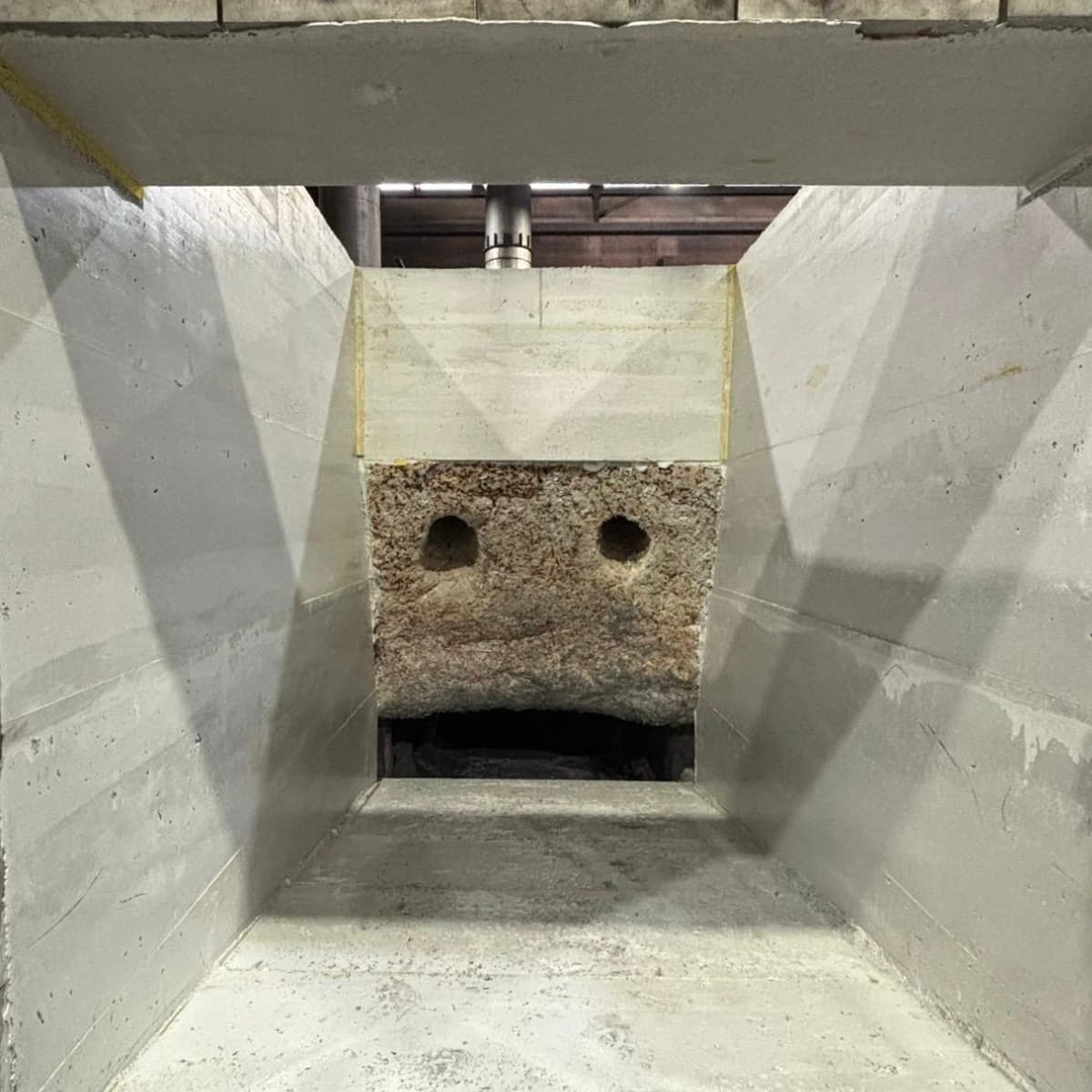
The tapping launder carries the liquid cast iron from the furnace well or the forehearth into the transport ladles. It is exposed to high temperatures and to the erosive action of the flowing iron melt. SBS manufactures tapping launders from prefabricated refractory elements of high-alumina castable that can be replaced quickly in the event of wear and ensure safe, controlled metal handling.
The cupola furnace is one of the most traditional and at the same time most efficient units in the iron foundry. Working on the continuous shaft principle, coke, iron feedstock and fluxes are charged from above — liquid cast iron is drawn off at the taphole below. SBS Refractory Service specialises in refractory construction for cupola furnaces of every design: from the conventional hot-blast cupola furnace to the modern long-campaign cupola furnace with a water-cooled shaft. Our teams of experienced refractory installers have mastered the specific requirements of cupola furnace lining and guarantee execution on schedule with maximum service life.
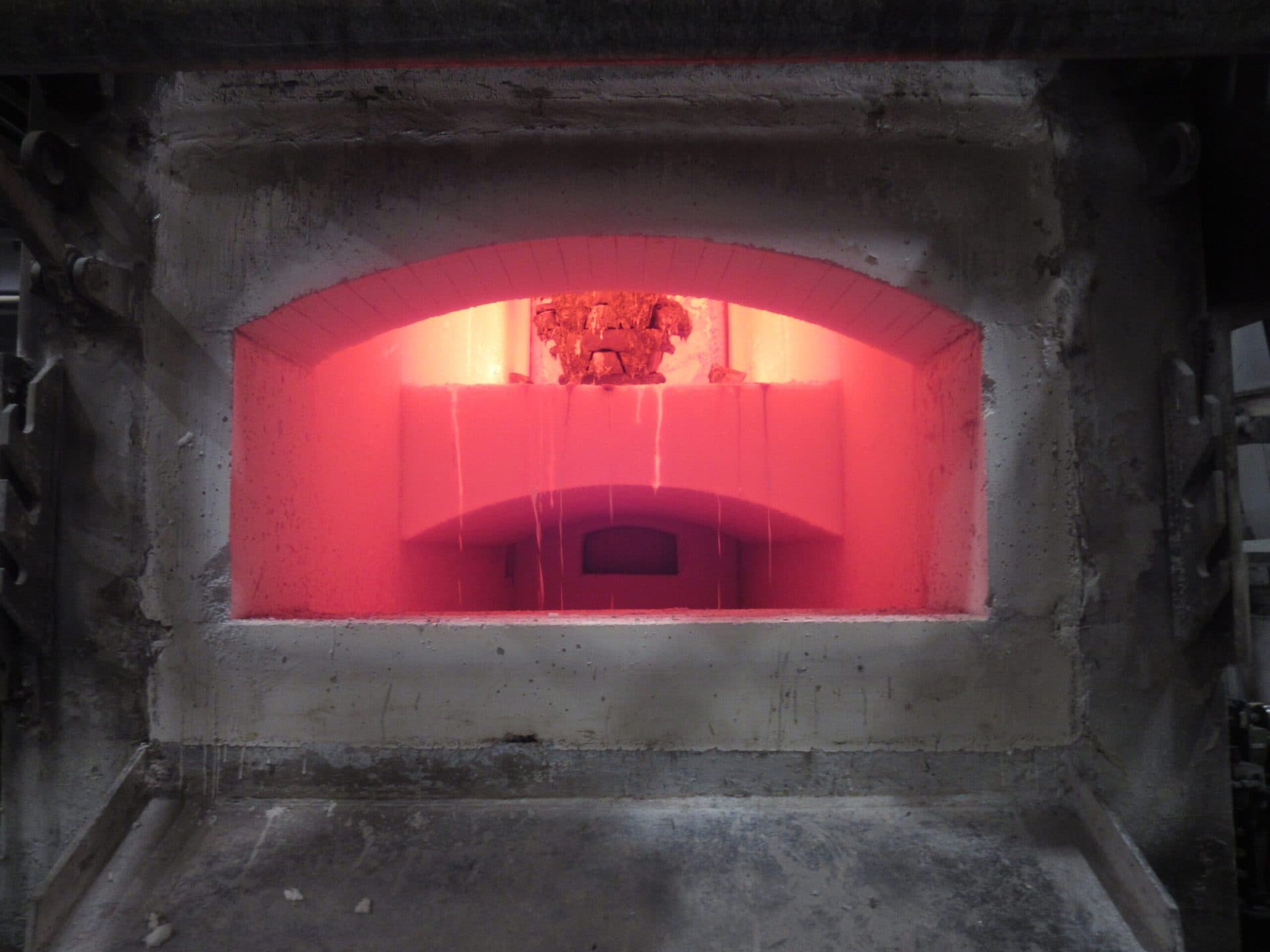
The strain on the refractory lining in the cupola furnace is extremely high, owing to direct contact with glowing coke, liquid iron and aggressive slags. In the melting zone the temperatures exceed 1,500 °C, while severe temperature swings occur in the preheating zone. The tuyère level is particularly critical — this is where hot blast at over 600 °C and aggressive slags come together and produce the highest local wear. Depending on the mode of operation, SBS uses acidic, basic or neutral lining concepts that are matched precisely to the metallurgical requirements and the desired casting quality.
In economic terms, the refractory lining largely determines the campaign length and hence the productivity of the cupola furnace. A high-quality lining allows longer campaigns between shutdowns and reduces the lining effort per tonne of cast iron. In its planning, SBS takes into account not only the pure material performance, but also the total operating costs including energy consumption and slag volume. On completion of every lining we document all materials and procedures used and remain available at any time via our emergency hotline for questions on furnace operation.
These loads determine the choice of material and the design of the refractory lining.
In the melting zone of the cupola furnace, temperatures exceed 1,500 °C with simultaneous contact with liquid iron, aggressive slag and glowing coke. This threefold loading — thermal, chemical and mechanical — leads to the highest wear rates in the entire furnace shaft. In this area SBS uses highly refractory materials with maximum slag resistance that enable an economical campaign length even under extreme conditions.
The tuyère level is the most heavily loaded zone of the cupola furnace, both thermally and chemically. Hot blast at temperatures above 600 °C strikes the lining here, while aggressive slags wash around the tuyère blocks. The combination of oxidation, slag corrosion and mechanical erosion by the coke leads to rapid wear. Special tuyère blocks made of high-alumina or SiC-containing materials offer maximum resistance to this.
Basic cupola furnace operation produces lime-rich slags that can destroy conventional acidic linings within a few melting days. The highly basic slag reacts particularly aggressively with SiO₂-containing materials and leads to rapid erosion. For basic cupola furnaces SBS uses magnesia or dolomite bricks with a matched mortar that withstand this chemical attack.
During the campaign, slag build-up and material bridges can form in the shaft, obstructing the descent of the charge and leading to operating disruptions. These build-ups consist of sintered slag/refractory mixtures and can only be removed by mechanical break-out. An optimal lining surface quality and the correct slag basicity considerably reduce the tendency towards build-up.
Between campaigns there are often only a few days available for inspection and repair of the lining. Within this narrow time window, worn areas have to be identified, broken out and relined. SBS plans these intermediate shutdowns precisely and works with well-practised teams that ensure a high-quality repair even under time pressure.
Every zone of your furnace places its own demands on temperature resistance, chemical resistance and mechanical load capacity. We select the optimum material combination.
Click on a material for details
Brickwork of the shaft in acidic operation
Repair of locally worn areas between campaigns
Our services for this furnace type — from complete relining to ongoing maintenance.
Our structured process guarantees quality, on-time delivery and safety in every project.
Inspection of the lining thickness in the shaft and the tuyère level after the campaign.
Definition of the repair scope and coordination with foundry planning.
Break-out of the worn areas, new brick lining with refractory bricks and mixes.
Dust protection during demolition, safeguarding against falling material in the shaft.
After every campaign our specialists carry out a systematic condition assessment of the cupola furnace. The cooled furnace is entered and the residual lining thickness is measured in all critical zones — melting zone, tuyère level, well and forehearth. Particular attention is paid to slag build-up, erosion channels and local breakthrough points. We document the state of wear photographically and prepare a wear profile that serves as the basis for repair planning.
On the basis of the inspection findings we define the repair scope — from local patch repairs at the tuyère level through to the complete relining of the shaft. The material selection depends on the mode of operation (acidic or basic), the desired campaign length and the budget. We coordinate the shutdown period with your foundry planning and ensure that all materials and personnel are available in good time. On long-campaign furnaces we also plan intermediate repairs during the breaks between campaigns.
Execution begins with the break-out of the worn brickwork — locally limited for partial repairs, across the entire shaft cross-section for a complete relining. After break-out the steel shell is inspected for deformation and corrosion damage. The new brick lining is built up course by course from the bottom upwards: well, tuyère level, melting zone and preheating zone. Every course of bricks is laid with refractory mortar and checked for dimensional accuracy. Finally the tuyères are installed and the lining is dried out under control.
Work inside the cupola furnace shaft calls for particular safety measures. Before entry, the furnace is checked for temperature, freedom from gas and the stability of the remaining lining. The regulations for work in confined spaces apply, with permit-to-work procedures and continuous air monitoring. During break-out, dust masks and hearing protection safeguard the employees. Catch nets and protective scaffolding are installed against material falling from the upper shaft area.
Over 500 successfully completed refractory construction projects in the DACH region and the Benelux countries.
Cupola furnace
Everything you need to know about the Cupola furnace
Whether complete relining, repair or emergency — free initial consultation and a fast response.