Wird geladen...
Wird geladen...
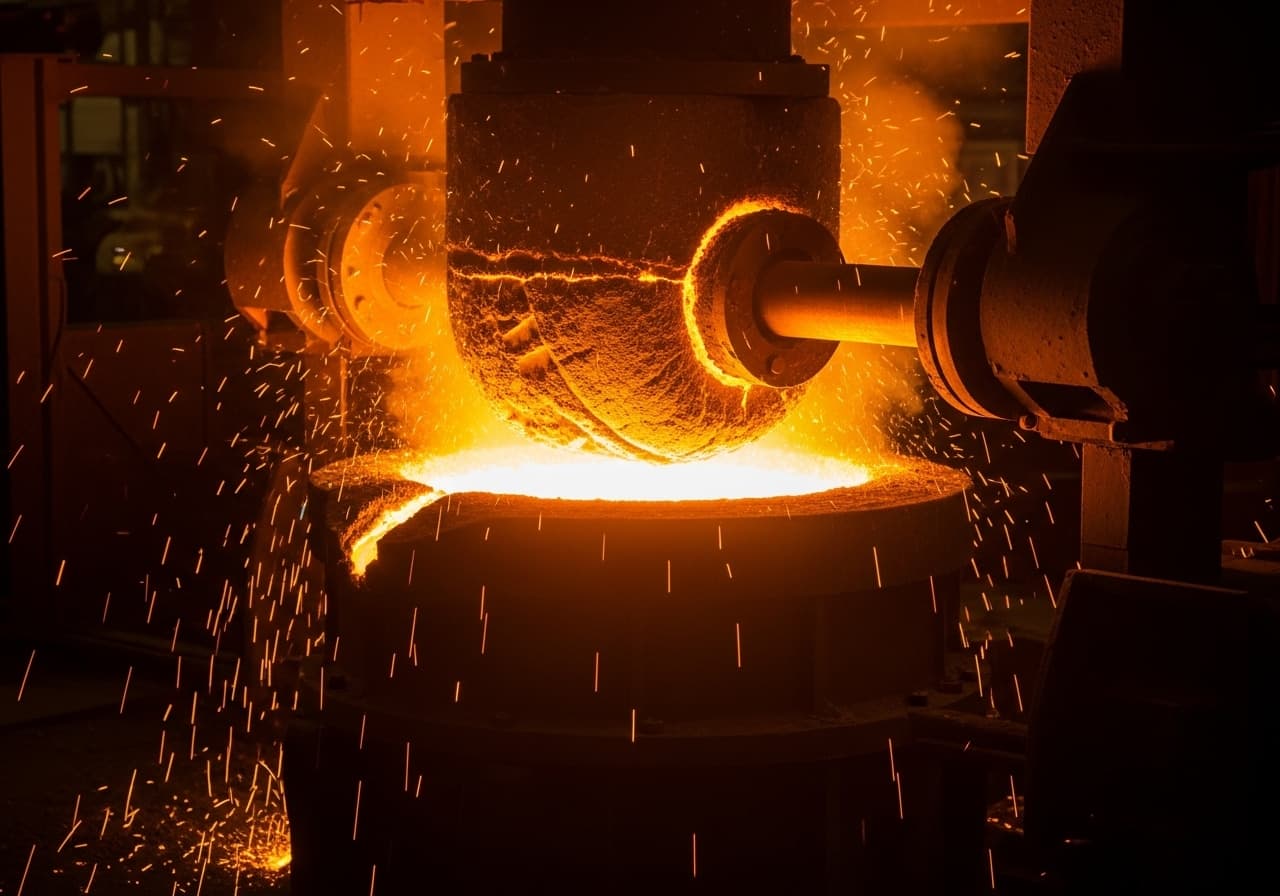
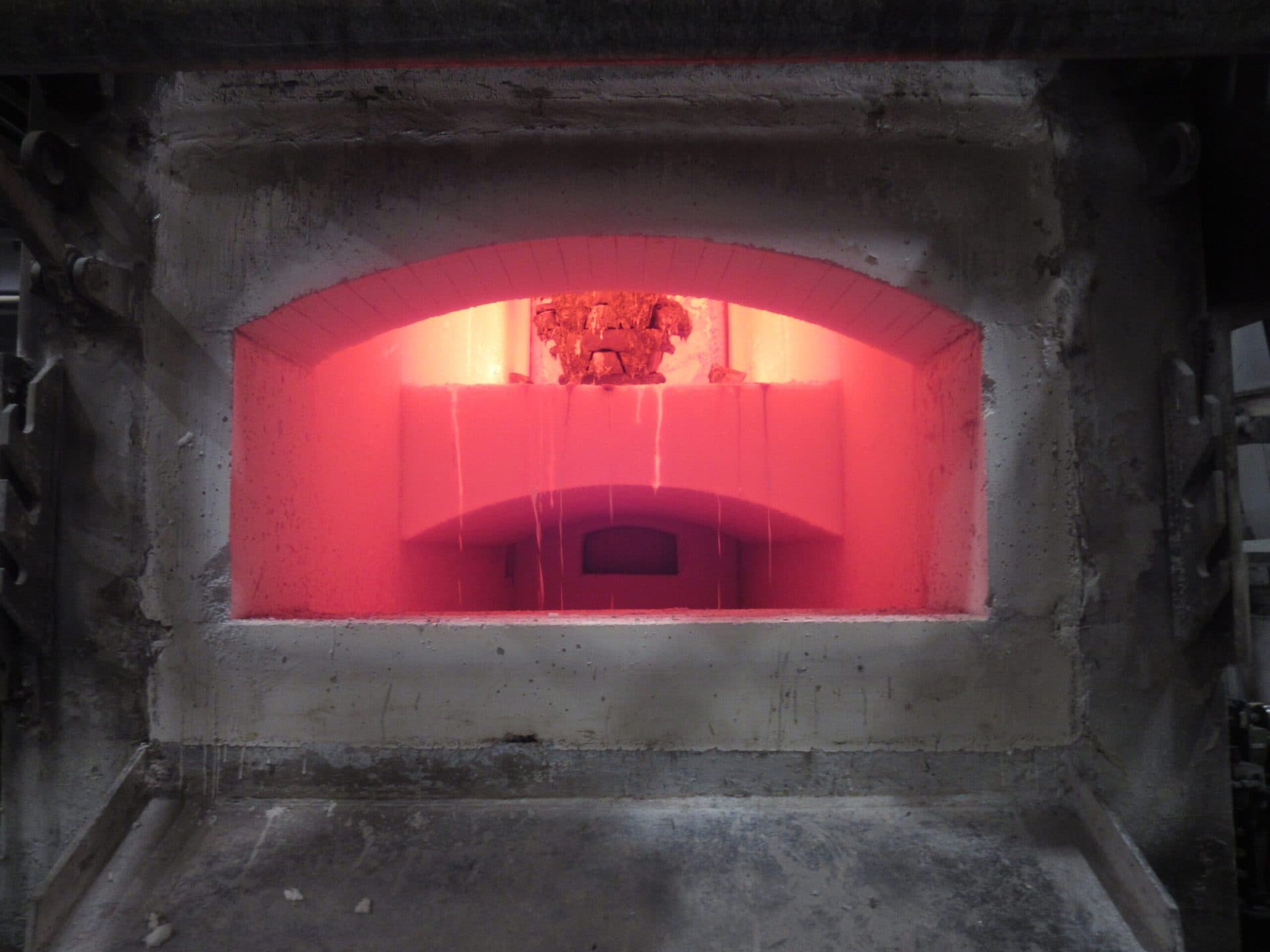
Refractory lining and repair of melting furnaces in the foundry for melting ferrous and non-ferrous metals.
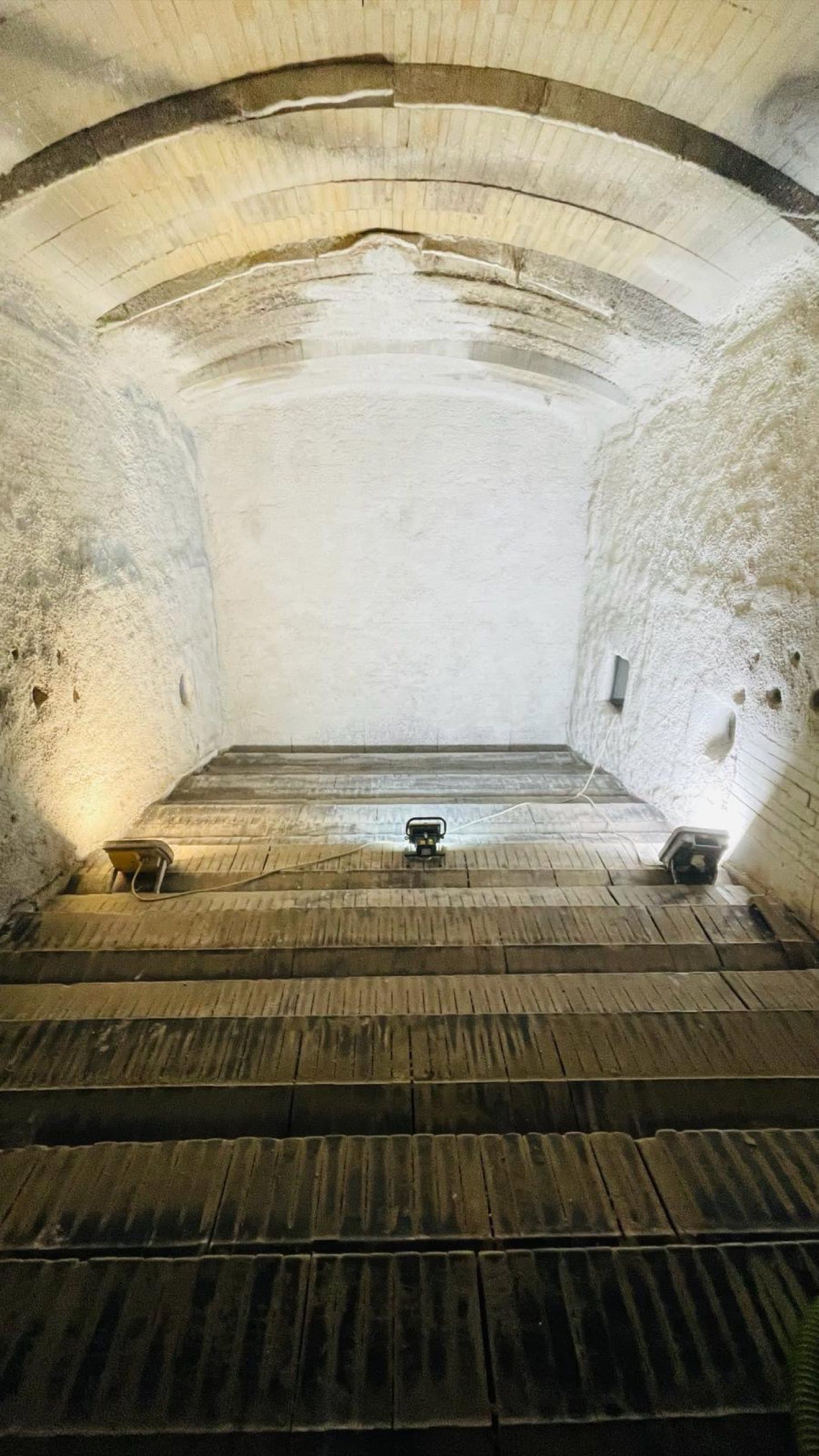
In the induction melting furnace the furnace wall is the most heavily loaded assembly. In the coil area it is in direct contact with the melt and is subjected to erosive wear by the electromagnetic bath movement. Depending on furnace size the wall thickness is 80–200 mm and is installed as a monolithic ramming mix. Uniform compaction and correct sintering are decisive for service life.
The furnace bottom carries the entire melt load and is heavily loaded mechanically during charging. It is built up from the same ramming mix as the furnace wall, but compacted with particular care. Beneath the wear lining lies a safety layer which, once the main lining is worn, serves as the last barrier against a breakthrough.
The pouring spout (nose) directs the liquid melt into the casting ladle. It is exposed to cyclic thermal loading during tapping and to mechanical wear from the flow of the melt. Pouring spouts are prefabricated as shaped parts from special mixes and can be replaced separately in the event of wear, without renewing the entire furnace lining.
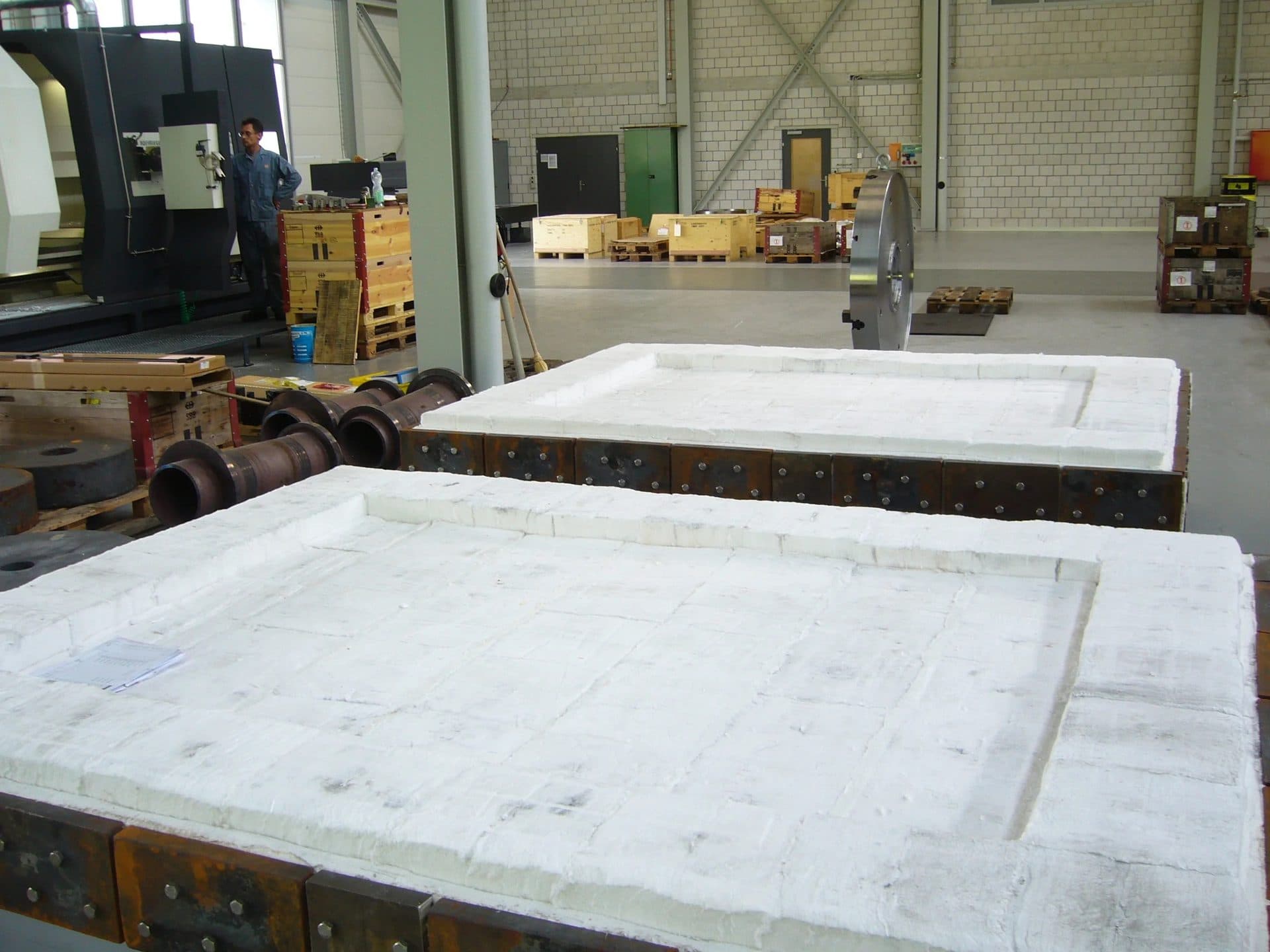
The furnace lid closes off the melting furnace at the top and reduces energy losses through radiation. It is lined with refractory bricks or castables and is primarily under thermal load. On induction furnaces with a tilting mechanism the lid must be checked regularly for cracking and spalling.
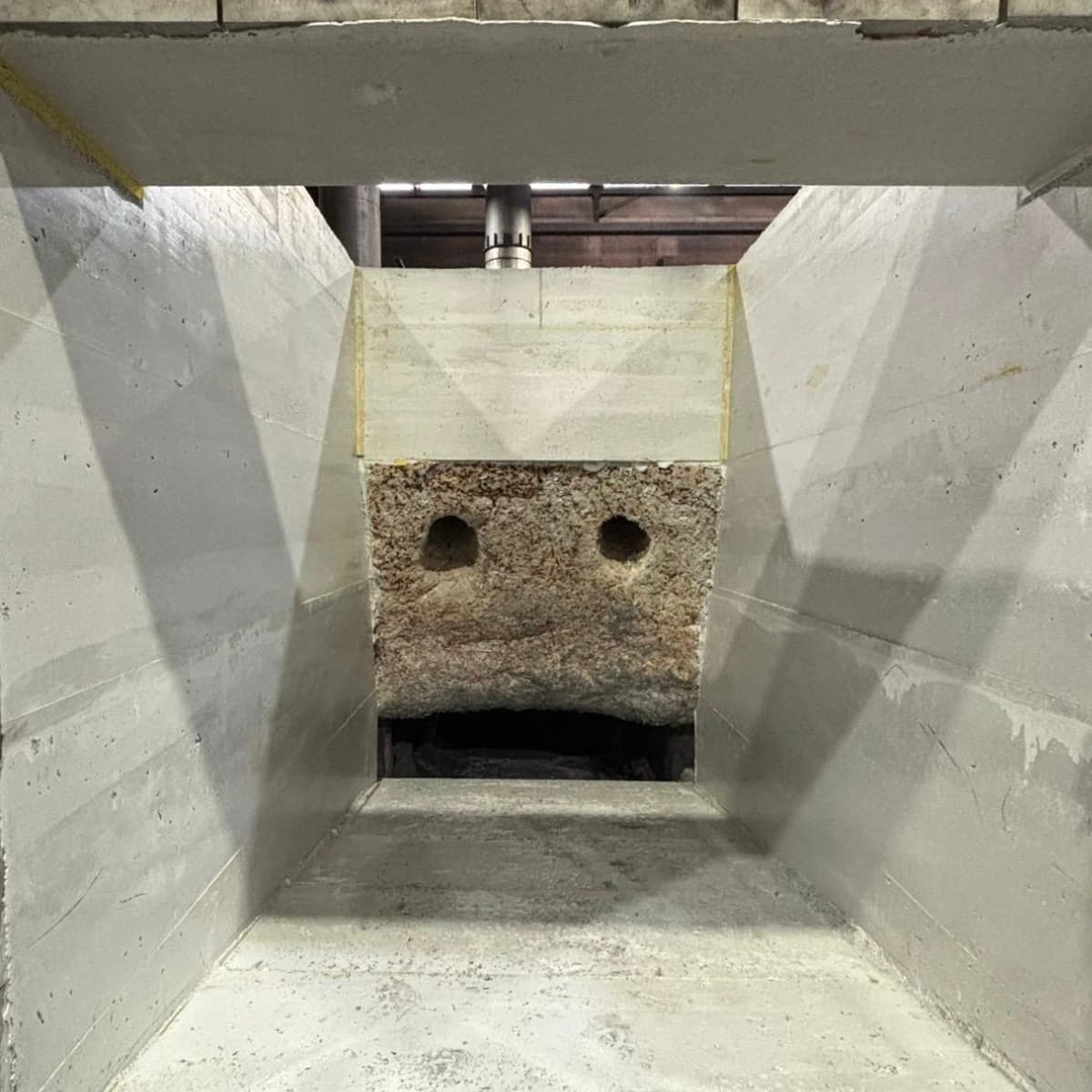
The tapping launder carries the melt from the furnace to the casting ladle or directly to the moulding line. It must withstand high temperatures, thermal shock and the erosive action of the flowing melt. SBS manufactures tapping launders from prefabricated refractory elements that allow a rapid change and thus minimise shutdown times.
The foundry melting furnace is the central unit in every ferrous and non-ferrous foundry. Whether a medium-frequency induction melting furnace, a crucible melting furnace or an electric arc furnace — the refractory lining determines the service life, melt quality and cost-effectiveness of the entire foundry operation. SBS Refractory Service has specialised in refractory construction for foundry melting furnaces for decades and serves customers throughout Germany. Our experienced refractory installers know the specific requirements of melting grey iron, ductile iron, cast steel and non-ferrous metals from daily practice and guarantee execution on schedule.
The strain placed on the refractory lining in foundry melting furnaces is among the most intense in the whole of refractory construction. Temperatures of up to 1,600 °C, permanent contact with liquid metal and aggressive slags load the furnace lining afresh with every heat. In the induction melting furnace, electromagnetic forces act in addition, keeping the melt in motion and subjecting the lining to erosive wear. SBS relies on proven material concepts of high-alumina ramming mixes, quartzite mixes and magnesia bricks that permanently withstand these multiple loads and reliably achieve the required number of heats.
An economically optimised refractory concept takes into account not only the material costs, but above all the total operating costs: service life per lining, energy consumption, melt quality and shutdown times. SBS analyses your operating conditions holistically and recommends materials and lining concepts designed for maximum cost-effectiveness. On completion of every complete relining we prepare seamless documentation including material certificates and the sintering curve. Via our emergency hotline we remain available to you at any time even after project completion — for rapid assistance in the event of unexpected wear or a risk of breakthrough.
These loads determine the choice of material and the design of the refractory lining.
Metallurgical slags react aggressively with the refractory lining and lead to accelerated chemical wear. Basic slags in particular, as encountered in steel casting, attack acidic linings severely. Correctly matching the slag chemistry to the lining material is decisive for service life. SBS selects materials whose chemical character (acidic, neutral or basic) is matched to the metal being melted and to the slag practice.
In the induction melting furnace the electromagnetic field generates an intensive bath movement that subjects the lining to mechanical and erosive wear. High wear rates occur in particular in the coil area and at the transition zone between the melt bath and the free furnace wall. High-density ramming mixes with an optimised grain size and sintering behaviour effectively reduce this erosion mechanism.
In foundry operation the melting furnace is charged, melted down and tapped cyclically. These temperature swings of several hundred degrees generate thermal shock stresses in the lining that lead to micro-cracks and progressive material failure. Materials with high thermal shock resistance and controlled sintering of the new lining are decisive for a long service life.
Charging the melting furnace with ingots, scrap and returns places a high mechanical load on the furnace bottom and the wall areas. Impact loading from placing heavy charge material can cause local break-outs and cracks. A sufficient wear layer thickness and high-strength materials protect the lining against premature failure.
Liquid metal can penetrate cracks and pores in the refractory lining and damage the lining mechanically as it solidifies. In the induction furnace, advanced infiltration carries the risk of a coil breakthrough with serious consequences. Regular residual lining thickness measurements and a timely complete relining reliably prevent this risk.
Every zone of your furnace places its own demands on temperature resistance, chemical resistance and mechanical load capacity. We select the optimum material combination.
Click on a material for details
Furnace wall and furnace bottom in the induction melting furnace
Brickwork of the furnace shell and lid area
Our services for this furnace type — from complete relining to ongoing maintenance.
Our structured process guarantees quality, on-time delivery and safety in every project.
Visual inspection and measurement of the residual wear thickness of the refractory lining.
Preparation of a lining plan with material selection and scheduling matched to the production break.
Demolition of the old lining, installation of the new refractory lining and controlled heat-up.
Compliance with all safety regulations for work in hot areas, protection against metal splashes.
Our refractory specialists carry out a comprehensive condition analysis of the melting furnace lining. This includes visual inspection for cracks, spalling and infiltration zones, measurement of the residual lining thickness by ultrasound, and an assessment of the wear profile across the entire furnace cross-section. On induction furnaces the earth-leakage monitoring data is evaluated in addition, in order to detect concealed infiltration. On the basis of this data we prepare a detailed inspection report with a recommendation for action — partial repair or complete relining.
During the planning phase we define the material concept, matched to the metal you melt, the slag chemistry and the target service life. We coordinate the shutdown period closely with your foundry planning and prepare a detailed construction schedule including manpower planning and material logistics. Coordination with your production team ensures that a sufficient melt stock is available for the shutdown period. All materials are specified in advance and checked for availability.
Execution begins with the controlled cooling of the furnace and the mechanical break-out of the old ramming mix or brickwork. After thorough cleaning and inspection of the induction coil or the furnace shell for damage, the rebuild follows: installation of the bottom ramming mix, layer-by-layer ramming of the wall lining around a steel former and installation of the pouring spout shapes. Finally the steel former is melted out and the lining is fired in according to a defined sintering curve — a critical step that decisively influences service life.
All work is carried out in strict compliance with the safety regulations. Before work begins we prepare a risk assessment and instruct all employees in the site-specific safety rules. During break-out of the old lining, particular attention is paid to dust protection and to safeguarding against falling material. For work on the induction furnace, the coil circuits are isolated and secured against being switched back on. Personal protective equipment and heat-protective clothing are a matter of course.
Over 500 successfully completed refractory construction projects in the DACH region and the Benelux countries.
Melting furnace
Everything you need to know about the Melting furnace
Whether complete relining, repair or emergency — free initial consultation and a fast response.