Wird geladen...
Wird geladen...
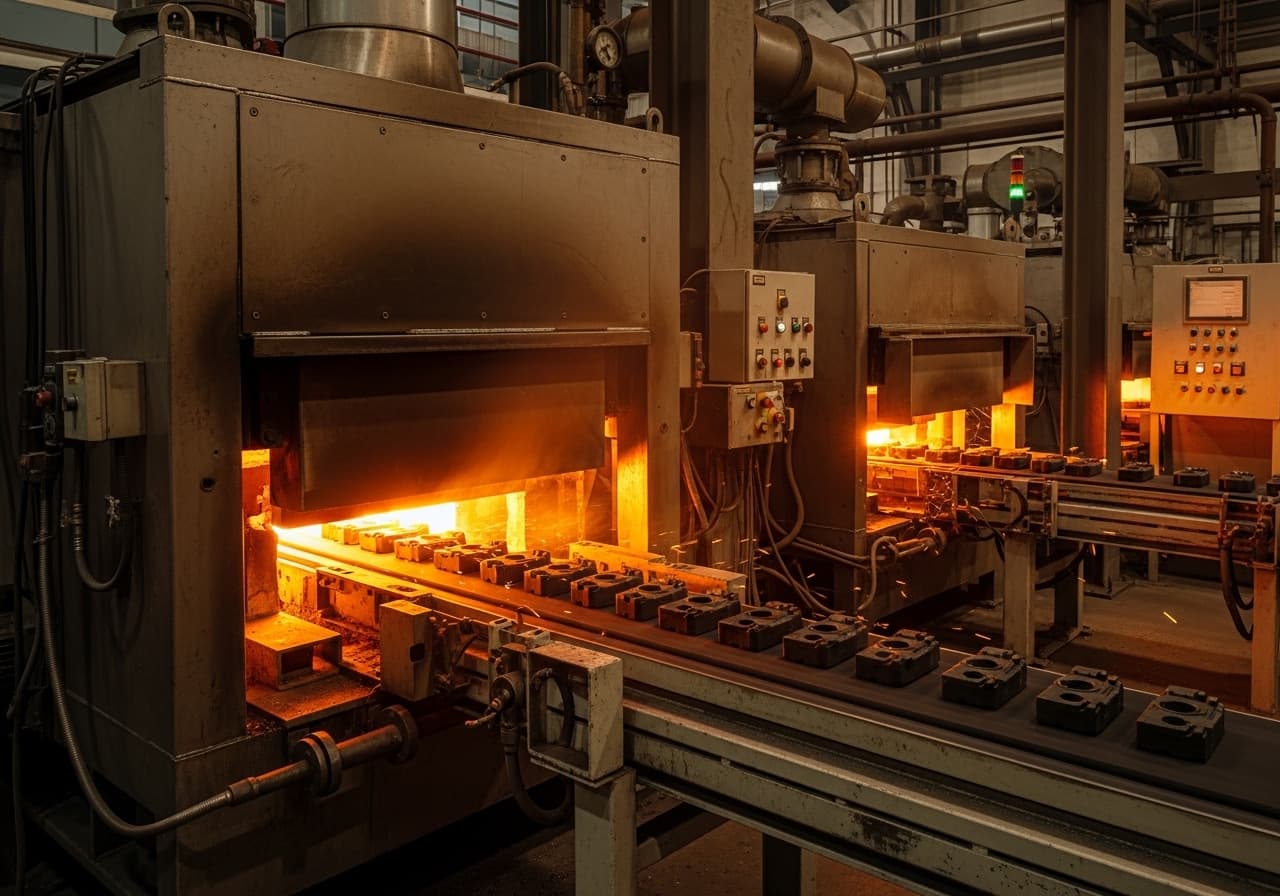
Refractory lining of sintering furnaces and belt furnaces for the sintering of ores and ceramics.
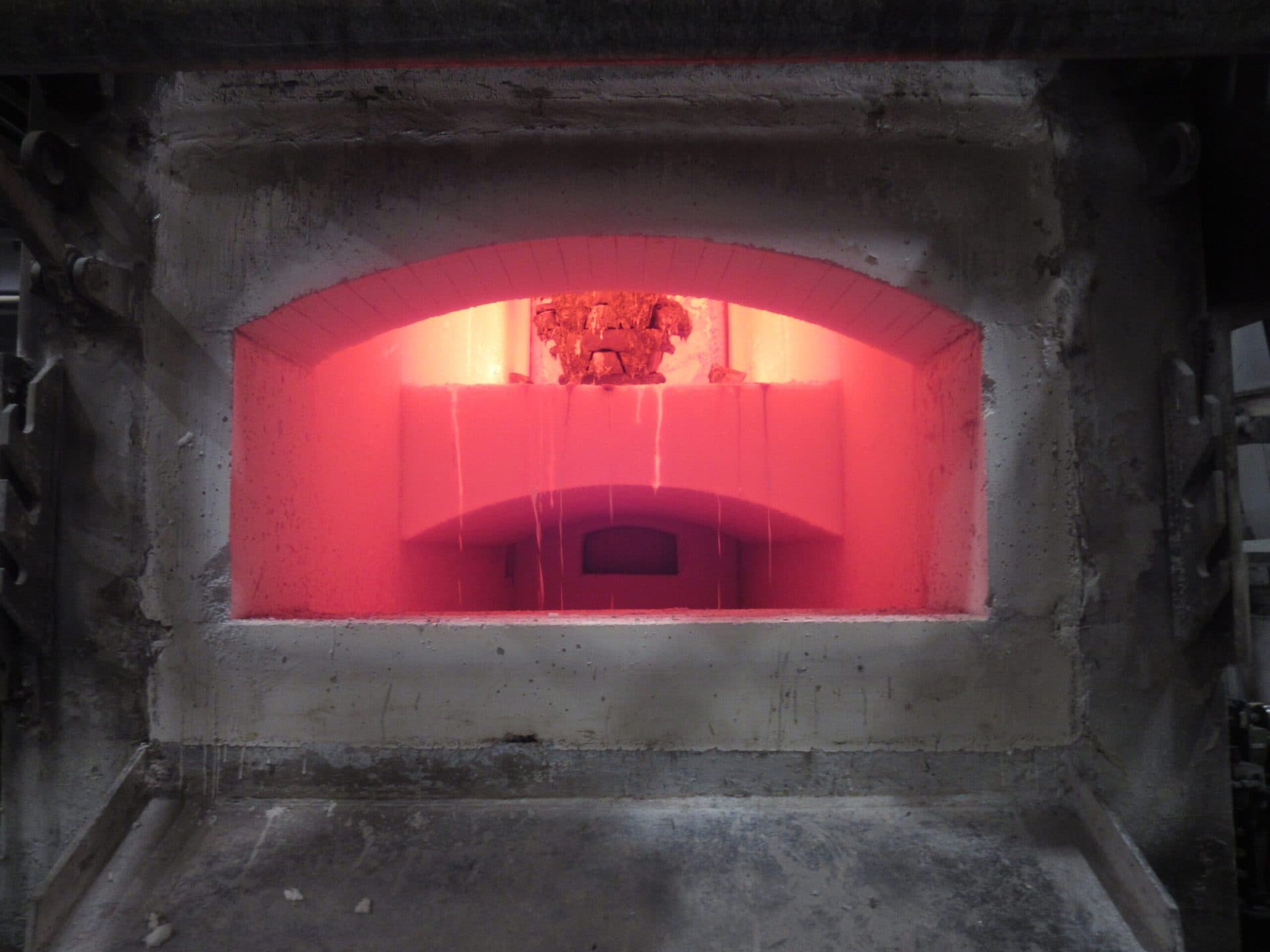
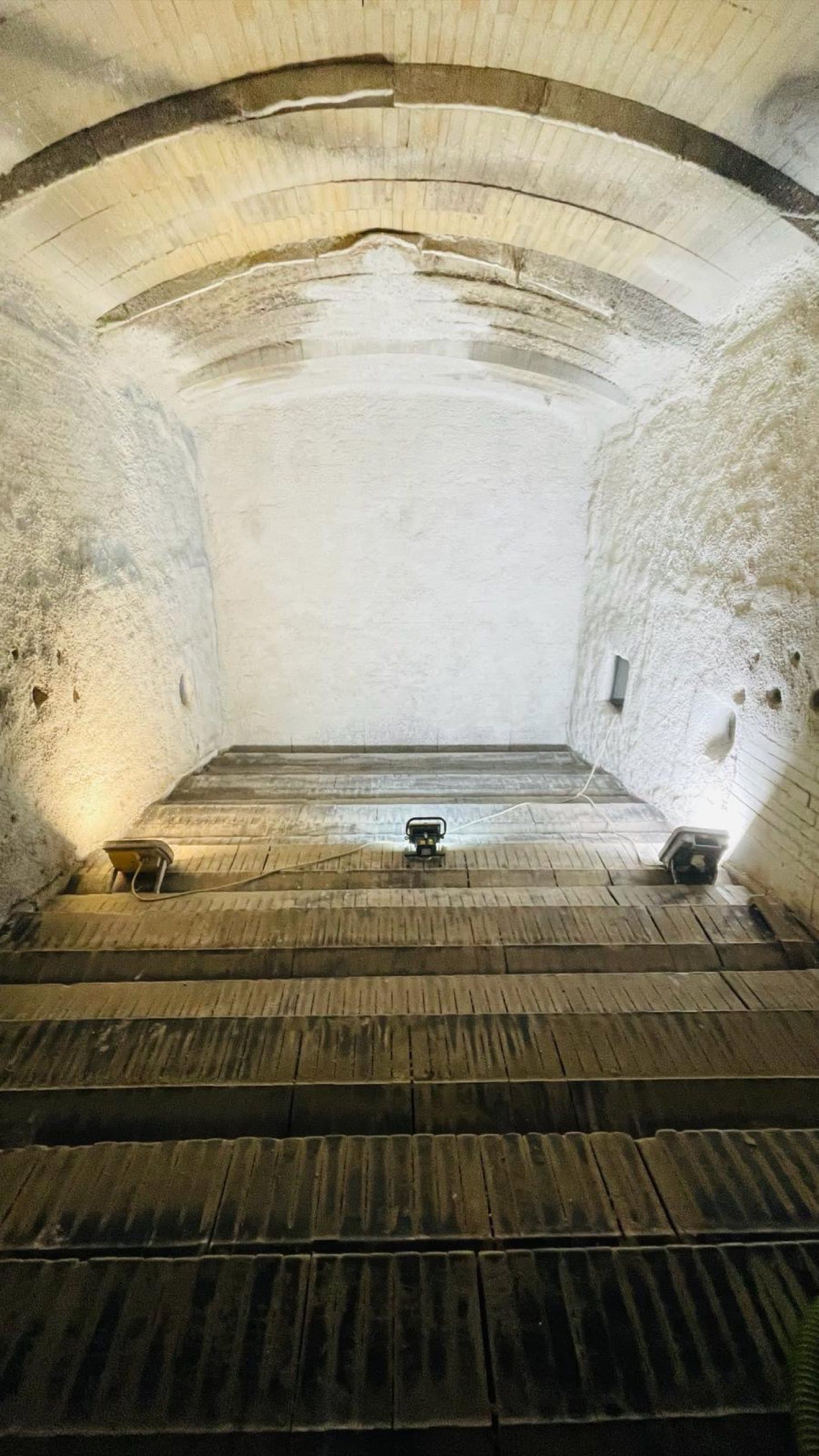
The firing zone is the area of the sintering furnace under the greatest thermal and abrasive load. Temperatures of over 1,300 °C are reached here while the sinter feed is moved continuously over the lining. The firing zone lining is built up from high-alumina bricks with an Al₂O₃ content of at least 70 % or from SiC-reinforced refractory castable and is checked regularly for wear.
The sinter belt or travelling grate transports the sinter feed through the various temperature zones of the furnace. The grate bars and side seals are exposed to extreme wear and to temperature changes. SBS supplies precisely fitting refractory seals and heat-resistant components that minimise material loss and ensure process reliability.
The side walls of the sinter plant are loaded both thermally and mechanically — by the radiant heat of the firing zone and by material build-up and impact as the sinter feed moves. The lining typically consists of refractory castable or high-alumina bricks with an insulating layer of ceramic fibre or insulating firebricks behind it.
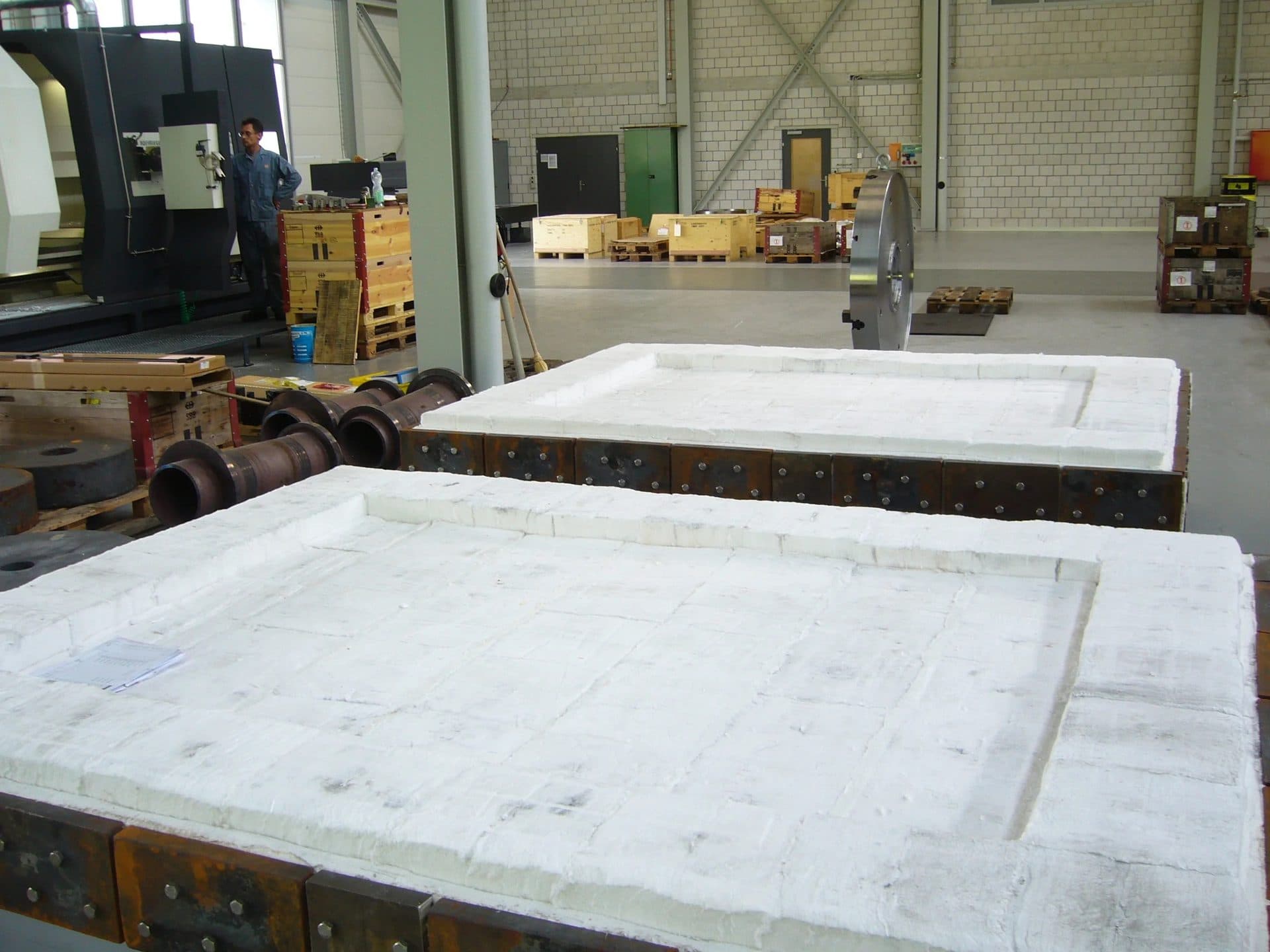
The extraction hood collects the hot process gases and directs them to the waste gas cleaning system. It is exposed to moderate temperatures but to a high dust load. Insulation is provided with ceramic fibre boards or blankets, which are light and easy to maintain. A gas-tight design is decisive for emission control and for efficient operation of the extraction system.
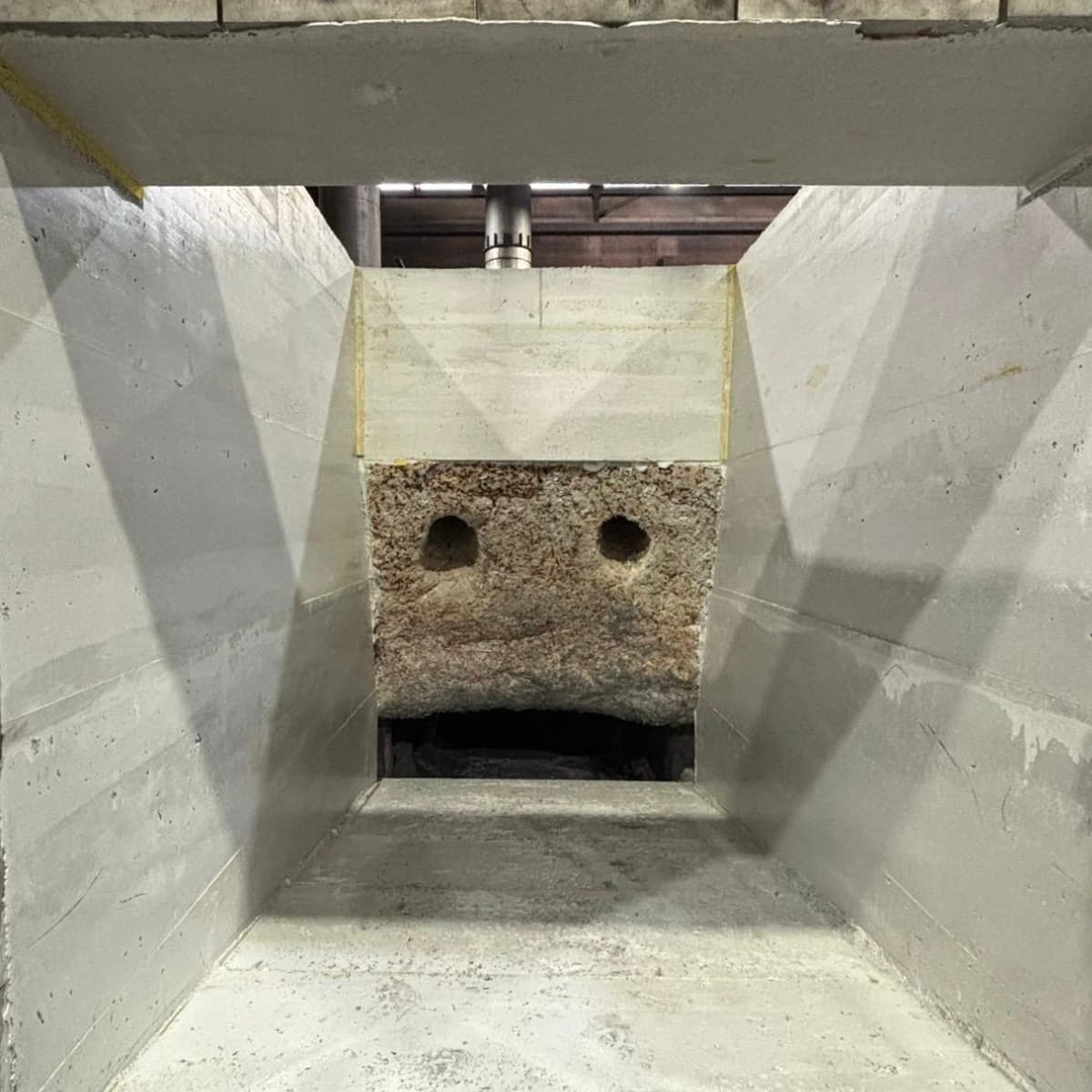
The wind boxes are located beneath the travelling grate and distribute the process air evenly across the entire sinter width. They are exposed to moderate thermal loading but to considerable dust erosion from entrained fine particles. SBS lines wind boxes with abrasion-resistant refractory castables or wear-resistant steel linings that can be inspected regularly and replaced quickly where required.
The sintering furnace — frequently built as a belt furnace or travelling grate furnace — is a central unit in ore and ceramic processing. In the continuous sintering process, powdered raw materials are sintered into solid, porous bodies at temperatures between 1,000 and 1,350 °C. SBS Refractory Service specialises in the refractory lining and maintenance of these high-performance furnaces and serves sinter plants in the steel, ceramics and powder metallurgy industries throughout Germany and Central Europe. Our experienced refractory installers know the extreme demands of sintering operations — from the permanent abrasion caused by the sinter feed through to the high thermal loads in the firing zone.
The strain placed on the refractory lining in the sintering furnace is exceptionally varied: in the firing zone, temperatures of over 1,300 °C combine with severe abrasive wear from the moving sinter feed. The side walls are exposed to mechanical impact from material build-up and to cyclic thermal loading during start-up and shutdown. Extraction hoods and wind boxes require heat-resistant insulation that also withstands the high dust loads. SBS relies on a coordinated material concept of high-alumina bricks, abrasion-resistant refractory castables and ceramic fibre insulation that reliably withstands these combined loads and ensures maximum service life.
An economically optimised refractory concept for sintering furnaces takes into account not only the thermal load, but also the mechanical loading and the specific process conditions. SBS analyses the wear progression of your existing lining, identifies the critical wear zones and develops a tailored concept that maximises service life and availability. On completion of the work you receive complete documentation with material certificates, a heat-up record and recommendations for regular maintenance. Our 24/7 emergency service ensures rapid assistance in the event of unexpected wear or an acute need for repair.
These loads determine the choice of material and the design of the refractory lining.
The ore and ceramic material moved continuously over the travelling grate or the sinter belt generates massive abrasive wear on the firing zone lining and the side walls. Fine-grained sinter feed acts like sandpaper on the refractory surface. In the high-wear zones SBS uses abrasion-resistant high-alumina bricks or SiC-reinforced refractory castables that withstand this permanent material removal and considerably extend service life.
The firing zone of the sintering furnace is exposed to extreme temperatures of over 1,300 °C. During start-up and shutdown of the plant, thermal gradients arise that can cause stress cracks in the lining. Materials with high thermal shock resistance and a controlled heat-up programme after a complete relining are decisive for a long service life of the refractory lining.
Depending on the composition of the sinter feed, stubborn build-up can form on the side walls and in the firing zone. These accretions alter the flow conditions in the furnace, impair sinter quality and, when removed mechanically, can damage the lining beneath. Smooth, dense refractory surfaces and regular cleaning intervals minimise the formation of build-up.
Sinter plants generate considerable quantities of dust, which affect both occupational safety and the refractory lining. Fine dust particles penetrate joints and cracks and accelerate wear. On every assignment at a sinter plant, SBS works with comprehensive personal protective equipment and extraction systems. Our safety protocols comply with SCC standards and ensure maximum occupational safety.
Sintering furnaces have numerous ancillary units such as extraction hoods, wind boxes and transition zones that require individual refractory solutions. These geometrically complex assemblies have to be built heat-resistant, gas-tight and easy to maintain. SBS manufactures precisely fitting shapes and special cut sections of ceramic fibre or refractory castable that ensure optimal sealing and insulation.
Every zone of your furnace places its own demands on temperature resistance, chemical resistance and mechanical load capacity. We select the optimum material combination.
Click on a material for details
Firing zone with the highest thermal loading
Side walls and transition zones
Hood and extraction insulation
Our services for this furnace type — from complete relining to ongoing maintenance.
Our structured process guarantees quality, on-time delivery and safety in every project.
Condition survey of the firing zone lining and wear measurement
Material selection according to thermal and abrasive loading
Lining of the firing zone and the side walls
Fall protection at the sinter plant, dust protection
Our refractory engineers carry out a comprehensive condition analysis of the entire sintering furnace lining. This includes visual inspection of all firing zones and side walls, measurement of the residual lining thickness by ultrasound, and thermographic imaging to identify hot spots on the steel shell. Particular attention is paid to the zones subject to abrasion in the area where the sinter feed moves. On the basis of the inspection data we prepare a detailed wear report with recommendations for action and a cost comparison between partial repair and complete relining.
During the planning phase we develop a material concept tailored to your operating conditions. We take into account the composition of the sinter feed, the operating temperature, the belt speed and the targets for service life and availability. The shutdown period is coordinated with your production planning, a construction schedule with milestones is prepared and the complete material logistics are organised in advance. All materials are specified, checked for availability and delivered to the plant on schedule.
Execution begins with the controlled cooling of the sinter plant and the mechanical demolition of the worn lining. After cleaning and inspection of the steel shell, the rebuild follows layer by layer: insulating layer, safety lining and wear lining in the firing zone, plus refractory castable in the side walls. In parallel, the hood and wind box insulation is renewed or repaired. Finally comes the controlled drying and the stepwise heat-up in accordance with a defined temperature/time programme that prevents thermal stress cracks.
Sinter plants require particular safety measures on account of their height, the dust exposure and the confined working areas. SBS works in strict compliance with SCC safety standards. Before work begins we prepare a detailed risk assessment and set up fall protection, dust extraction and respiratory protection measures. All employees are instructed in the site-specific safety rules. Our safety record of more than 500,000 accident-free working hours demonstrates our commitment to occupational safety.
Over 500 successfully completed refractory construction projects in the DACH region and the Benelux countries.
Sintering / belt furnace
Everything you need to know about the Sintering / belt furnace
Whether complete relining, repair or emergency — free initial consultation and a fast response.